
If you’re planning Brivis or Braemar ducted heating installation, you’ll need to assess more than brand preference. Your home’s size, insulation, duct layout, and flue path all affect suitability, efficiency, and compliance. Brivis often suits simpler replacement projects, while Braemar can be better for larger zones. Installation cost, running cost, and warranty terms also vary in ways that can change the outcome. The key differences aren’t always obvious at first.
Key Takeaways
- Choose Brivis or Braemar based on home size, insulation, duct layout, and a professional heat load calculation.
- Brivis often suits straightforward replacements, while Braemar is better for larger homes needing higher heating output.
- Compare efficiency using star ratings, zoning capability, fan power, and real running costs under normal operating conditions.
- Installation must confirm roof space clearance, flue routing, gas line capacity, duct integrity, and manufacturer-specific compliance requirements.
- Expect installed costs of about $5,000 to $12,000, depending on unit size, zoning, roof access, and electrical or gas upgrades.
Which Homes Suit Brivis or Braemar?
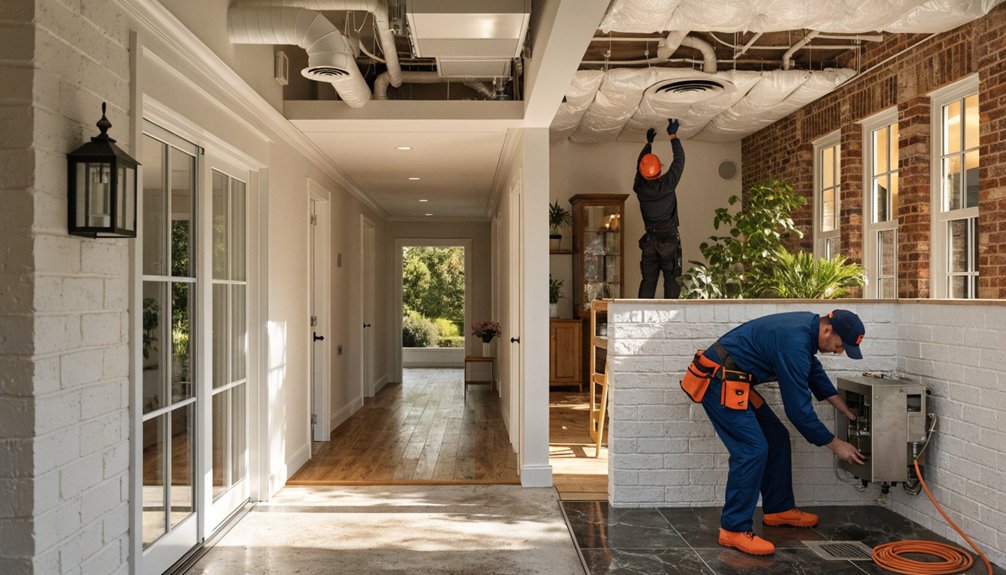
Two common choices for ducted heating are Brivis and Braemar, and the right fit depends on your home’s size, layout, insulation level, and existing duct design. If you’re evaluating suitability, you should prioritise heat load calculations, ceiling or underfloor access, and zoning requirements rather than brand preference alone for compliance. Brivis often suits homes where you need straightforward replacement within compatible duct runs and stable return-air pathways. Braemar can suit homes requiring careful matching to higher output demands, especially across larger floor areas. In either case, your installer should verify home size, register placement, and duct integrity before selection. You’ll also want insulation evaluated, because poor thermal performance reduces energy efficiency and can force oversizing. Correct appliance sizing supports balanced airflow, consistent temperatures, and code-aligned installation outcomes overall. Experienced hydronic specialists like Johns Refair emphasise that regular maintenance and correct system sizing are just as critical for long-term comfort and efficiency as the choice between Brivis or Braemar.
Brivis vs Braemar Features Compared
Once your home’s heating requirements and duct layout have been assessed, the next step is comparing Brivis and Braemar on actual system features rather than name recognition. You should check burner modulation, controller compatibility, zoning logic, fan-speed options, and fault-diagnostic capability before specifying a unit. With Brivis technology, you’ll typically see strong integration with programmable wall controls, add-on refrigerated cooling interfaces, and service diagnostics that simplify commissioning. Braemar efficiency is often paired with straightforward zoning control, compact cabinet configurations, and installation flexibility where roof space or return-air pathways are constrained. You should also compare noise management, ignition systems, external static pressure tolerance, and replacement-part availability. If you’re planning future upgrades, confirm whether each platform supports expanded zoning, smart control accessories, and compliant condensate or flue arrangements. Braemar’s focus on energy-efficient systems helps reduce both running costs and environmental impact when compared with less efficient ducted or split alternatives.
How Efficient Are Brivis and Braemar?
When you compare Brivis and Braemar efficiency, you’ll need to check Energy Star ratings as a baseline indicator of thermal performance. You should also assess running costs against heat output, since higher-rated systems don’t always produce the lowest operating expense in your installation conditions. If zoning is included, you can improve control efficiency by directing heat only to occupied areas and matching output to your household load. Because these systems use natural gas as a fuel, they can deliver reliable warmth with lower emissions and reduced energy consumption compared to many electric alternatives.
Energy Star Ratings
Although star ratings aren’t the only measure of running cost, they’re a practical benchmark for comparing Brivis and Braemar ducted gas heaters because they indicate how efficiently each unit converts gas into usable heat. When you assess models, you should review certified energy efficiency data, not marketing summaries, and confirm whether the listed stars apply to the exact configuration being installed.
For accurate rating comparisons, you’ll need to evaluate burner design, heat exchanger performance, and control compatibility, because these factors influence the published star outcome. Higher-star units generally deliver better thermal conversion under standard test conditions, but you should also verify zoning capability and thermostat integration. If you’re selecting between Brivis and Braemar, ask your installer for current specifications, model-specific star ratings, and documentation aligned with Australian compliance requirements and relevant installation standards.
Running Cost Comparison
Star ratings provide a standardised efficiency reference, but your actual running cost depends on how a Brivis or Braemar ducted heater performs in your home under real operating conditions. You’ll need to compare published thermal efficiency, fan power draw, ignition type, and control logic, because each affects gas use and electricity demand.
In practice, lower energy consumption comes from a unit that maintains set temperature without excessive cycling or prolonged fan operation. If two models have similar star ratings, you should review standby power, airflow resistance, and burner modulation, as these can alter annual costs. You should also factor in maintenance costs, because restricted filters, worn components, or poor commissioning can reduce efficiency over time. A correctly sized, professionally installed system generally delivers more predictable operating expenditure and better seasonal performance overall.
Zoning And Heat Output
Two factors largely determine delivered efficiency in a ducted system: zoning strategy and usable heat output. With Brivis or Braemar, you’ll get better performance when zones match occupancy patterns, room sizes, and duct layout. Proper zoning benefits include reduced conditioned area, lower fan demand, and more stable return-air temperatures during partial-load operation.
Usable heat output matters because the rated input doesn’t equal the heat actually delivered to occupied rooms. You should compare nominal capacity, thermal efficiency, and external static pressure tolerance, since these affect airflow and heat distribution across the network. If the unit is oversized, you may see short cycling and uneven temperatures; if undersized, recovery times lengthen and comfort drops. A compliant installation balances outlet sizing, damper settings, and insulation to maintain designed performance year-round.
Brivis vs Braemar Installation Needs
When you compare Brivis and Braemar installation needs, you’ll need to verify roof space clearances, unit access, and support requirements against the manufacturer’s specifications. You should also check whether the flue route, termination position, and gas connection layout comply with the applicable installation standard and local code. Since Brivis and Braemar models come in different energy efficiency ratings, confirming the correct capacity and star rating during installation helps optimise long-term running costs and performance.
Roof Space Requirements
For roof space planning, Brivis and Braemar units don’t have identical installation clearances, service access needs, or return-air layout constraints, so you can’t assume one system will fit where the other does. You’ll need roof pitch, truss spacing, duct placement, and insulation requirements checked before selection.
| Checkpoint | Brivis | Braemar |
|---|---|---|
| Cabinet clearance | Model-specific | Model-specific |
| Service access | Front/side varies | Front/side varies |
| Return-air path | Layout dependent | Layout dependent |
| Roof loading | Verify support | Verify support |
You should confirm minimum working space around the cabinet, safe platform access, and whether bulk insulation must be trimmed or shielded. If your roof cavity is tight, one brand’s footprint or fan orientation may simplify compliance, reduce rework, and improve airflow balance. Always use manufacturer manuals and installer measurements.
Flue And Gas Connections
After roof space fit is confirmed, flue routing and gas connection details are the next installation checks, because Brivis and Braemar models can differ in flue diameter, terminal position, condensate handling on high-efficiency units, and required clearances from combustible materials and openings.
You’ll need the manufacturer’s flue installation instructions matched to the exact model, not a generic setup. Terminal location must satisfy code distances from eaves, windows, doors, and mechanical air intakes. If your unit is condensing, you’ll also need compliant condensate drainage and frost-safe discharge. For the gas line, your installer must verify meter capacity, pipe sizing, regulator suitability, isolation valve placement, and test-point access. Commissioning should include pressure testing, leak checks, combustion verification, and documented gas safety compliance before handover to you.
What Does Ducted Heating Installation Cost?
Although pricing varies by system type, home size, duct layout, and installation complexity, ducted heating installation in Australia typically costs between $5,000 and $12,000 for a standard residential setup. Your cost breakdown usually includes the heater unit, ducting, outlets, return air grille, thermostat, labour, and commissioning. Key installation factors include roof access, zoning requirements, flue routing, electrical upgrades, and whether existing ducts can be reused. With experienced professionals like Johns Refair, homeowners also benefit from expert central heating assessment to ensure the system is correctly sized, safely installed, and optimised for long-term performance and reliability.
- System capacity: Larger kilowatt outputs and additional zones increase equipment and balancing requirements.
- Property constraints: Tight roof cavities, double-storey layouts, or long duct runs raise labour time and material quantities.
- Compliance items: You may need gas line modifications, isolation switches, condensate management, or ceiling rectification to meet Australian standards.
You should request a written quote specifying inclusions, exclusions, and any provisional sums.
Brivis vs Braemar Running Costs and Warranty
When you compare Brivis and Braemar, running costs usually come down to star rating, burner efficiency, zoning control, fan power draw, and how accurately the unit is sized to your home. Your running cost analysis should use MJ input, thermostat behaviour, and service history, not brochure claims alone.
| Factor | Brivis | Braemar |
|---|---|---|
| Star rating | Model dependent | Model dependent |
| Zoning impact | Can reduce usage | Can reduce usage |
| Fan energy | Varies by motor | Varies by motor |
| Heat output match | Critical for economy | Critical for economy |
For warranty comparison, you should verify heat exchanger, parts, labour, and controller coverage separately. Terms can differ by product series, installer registration, and maintenance compliance, so you’ll need the written manufacturer warranty before approving installation quotes or contracts. In Melbourne, factor in the ongoing cost and safety benefits of regular gas heater servicing when comparing long‑term running costs and warranty value.
How to Choose Between Brivis and Braemar
How do you choose between Brivis and Braemar? You should assess performance specifications, zoning compatibility, and after-sales support against your home’s heating load. Brivis benefits often suit households prioritising control integration and established service networks, while Braemar advantages may appeal if you want strong efficiency ratings and broad model flexibility. Your installer should verify capacity, airflow, and compliance before recommending either brand. In climates like Melbourne, it’s also worth discussing how each system could later integrate with or complement energy‑efficient hydronic heating if you plan staged upgrades.
- Compare star ratings, burner output, and fan performance to confirm efficient, code-aligned operation.
- Check controller options, zoning features, and smart-home compatibility for practical day-to-day use.
- Review warranty terms, spare-parts availability, and installer accreditation to reduce lifecycle risk.
If your priority is seamless controls, Brivis may fit better. If you need flexible configurations and efficiency, Braemar may offer the stronger match overall.
Frequently Asked Questions
Can Brivis or Braemar Ducted Heating Be Controlled Remotely by Smartphone?
Yes, you can control some Brivis or Braemar ducted heating systems remotely by smartphone, provided they’re equipped with compatible Wi-Fi controllers. Check smartphone compatibility and manufacturer specifications to confirm compliant remote access and supported app functionality.
How Noisy Are Brivis and Braemar Ducted Heating Systems During Operation?
Worried they’ll be loud? You’ll usually find Brivis and Braemar ducted heaters operate quietly, with moderate startup airflow noise levels. Proper sizing, insulated ducting, and installation quality directly affect perceived sound and system efficiency during operation.
How Often Should Brivis and Braemar Ducted Heaters Be Serviced?
You should service Brivis and Braemar ducted heaters annually, ideally before winter. This maintenance frequency supports safe operation, efficiency, and warranty compliance. You’ll also gain service benefits like fault detection, cleaner airflow, and reduced component wear.
Are Brivis and Braemar Compatible With Existing Ductwork in Older Homes?
Yes—like fitting a modern key to an old lock, you can often use existing ductwork, but ductwork compatibility depends on sizing, insulation, leakage, and layout. You’ll need professional assessment of installation considerations before any compliant upgrade.
What Happens if My Brivis or Braemar Heater Needs Emergency Repairs?
If your Brivis or Braemar heater fails, you’ll typically access emergency response through an authorised technician, who’ll diagnose faults, apply safe interim measures, and explain compliant repair options, parts availability, costs, and expected restoration timeframes.