
When you schedule annual ducted heating services, you’re fundamentally performing low‑cost risk mitigation on critical components like burners, motors, and heat exchangers before they fail under peak load. Technicians calibrate gas pressures, check airflow, test safety controls, and identify early-stage faults that, left unchecked, lead to high-dollar repairs and downtime. If you’re relying on “run to failure” instead, you may be absorbing hidden costs you haven’t quantified yet…
Key Takeaways
- Annual servicing catches early wear and minor faults before they escalate into expensive component failures or emergency call-outs.
- Proper cleaning and filter replacement reduce strain on motors and heat exchangers, preventing overheating damage and extending component life.
- Technicians verify gas pressures, airflow and combustion, preventing unsafe, inefficient operation that accelerates breakdowns and repair needs.
- Documented test readings and inspections create a maintenance history that guides timely, low-cost preventative repairs instead of major replacements.
- Regular professional servicing maintains manufacturer compliance and warranty coverage, reducing out-of-pocket repair expenses when faults occur.
How Annual Ducted Heating Services Save You Money
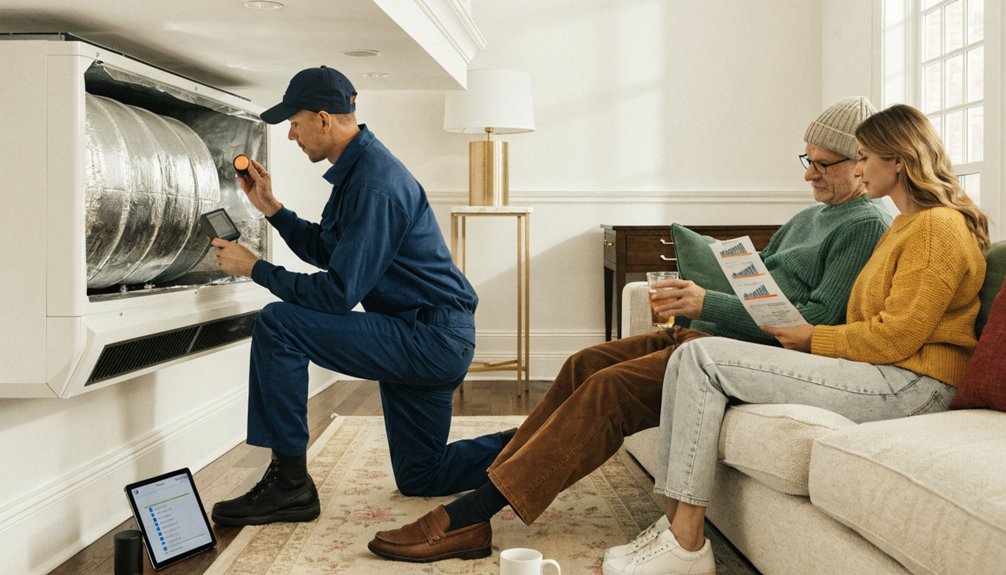
When you schedule annual ducted heating services, you’re fundamentally performing preventative maintenance that reduces energy waste, minimises component failure, and extends system lifespan—all of which translate directly into lower operating costs. You’re optimising energy efficiency by keeping airflow resistance, burner performance, and heat-exchanger transfer rates within design parameters, so the system delivers the same heat output with less electrical and gas input. From a cost analysis perspective, you’re smoothing cashflow by trading unpredictable breakdown expenditure for predictable, lower scheduled-service costs. You also avoid efficiency losses that incrementally inflate quarterly utility bills. In addition, you’re deferring capital expenditure by slowing degradation of high-value components, which extends replacement intervals and improves whole-of-life cost performance across your ducted heating asset. By maintaining air quality and preventing contamination through regular servicing, you also reduce the risk of health-related issues and the associated indirect costs over the life of the system.
What Actually Happens in a Ducted Heating Service
When a technician services your ducted heating system, they follow a defined step-by-step process that starts with system isolation and visual inspection, then progresses through testing, cleaning, adjustment, and final commissioning. During this procedure, they assess key components such as the heat exchanger, burner assembly, fan motor, return and supply ductwork, thermostats, and safety controls. You’ll see each stage carried out in sequence to guarantee the system operates within manufacturer specifications and Australian Standards. This structured process also allows the technician to detect and address performance issues early, which helps prevent costly repairs and reduces high energy bills.
Step-By-Step Service Process
From the moment a technician arrives for your annual ducted heating service, the process follows a structured sequence designed to verify safety, efficiency, and compliance. They’ll first confirm system details, service frequency, and site access, then verify gas, electrical isolation, and ventilation in line with manufacturer specifications and local codes. Technician qualifications determine what testing and calibration they’re licensed to perform.
Next, they’ll complete a staged operational check: pre-start visual assessment, start-up sequence, burner ignition verification, and airflow performance review. Test instruments are connected to measure gas pressures, temperature differential across the heat exchanger, and system static pressure. Finally, they’ll document readings, note non-conformances, reset controls to ideal setpoints, and provide you with a service report outlining any recommended remedial actions.
Key Components Inspected
A thorough ducted heating service targets specific components that determine safety, combustion quality, and airflow performance. Your technician will work through a structured duct inspection checklist, starting at the return air grille, then progressing through the heat exchanger, burner assembly, fan motor, and supply ductwork. Each item’s assessed for gas-tight integrity, proper ignition sequence, and stable operating pressures.
They’ll also quantify component wear that can escalate into major failures if ignored.
| Component Group | Key Inspection Focus |
|---|---|
| Burners & Ignition | Flame stability, electrode condition, gas pressure, combustion analysis |
| Heat Exchanger & Fan | Cracks, corrosion, temperature rise, motor amperage, bearing noise |
| Ducts & Controls | Air leaks, insulation, static pressure, thermostat calibration, safety switches |
This disciplined approach lets faults be rectified early, minimizing repair spend.
Hidden Maintenance Mistakes That Drive Up Repair Costs
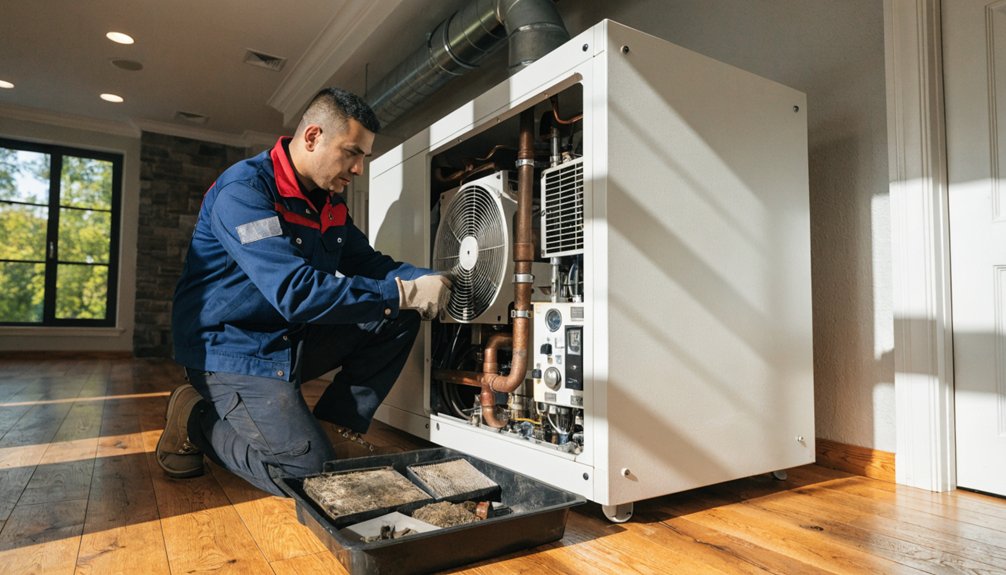
When you skip scheduled filter replacements, ignore early fault indicators like abnormal airflow or burner noise, or use incorrect methods for vent and duct cleaning, you’re setting up the system for avoidable component stress and premature failure. These maintenance errors restrict static pressure, upset airflow balance, and can cause heat exchanger, blower motor, and control board issues that are far more expensive than routine servicing. Professional repairs and regular maintenance help prevent unexpected failures, improve efficiency, and can significantly extend the lifespan of your ducted heating system. Let’s break down how each of these mistakes escalates repair costs and what procedures you should follow instead.
Skipping Filter Replacements
One of the most costly oversights in ducted heating maintenance is neglecting regular filter replacement, which directly undermines airflow, static pressure balance, and system efficiency. When you exceed the intended filter lifespan, particulate loading increases, blower motors work harder, and supply air temperatures can drift out of design range, all with serious cost implications over time.
- Clogged filters elevate external static pressure, forcing the fan to draw higher amperage and shortening motor life.
- Reduced airflow across the heat exchanger raises operating temperatures and risks premature heat exchanger fatigue.
- Dirty filters allow bypass of fine particulates, contaminating ductwork and terminal outlets.
- Increased system resistance causes longer runtimes, inflating energy consumption.
- Scheduled filter inspections and replacements maintain design airflow (L/s or CFM) and protect downstream components.
Ignoring Early Warning Signs
Filters aren’t the only early warning point in a ducted heating system; subtle performance changes often flag developing faults long before a breakdown occurs. When you ignore early detection cues—such as uneven supply air temperatures, extended burner run-times, short-cycling, or abnormal fan noise—you allow minor defects to escalate into component failures.
You should treat any new vibration, metallic rattling, or delayed ignition as a trigger for minor repairs and diagnostics. A technician can then check static pressure, gas pressure, flame signal strength, and motor amperage draw, pinpointing issues while they’re still low-cost to correct. By responding promptly to these signals, you prevent heat exchanger stress, blower motor overload, and control board faults that transform manageable service calls into major, high-cost repairs.
Improper Vent And Duct Cleaning
Although vent and duct cleaning is often marketed as a cure‑all, doing it improperly can quietly damage a ducted heating system and inflate future repair bills. When you use uncalibrated equipment or aggressive methods, you can dislodge seals, deform flex‑duct, and create new duct obstructions that cause ventilation issues and airflow imbalance. Poor technique also drives contaminants deeper, rather than removing them.
- Using high‑pressure air whips without airflow calculations can rupture weak joints.
- Vacuum units without HEPA filtration redistribute particulates into supply air.
- Inserting brushes without camera inspection risks tearing internal duct liners.
- Blocking return vents during cleaning stresses the blower motor and heat exchanger.
- Skipping post‑clean static pressure testing hides leaks that increase energy consumption and wear.
How Regular Servicing Extends Your Ducted Heating System’s Lifespan

When it’s serviced on a regular schedule, a ducted heating system operates within its designed parameters for far longer, considerably delaying component fatigue and failure. During annual servicing, a technician verifies burner calibration, gas pressure, fan speed, and airflow balance, ensuring the unit runs at specified setpoints rather than under load strain.
They’ll also inspect heat exchangers for micro‑cracks, lubricate motor bearings, tension or replace drive belts, and clean return and supply components to maintain system efficiency. By preventing thermal stress, vibration, and overheating, you’re reducing cumulative mechanical wear on critical assemblies. In Melbourne, relying on licensed technicians for annual ducted heating servicing ensures approved parts are used and safety standards are maintained, further reducing the risk of unexpected breakdowns and costly repairs.
These procedures deliver clear longevity benefits: fewer major part replacements, stable performance curves over time, and a serviceable operating life that more closely matches (or exceeds) the manufacturer’s projected lifespan.
Prevent Winter Breakdowns With Annual Ducted Heating Servicing
As temperatures drop and heating demand peaks, annual ducted heating servicing becomes your primary control measure against in‑season breakdowns. By scheduling a pre‑winter inspection, you validate winter readiness and reduce the likelihood of catastrophic component failure when loads are highest. A licensed technician will benchmark system performance, verify safe operation, and provide documented comfort assurance. Working with experienced technicians in Melbourne ensures your gas ducted heating system is serviced correctly and cost‑effectively each year.
During servicing, they’ll systematically:
- Inspect burners, heat exchanger, and ignition assembly for cracks, fouling, or flame instability
- Test limit switches, fan relays, and thermostats for correct set‑points and electrical continuity
- Check ductwork integrity, airflow balance, and register performance to prevent hotspot complaints
- Clean return air filters, blower wheel, and housings to maintain design airflow and reduce strain
- Verify gas pressure, flue draft, and combustion analysis meet manufacturer specifications
Lower Power Bills With Regular Ducted Heating Service
Even if your ducted system seems to be running fine, regular servicing’s one of the most effective ways to drive down its electrical and gas consumption per kW of delivered heat. A licensed technician will test combustion efficiency, verify gas pressure, and calibrate the thermostat so the system doesn’t short‑cycle or overrun. They’ll also clean burners, fan assemblies, and return air filters to reduce static pressure and improve airflow across the heat exchanger. This boosts energy efficiency because the unit reaches setpoint faster and operates within design parameters. Duct inspections and damper adjustments minimise leakage and bypass, ensuring conditioned air actually reaches occupied zones. The result is lower run‑times, reduced input energy, and measurable cost savings on your quarterly power and gas bills. Regular servicing also helps maintain your system’s energy star rating, maximising efficiency and keeping ongoing running costs lower than many electric heating alternatives.
When to Book Your Annual Ducted Heating Service
Ideally, you should lock in your annual ducted heating service well before peak demand in late autumn, so you’re not queueing for a technician when the first real cold snap hits. Correct service timing lets a technician perform a full operational check, combustion analysis, and airflow balancing before the system’s under continuous load. Booking your service early also gives you time to address issues like sealing drafts and improving insulation so your heating system doesn’t have to work as hard through Melbourne’s coldest months.
Key seasonal considerations and scheduling cues include:
- Shoulder seasons (early autumn or late winter) to avoid peak callout congestion
- Before consistent overnight lows below 10°C, when runtime hours spike sharply
- After any major renovation that may have disturbed ductwork or static pressure profiles
- Following noticeable changes in thermostat cycling, supply-air temperature, or fan noise
- Annually, aligned with warranty conditions and manufacturer-recommended service intervals
DIY Maintenance vs Professional Ducted Heating Servicing
Once you’ve identified the right time of year to service your ducted heating, the next step is deciding what you can safely handle yourself and what requires a licensed technician. With the right DIY Tips, you can vacuum return-air grilles, replace or clean filters, clear supply registers, and visually check flexible ducting for kinks or dislodged sections. You can also monitor thermostat calibration and listen for abnormal fan or burner noise. Regular servicing by a qualified technician helps prevent carbon monoxide buildup and ensures your heater runs safely and efficiently through winter.
However, combustion tests, gas pressure adjustment, heat-exchanger inspection, electrical continuity checks, and airflow balancing must be left to a qualified technician. Their Professional Insights, backed by diagnostic instruments and compliance with gas and electrical standards, help detect hairline cracks, unsafe CO levels, and latent faults early—significantly reducing unexpected breakdown and repair costs.
How to Choose a Reliable Ducted Heating Service Provider
So how do you sort dependable ducted heating specialists from operators who’ll compromise system performance or safety? Start by verifying service qualifications, trade licenses, and insurance specific to gas ducted heating and airflow systems. You’re looking for technicians trained in combustion analysis, static pressure testing, and manufacturer-compliant servicing procedures. Choosing providers who understand the importance of regular boiler servicing and broader HVAC maintenance helps protect efficiency, safety, and long-term operating costs across your whole heating system.
Check customer reviews with a focus on repeated patterns, not one-off complaints. Ask for a transparent scope of works, including testing, calibration, and reporting.
- Verify gas-fitting and electrical licenses
- Confirm OEM training and current service qualifications
- Review detailed customer reviews on independent platforms
- Request a written maintenance checklist and test report template
- Clarify response times, warranty on workmanship, and call-out fees
Frequently Asked Questions
Does Annual Ducted Heating Servicing Affect My Manufacturer or Extended Warranty Coverage?
Yes, annual servicing usually preserves manufacturer and extended coverage—about 70% of claims rely on proof of maintenance. You’ll maintain warranty compliance by following the scheduled service intervals and retaining detailed service documentation, including test readings, component checks, and invoices.
How Can I Tell if My Ducted System Is Incorrectly Sized for My Home?
You’ll see inconsistent room temperatures, short‑cycling, elevated static pressure, and noisy returns. Undersized duct size or oversized capacity causes airflow issues, poor heat distribution, and higher energy use. A load calculation (Manual J) and duct assessment confirm mismatch.
Are There Health or Air Quality Benefits From Yearly Ducted Heating Maintenance?
Yes, you gain health and air-quality benefits: yearly maintenance removes airborne pollutants from filters and ductwork, optimizes airflow, prevents microbial growth on coils, stabilizes humidity, and improves energy efficiency, reducing combustion by-products, particulate resuspension, and contaminant distribution throughout your home.
What Signs Show My Ducts Themselves Need Repair or Replacement, Not Just Cleaning?
You know ducts need repair, not cleaning, when visible gaps contrast with intact runs, persistent duct leaks cause pressure imbalances, rooms show chronic airflow issues, insulation’s deteriorated, metal’s corroded, joints separate under static pressure testing, and smoke-puff diagnostics reveal concealed breaches.
How Does Annual Servicing Impact the Resale Value of My Property?
It boosts perceived property maintenance standards, evidences lifecycle management of HVAC assets, and reduces buyer risk loading, so you can defend a higher resale value, streamline building inspections, and avoid discounts triggered by deferred mechanical-system remediation.