
If you’re budgeting for ducted heating installation in Melbourne, you’ll need more than a headline price. System type, home size, duct routing, and compliance work can shift costs from a standard range into a much higher bracket. You should also account for electrical upgrades, insulation, and quote variations that aren’t always like-for-like. The figures may seem straightforward at first, but that’s rarely where the real cost picture ends.
Key Takeaways
- Standard gas ducted heating installation in Melbourne typically costs $4,500 to $9,500, while larger or more complex homes can exceed $12,000.
- Installation cost depends on system capacity, home size, duct layout, register numbers, and roof or subfloor access conditions.
- Extra costs may include electrical upgrades, gas line extensions, thermostat zoning, insulation improvements, old unit removal, and asbestos-related work.
- Reverse-cycle ducted systems cost more upfront than gas heating but can deliver better long-term value through heating, cooling, and energy efficiency.
- Compare quotes carefully by matching unit capacity, duct design, inclusions, warranties, energy ratings, and removal or compliance costs.
How Much Does Ducted Heating Cost in Melbourne?
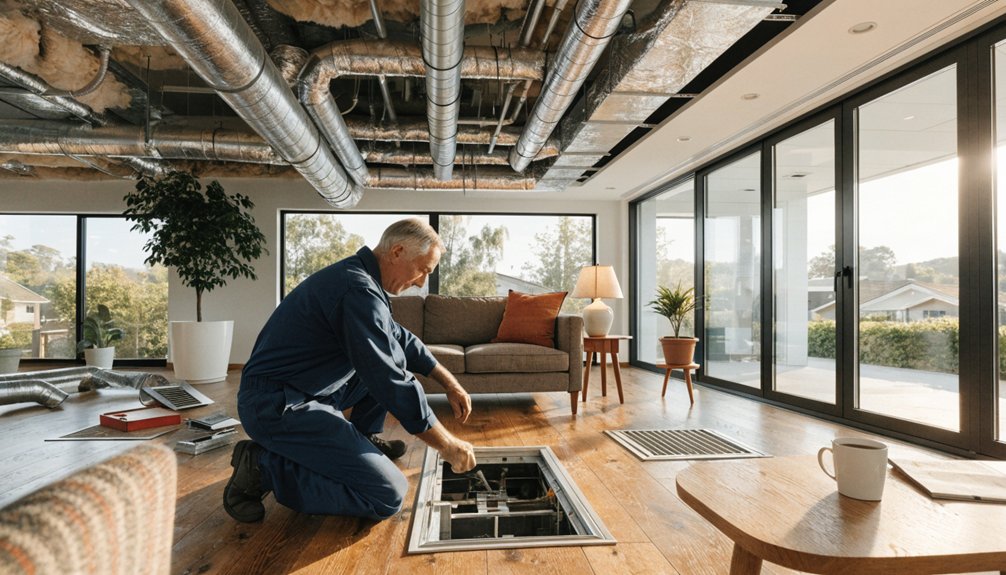
Because installation scope varies by property size, floorplan, and system type, ducted heating in Melbourne typically costs between $4,500 and $9,500 for a standard gas ducted system, while higher-capacity or more complex installations can exceed $12,000. Your final price usually reflects unit capacity, duct layout, ceiling or subfloor access, register count, controls, and labour compliance requirements. You should also allow for electrical connection, thermostat placement, return-air provisions, insulation upgrades, and commissioning. These factors directly affect Energy efficiency and ongoing operating performance. If you’re comparing quotes, check whether removal of old equipment, permit obligations, and balancing are included. One of the key Ducted heating benefits is whole-home temperature consistency, but only if sizing and airflow calculations are completed correctly. A compliant installer should provide itemised pricing, warranty terms, and efficiency documentation. When budgeting, also factor in ongoing ducted heating maintenance, as regular servicing helps prevent unexpected failures, improves safety, and extends system lifespan.
Which Ducted Heating System Costs More?
Once you’ve looked at broad installation ranges, the next cost question is which system type sits higher on the quote. In Melbourne, you’ll usually find refrigerated reverse-cycle ducted systems priced above gas ducted heating, because they integrate heating and cooling and use more complex equipment. Gas systems often present a lower upfront figure, but they don’t provide cooling.
- Gas ducted heating: lower initial outlay, heating only.
- Reverse-cycle ducted: higher purchase and install cost, dual-function operation.
- Add-on cooling with gas: can approach or exceed reverse-cycle pricing.
- Premium inverter models: highest bracket, but stronger energy efficiency.
If you’re comparing strictly by installed price, reverse-cycle generally costs more. If you’re comparing long-term value, energy efficiency and system longevity can narrow the gap over time for many households substantially. Choosing reverse‑cycle systems with ENERGY STAR certification can further reduce running costs and environmental impact over the life of the unit.
What Affects Ducted Heating Installation Cost?
Several installation variables determine what you’ll pay for ducted heating, and the final cost usually depends less on the unit alone than on the design and labour required to fit it correctly. Your home’s floor area, ceiling height, layout complexity, and insulation levels all affect system sizing and zoning requirements. Access conditions also matter. If your roof space, subfloor, or wall cavities are restricted, installation takes longer and may require different routing methods. Duct size influences airflow performance, static pressure, and register placement, so it must match the heater’s capacity and your room load calculations. Return air design, grille locations, and thermostat positioning also affect compliance and control accuracy. If you prioritise energy efficiency, you’ll likely need tighter design tolerances, better sealing, and more careful commissioning for reliable long-term operation. Incorporating thorough energy audits before design and installation can help right-size the system, minimise waste, and improve long-term heating efficiency and operating costs.
What Extra Costs Come With Ducted Heating?
While the base installation price covers the heater, ductwork, and standard labour, extra costs often arise from electrical upgrades, gas line extensions, upgraded zone controls, ceiling or roof access works, and disposal of an existing system.
- You may need switchboard upgrades if the existing electrical capacity doesn’t meet current compliance requirements.
- Gas line alterations can increase labour and installation materials, especially where meter distance or access is difficult.
- Premium thermostats and zoning modules add control flexibility, but they also raise upfront costs.
- Restricted roof space, asbestos risks, plaster repairs, and old unit removal can trigger additional site-specific charges.
You should also allow for permit-related work where applicable, plus future maintenance expenses such as filter servicing, fan inspections, and burner checks after commissioning. Partnering with specialists in central heating repair and maintenance in Melbourne can also help you budget realistically for these long‑term running and servicing costs.
How Do You Compare Ducted Heating Quotes?

How do you compare ducted heating quotes accurately? Start by checking whether each quote specifies the same scope: unit capacity, duct layout, zoning, return air provisions, controller type, and installation labour. Without matched inclusions, quote evaluation isn’t reliable.
Next, confirm compliance details. You should compare energy rating, system efficiency, manufacturer warranty, and whether the installer is licensed, insured, and experienced with Melbourne regulations. Ask if electrical upgrades, ceiling access issues, old system removal, permits, and commissioning are included or excluded. Review brand model numbers so you’re comparing equivalent equipment, not generic descriptions. When comparing quotes, also consider whether the installer offers ongoing servicing that includes safety checks to prevent gas leaks and carbon monoxide risks in your home. Finally, assess total lifecycle value, not just upfront price. A lower quote can mean reduced efficiency, shorter warranty cover, or omitted works that create variation charges after installation. Request written clarification before approving anything.
Frequently Asked Questions
How Long Does Ducted Heating Installation Usually Take?
Usually, you’ll need one to two days; like a relay runner’s baton pass, timing matters. Your installation timeline depends on installation complexity—single-storey homes often finish faster, while multi-zone retrofits can extend works to three days.
Is Ducted Heating Suitable for Allergy Sufferers?
Yes, it can suit you if filtration is effective and system maintenance is consistent. You’ll improve air quality by using high-grade filters, sealed ducts, and regular cleaning to minimise dust, pollen, and circulating allergens indoors.
Can Ducted Heating Be Added to an Existing Home?
Yes—you can, like fitting arteries through a house: ducted heating can be retrofitted to existing homes. You’ll gain Ducted heating benefits, but Installation challenges include roof space, floor access, zoning design, and compliant vent placement.
How Often Should Ducted Heating Systems Be Serviced?
You should service your ducted heating system annually, with additional inspections if usage is heavy or performance drops. Proper system maintenance supports efficiency, safety, and warranty compliance, while correct service frequency helps detect faults before failures occur.
Does Ducted Heating Work Well With Solar Power?
Yes—like a mill drawing steady wind, your ducted heating can work well with solar power, provided system sizing and load profiles align. You’ll improve solar efficiency, reduce grid reliance, and achieve measurable energy savings overall.