
Most commercial heating failures don’t start with a shutdown; they begin with small efficiency losses your team may not notice. If you catch uneven heat, short cycling, or thermostat drift early, you can prevent downtime, protect comfort, and avoid larger repair costs. The right service strategy combines inspection, fast correction, and planned maintenance—but the systems that fail most often tend to follow a pattern.
Key Takeaways
- Monitor temperatures, airflow, and maintenance logs to catch uneven heating, drifting setpoints, and other early warning signs before failures occur.
- Use experienced commercial heating technicians to diagnose ignition, airflow, controls, and heat exchanger issues safely and accurately.
- Schedule preventive maintenance and seasonal tune-ups to reduce breakdowns, improve efficiency, and support reliable system startup.
- Choose licensed, insured providers with 24/7 emergency response, stocked vehicles, and clear communication during heating failures.
- Upgrade controls, thermostats, and zoning strategies to lower energy costs, improve comfort, and detect faults earlier.
Spot Commercial Heating Problems Early
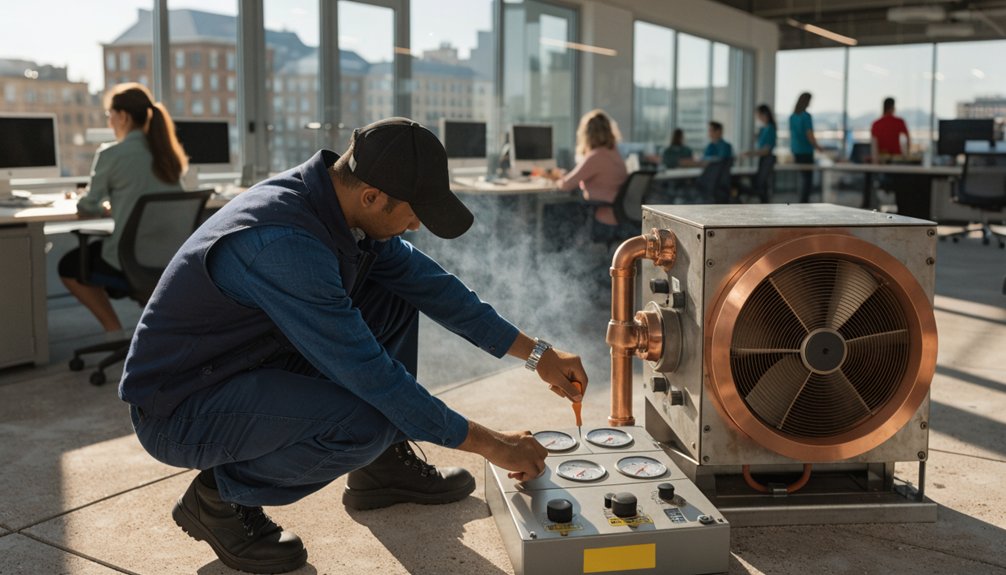
Because commercial heating systems run under heavier loads and longer operating hours, small performance changes can signal larger issues before a failure occurs. You should investigate uneven heating, a faulty thermostat, inadequate insulation, and air duct leaks as early warning signs. Consistent temperature monitoring helps you spot drifting setpoints, short cycling, or isolated cold zones before they escalate. You can strengthen detection by keeping detailed maintenance logs, scheduling energy audits, and using employee training to improve reporting of unusual odors, airflow changes, or startup delays. These observations support targeted system upgrades when components no longer perform efficiently. By identifying inefficiencies early, you reduce wasted energy, improve occupant comfort, and protect equipment lifespan. A disciplined, data-driven approach lets you correct minor faults before they compound into costly operational disruptions later. Regularly reviewing building-wide energy consumption data helps reveal hidden heating inefficiencies and confirms whether corrective actions are actually improving system performance over time.
Prevent Downtime With Heating Services
Once you’ve identified early warning signs, the next step is using professional heating services to prevent unplanned downtime before minor faults interrupt operations. You need technicians who can test ignition components, verify airflow, inspect heat exchangers, and calibrate controls before performance drops or shutdowns occur. Targeted service helps you correct inefficiencies that strain equipment and raise operating costs. By resolving burner issues, sensor faults, pressure imbalances, and distribution problems early, you protect heating efficiency and keep indoor conditions stable. That matters because temperature fluctuations can disrupt production areas, affect sensitive inventory, and reduce employee comfort. Professional diagnostics also confirm whether your system is meeting load demands safely and consistently. When your heating equipment runs reliably, you reduce interruptions, avoid emergency service calls, and support a more predictable operating environment overall. In Melbourne, partnering with specialists in central heating repair like Johns Refair ensures expert diagnostics, maintenance, and installation support tailored to your business’s specific heating demands.
Schedule Commercial Heating Maintenance
You can reduce failure risks and stabilize heating performance by implementing a preventive service plan for your commercial system. Scheduled maintenance visits help you identify wear, airflow restrictions, and control issues before they disrupt operations. With seasonal system tune-ups, you’ll improve efficiency, support reliable startup, and keep critical components operating within specification. Regular commercial boiler inspections also help ensure safety compliance, catch efficiency issues early, and prevent minor problems from escalating into costly breakdowns.
Preventive Service Planning
When you schedule commercial heating maintenance as part of a preventive service plan, your system can be inspected, cleaned, calibrated, and tested before minor wear turns into downtime, safety issues, or rising energy costs. You reduce failure risk by aligning service intervals with runtime, equipment age, occupancy demands, and manufacturer specifications.
A structured plan lets you track burner performance, airflow balance, ignition reliability, heat exchanger condition, and control accuracy. With documented preventive checks and clear maintenance schedules, you can catch drifting setpoints, blocked filters, loose electrical connections, worn belts, and abnormal combustion readings early. That data supports faster repairs, fewer emergency calls, and better budget forecasting. You also protect indoor comfort by correcting inefficiencies before they affect temperatures, ventilation, or system responsiveness across occupied zones in your facility.
Seasonal System Tune-Ups
Seasonal system tune-ups build on your preventive service plan by timing inspections and adjustments to changing heating demand, outdoor conditions, and operating loads. You can catch calibration drift, airflow restrictions, ignition issues, and control faults before they trigger costly interruptions or comfort complaints across your facility.
During each visit, your contractor should follow a detailed maintenance checklist covering burners, heat exchangers, belts, filters, safeties, thermostats, electrical connections, and venting. You’ll want combustion testing, amperage readings, lubrication, and sensor verification completed and documented. These tune-ups restore energy efficiency, stabilize temperatures, and reduce strain on critical components. They also help you prepare for occupancy shifts, colder weather, and extended run times. By scheduling service seasonally, you’re reducing emergency calls while improving reliability, performance, and budget predictability year-round.
Fix Commercial Heating Issues Fast
Because heating failures can escalate from minor faults to full system shutdowns, fast commercial service helps isolate the root cause, stabilize indoor conditions, and limit disruption to your operations. You need prompt diagnostics when airflow drops, burners short-cycle, controls misread temperatures, or unusual noises signal component stress. Early response protects equipment and preserves occupant comfort.
With targeted HVAC troubleshooting, you can identify failed igniters, clogged filters, sensor errors, belt wear, or circulation problems before they trigger wider damage. Technicians should verify electrical connections, gas pressure, thermostat calibration, heat exchanger condition, and safety controls to restore reliable output. These commercial heating solutions don’t just correct immediate faults; they also reduce repeat breakdowns, improve system efficiency, and help you maintain consistent heating performance during peak demand and colder weather conditions. Proactive attention to energy efficiency ratings and aging equipment can also reveal when upgrading is more cost-effective than repeated repairs over the long term.
Choose the Right Heating Service Provider
When you choose a heating service provider, you need a team with proven industry experience to diagnose system risks accurately and prevent repeat failures. You should also verify current licensing and insurance, since those credentials protect your business and confirm the work meets code and safety standards. Make sure the provider offers emergency response availability, so you can reduce downtime and restore heat before disruptions escalate. Look for providers who emphasise regular heater servicing to enhance performance, reduce energy costs, and minimise safety risks.
Industry Experience Matters
Experience is a practical filter for choosing a commercial heating service provider, especially in facilities where uptime, load demands, and code compliance directly affect operations. You need a team that’s seen similar systems, seasonal failure patterns, and occupancy pressures before they become outages. Experienced providers track industry trends and apply service innovations that improve diagnostics, controls, and preventative scheduling.
- They recognize recurring faults in boilers, RTUs, hydronic loops, and make-up air units.
- They benchmark runtime, airflow, combustion, and heat exchanger performance against expected ranges.
- They plan maintenance windows around production, tenant comfort, or customer traffic.
- They anticipate part lead times and recommend staged replacements before failures spread.
That experience helps you reduce nuisance shutdowns, protect indoor conditions, and make repair-versus-replacement decisions with fewer surprises and lower operational risk.
Licensing And Insurance
Although pricing and response time often get the most attention, licensing and insurance are baseline risk controls you shouldn’t overlook when choosing a commercial heating service provider. You need proof that the contractor meets local licensing requirements and carries current insurance coverage. That protects you from code violations, unsafe workmanship, and liability exposure during installation, maintenance, or repairs.
| Check | Why it matters |
|---|---|
| Active license | Confirms legal authorization |
| Liability insurance | Limits property-loss risk |
| Workers’ comp | Reduces claim exposure |
| Certificate dates | Verifies current status |
Before signing, ask for license numbers, policy certificates, and named insured details. Then verify them with state agencies and carriers. That simple due diligence helps you prevent compliance gaps, control financial risk, and keep your heating infrastructure safer.
Emergency Response Availability
Because heating failures rarely happen on a convenient schedule, you need a provider that can respond fast, diagnose accurately, and stabilize your system before downtime spreads into safety, comfort, or operational issues. Strong emergency preparedness means you’re not waiting for parts, approvals, or guesswork when temperatures drop.
- 24/7 dispatch with defined rapid response windows
- Technicians trained on commercial controls, burners, and safeties
- Stocked service vehicles for common failure points and temporary fixes
- Clear escalation plans, communication updates, and post-incident reporting
When you evaluate availability, ask how they triage alarms, verify root causes, and protect occupied spaces during repairs. A dependable partner won’t just restore heat; they’ll isolate faults, reduce repeat failures, and help you build response protocols that strengthen resilience across your facility.
Upgrade Your Commercial Heating System
When your current commercial heating system struggles with uneven temperatures, rising utility costs, or frequent repairs, an upgrade can improve reliability, efficiency, and control across your facility. You’ll benefit from heating technology advancements that support diagnostics, zoning, and safer operation. Planning energy efficiency upgrades also helps you prevent component failures and maintain consistent performance. Leveraging modern inverted ducted heating can also enhance energy conservation and indoor air quality while maintaining consistent comfort throughout the building.
| Upgrade Area | Preventative Benefit | Operational Result |
|---|---|---|
| Controls | Early fault detection | Better scheduling |
| Burners | Cleaner combustion | Stable output |
| Sensors | Accurate monitoring | Fewer disruptions |
Before replacing equipment, you should assess load demands, duct condition, ventilation, and control compatibility. That lets you specify the right capacity, avoid short cycling, and improve serviceability. With a proactive upgrade plan, you’ll reduce downtime risks and strengthen comfort management across occupied spaces.
Reduce Energy Costs With Smarter Heating
How do you lower heating expenses without sacrificing comfort or uptime? You start by controlling demand, eliminating waste, and verifying performance. smart thermostats let you schedule temperatures by occupancy, zone workloads, and business hours, so you don’t heat empty spaces. Energy audits reveal where your system loses efficiency, from duct leakage to short cycling and poor calibration. With that data, you can target corrections before they raise operating costs or disrupt operations. Integrating smart thermostats with your HVAC system can further cut energy costs by up to 25% while maintaining comfortable working conditions.
- Program zone setbacks for unoccupied offices, storage areas, and overnight periods.
- Calibrate sensors and thermostats to prevent overheating and uneven distribution.
- Seal duct leaks and insulate piping to reduce heat loss during delivery.
- Monitor runtime trends to catch inefficiencies before they become expensive failures.
Smarter heating protects comfort, stabilizes energy use, and supports reliable daily business performance consistently.
Create a Winter Heating Service Plan
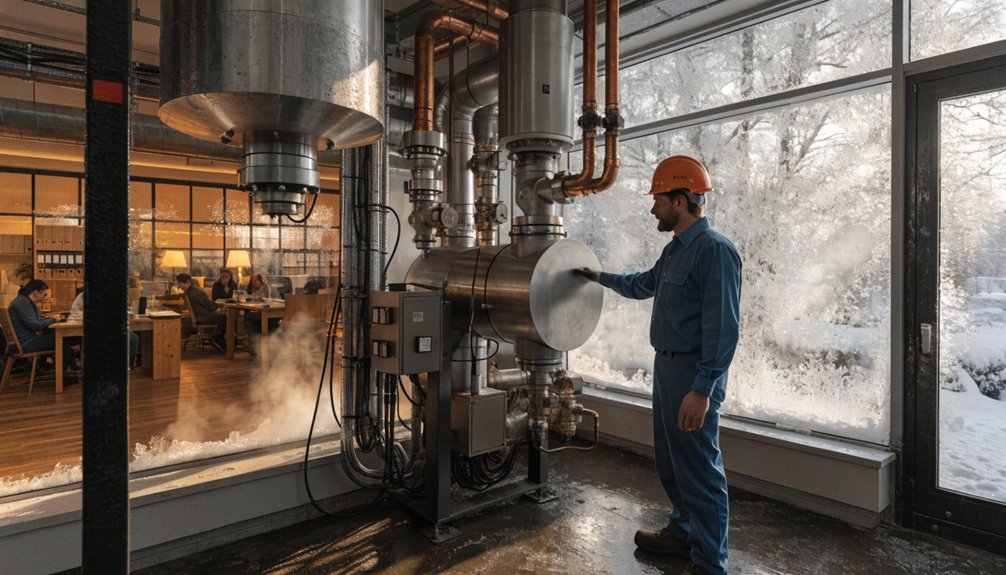
Before winter demand peaks, you need a heating service plan that sets inspection dates, assigns response priorities, and defines maintenance tasks for each system component. Build your schedule around boiler testing, burner calibration, filter changes, thermostat verification, airflow balancing, and controls diagnostics. You’ll reduce unplanned outages by documenting baseline performance and flagging parts nearing failure. Use winter readiness strategies to sequence preventive work before occupancy surges and freezing temperatures. Your heating service checklist should include fuel supply confirmation, leak inspection, venting clearance, sensor testing, belt tension, lubrication points, and emergency shutdown procedures. Assign escalation paths for critical zones, tenant-facing spaces, and temperature-sensitive operations. When you standardize service intervals and contractor communication, you’ll improve uptime, protect comfort, and keep repairs targeted, faster, and less disruptive all season long. Proactive professional maintenance ahead of the coldest months helps identify failing components early and keeps commercial heating systems operating safely and efficiently throughout winter.
Frequently Asked Questions
How Often Should Businesses Replace Commercial Heating Filters?
You should replace commercial heating filters every 1–3 months, depending on system load, occupancy, and air quality. Consistent filter maintenance protects equipment, supports energy efficiency, and helps you prevent airflow restrictions, wear, and costly disruptions.
Are Emergency Heating Services Available Outside Regular Business Hours?
Yes, you can access emergency heating services outside regular business hours through providers offering after hours availability and rapid emergency response. You’ll minimize equipment risk and occupancy disruption by confirming technician coverage, dispatch protocols, and service agreements.
What Certifications Should Commercial Heating Technicians Have?
You’ll want technicians with gently rigorous certification types: EPA 608, NATE, HVAC Excellence, and state licensing. These technician qualifications help you prevent minor setbacks, guarantee code compliance, improve diagnostics, and support safer, more reliable system performance.
Can Heating Services Help Meet Workplace Safety Regulations?
Yes, heating services can help you meet workplace safety regulations through scheduled heating inspections, combustion testing, airflow verification, and documentation. You’ll strengthen workplace compliance, reduce hazard exposure, and address deficiencies before they trigger violations or incidents.
Do Heating Service Contracts Usually Include Priority Response Times?
Yes, you’ll usually find priority response times in service agreements, though terms vary. Review contract benefits and response expectations carefully, because defined escalation windows, coverage hours, and preventative maintenance clauses help you reduce failure risk and downtime.