
If your heating system smells of gas, makes unusual noises, or struggles to keep rooms warm, you shouldn’t ignore it. These signs can point to leaks, component faults, or unsafe combustion that need prompt, compliant attention. A qualified heating technician can test pressure, inspect controls, and check flue performance to identify the cause and restore safe operation. The next step depends on what those checks uncover.
Key Takeaways
- If you smell gas, hear hissing, or see pilot outages, shut off gas, ventilate, evacuate, and call a Gas Safe engineer immediately.
- Poor heating performance, short cycling, uneven temperatures, or weak airflow often indicate dirty burners, low pressure, thermostat faults, or sludge buildup.
- Qualified technicians diagnose issues through visual inspection, ignition and flame checks, pressure testing, thermostat calibration, and flue analysis.
- Choose a licensed, insured heating service with proven gas system experience, carbon monoxide testing, and fast emergency response capability.
- Compare transparent quotes that clearly include leak detection, ventilation checks, hazard isolation, and documented safety recommendations.
What Heating Problems Need Urgent Repair?

When your heating system shows signs of a gas leak, won’t start, or begins cycling irregularly, it needs urgent repair to protect your safety and prevent equipment damage. You should also act quickly if airflow drops sharply, burner flames appear unstable, control boards fail, or safety shutoffs trip repeatedly. These faults can overheat components, strain motors, and compromise combustion performance. You also shouldn’t delay repairs if you notice weak or yellow pilot flames, which often indicate pilot light problems that can prevent proper ignition and safe combustion. You shouldn’t ignore banging noises, burning odors, electrical arcing, or a blower that runs continuously without reaching set temperature. Qualified technicians can diagnose ignition faults, limit switch failures, blocked vents, and cracked heat exchangers using approved procedures. During emergency repairs, they’ll isolate power, verify ventilation, and apply essential safety measures to keep your system compliant, stable, and ready to operate reliably again under load.
Could Your Heating System Have a Gas Leak?
Could Your Heating System Have a Gas Leak?
Some urgent heating faults point directly to a possible gas leak, and you shouldn’t try to confirm or fix one yourself. If you smell gas near your boiler, hear hissing around pipework, or notice pilot outage with no clear cause, treat it as an immediate hazard. Gas leaks can create fire, explosion, and carbon monoxide risks within enclosed spaces. As part of a safety-first approach, annual gas leak checks by qualified professionals help detect issues early and maintain a safe, efficient heating system over time.
Your safest response is to turn off the gas supply if accessible, open windows, avoid switches or naked flames, evacuate, and call a qualified Gas Safe engineer. Professional leak detection uses calibrated instruments to locate and verify escaping gas without increasing danger. During attendance, engineers follow strict safety measures, isolate the appliance, test system integrity, and confirm whether your heating equipment can be returned to service safely and legally.
Which Heating Faults Reduce Performance?
Although a complete breakdown is obvious, many heating faults reduce performance more subtly by lowering heat output, increasing fuel use, or making temperature control inconsistent. You might notice rooms warming slowly, short cycling, uneven temperatures, or higher bills without any total failure occurring at all.
Common causes include a dirty burner, restricted airflow, low system pressure, circulation pump wear, thermostat issues, or partially blocked pipework. A cracked or deteriorating heat exchanger can also impair efficient heat transfer and compromise safe operation. In gas systems, unstable ignition or flame quality may reduce combustion efficiency and output. You may also experience performance loss from sludge buildup, radiator cold spots, or faulty motorised valves. Prompt attention helps restore efficiency, protect components, and keep your heating system operating safely, reliably, and within expected performance standards. In many cases, simply scheduling regular maintenance can prevent these performance-reducing faults from developing into more serious and costly failures.
How Do Heating Technicians Diagnose the Issue?
A heating technician diagnoses the issue by combining visual inspection, operational testing, and gas-safety checks to identify both the immediate fault and any underlying cause. You’ll have pipework, burners, seals, and ventilation checked first, then controls assessed for safe, compliant function.
| Check | Method | Purpose |
|---|---|---|
| Gas supply | pressure testing | Confirms leaks, regulator faults |
| Controls | thermostat calibration | Verifies accurate temperature response |
| Combustion | Flue analysis | Checks safe, efficient burning |
Next, your technician observes ignition, flame stability, circulation, and heat output under load. They’ll compare readings against manufacturer specifications, inspect error codes, and test safety devices, including shut-off valves and limit stats. This process helps you understand whether the fault is isolated, intermittent, or linked to wider system conditions. Regular diagnostic visits also reduce the risk of carbon monoxide leaks by ensuring proper combustion, ventilation, and ongoing gas line integrity.
Should You Repair or Replace Your Heating System?
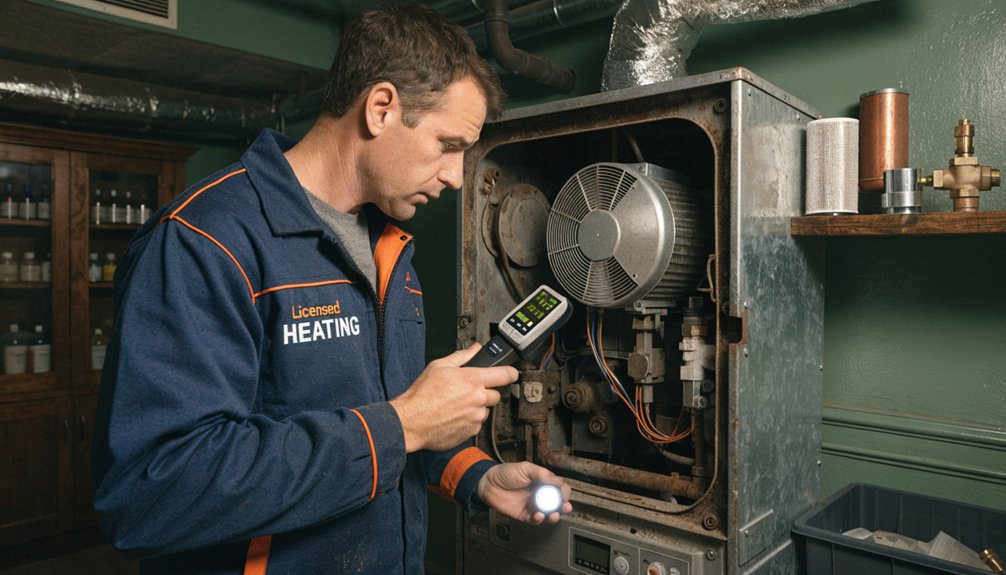
When deciding whether to repair or replace your heating system after a gas leak, the key factors are safety, age, condition, and cost-effectiveness. If the leak caused limited damage and core components remain compliant, a repair may restore safe operation. You’ll also want to compare repair costs against remaining system lifespan. You should also consider the long-term savings that can come from energy-efficient heaters, as newer systems often reduce running costs and improve comfort.
Replacement becomes more practical when repeated faults, corrosion, heat exchanger damage, or obsolete controls affect reliability. In those cases, repairs can become uneconomical and may reduce heating efficiency over time. If your unit is older and parts are harder to source, replacement can improve performance, safety monitoring, and energy use.
A qualified assessment should confirm whether the appliance can meet current safety standards after remedial work. With the right recommendation, you can protect your property and restore dependable heating confidently.
How Do You Choose a Qualified Heating Service?
When you choose a qualified heating service for a gas leak, you should first verify that the company is properly licensed and insured to meet safety and regulatory requirements. You’ll also want to confirm the technician’s experience with gas heating systems, since specialized expertise supports accurate diagnostics and compliant repairs. Finally, compare response times and pricing so you can secure prompt service and clear, reasonable cost expectations. It’s also wise to confirm that your chosen provider offers comprehensive carbon monoxide testing as part of their heating services, to ensure early detection of dangerous leaks and protect occupants’ health.
Verify Licensing And Insurance
Before any work starts on a suspected gas leak, verify that the heating service holds the required state or local HVAC and gas-fitting licenses and carries current liability and workers’ compensation insurance. This protects you if property damage or on-site injuries occur and confirms the company operates under applicable safety regulations.
Ask for license numbers, insurer names, policy limits, and expiration dates, then confirm them with the issuing agency or carrier. You shouldn’t rely on verbal assurances alone. Valid service credentials show that the company meets legal standards for gas-related work and can be held accountable if compliance issues arise.
If a contractor hesitates to provide documentation, treat that as a warning sign. Clear proof of licensing and insurance helps you choose a compliant provider and reduces unnecessary risk.
Assess Gas Heating Expertise
How can you tell whether a heating service is truly qualified to handle a gas leak? You should look for proven experience with gas boilers, furnaces, pipework, regulators, and combustion diagnostics. A competent technician won’t rely on guesswork; they’ll follow testing procedures, isolate hazards, and document findings clearly. Their knowledge should align with current codes, manufacturer specifications, and gas safety requirements.
You can also assess expertise by asking whether the company performs flue analysis, pressure testing, leak detection, and ventilation checks. Qualified engineers should explain fault causes in plain terms and recommend compliant corrective work. They should also provide practical maintenance tips to help you reduce future risks and performance issues. When a service demonstrates methodical inspection skills, you can feel more confident in their technical judgment.
Compare Response And Pricing
Although price matters, you shouldn’t choose a heating service for a gas leak on cost alone; response capability, emergency availability, and the scope of diagnostic work are just as important.
When you make a cost comparison, check what’s included: leak detection methods, appliance isolation, pressure testing, ventilation checks, and written safety recommendations. A low quote may exclude essential compliance work or after-hours attendance. You should also evaluate service response times, especially for suspected gas escapes or heating failure in cold weather. Ask whether the engineer offers 24/7 callouts, estimated arrival windows, and access to calibrated testing equipment. Reputable providers explain charges clearly, confirm qualifications, and prioritise immediate risk control before repairs. That balance of transparent pricing and dependable service response helps you choose safely and confidently.
Frequently Asked Questions
How Long Does a Typical Heating Repair Appointment Take?
You can expect a typical heating repair appointment to take 1–3 hours; simple faults finish faster, complex issues take longer. Your appointment duration depends on diagnosis, parts access, and repair complexity, ensuring safe, compliant, thorough service.
Do Home Warranties Usually Cover Heating System Repairs?
Yes, you’ll usually find home warranties cover some heating system repairs, but you should review warranty limitations and coverage exclusions carefully. You’re typically covered for normal wear, while pre-existing conditions, neglect, or code violations often aren’t.
Can Smart Thermostats Improve Heating Efficiency and Reduce Faults?
Yes, you can improve heating efficiency and reduce faults with proper smart thermostat setup. You’ll gain smart thermostat benefits like optimized cycling, remote diagnostics, and energy savings, while maintaining manufacturer settings and compliant operation for reliability.
What Maintenance Helps Prevent Future Heating System Breakdowns?
You’ll prevent future heating breakdowns through preventive maintenance: schedule annual system inspections, replace filters, clean burners, test controls, check airflow, lubricate moving parts, and verify safe operation. That keeps performance stable, compliant, and reduces unexpected faults.
Are Financing Options Available for Major Heating Repairs or Replacements?
Yes—because major repairs never arrive at inconvenient times, you’ll often find financing plans available for qualified customers. They can spread repair costs across manageable payments, subject to credit approval, helping you restore compliant, reliable heating faster.