
Like a chain with one weak link, your heating system can’t deliver steady comfort when airflow is restricted or heat distribution is off. You might notice cold rooms, weak vents, or longer run times, but those symptoms usually point to specific faults in ducts, filters, blower performance, or system balance. Pinpointing the exact cause takes a methodical check of how air moves through your home—and what that reveals may explain more than you expect.
Key Takeaways
- Heating services inspect filters, dampers, registers, and return vents to find airflow restrictions causing weak heat delivery.
- Technicians check ductwork for leaks, crushed sections, and hidden blockages that reduce warm air reaching certain rooms.
- Blower motor testing and static pressure measurements help confirm whether the system can move enough air efficiently.
- Uneven rooms may need vent adjustments, duct sealing, insulation improvements, or draft sealing around windows and exterior walls.
- Seasonal maintenance, filter changes, and thermostat calibration help prevent recurring airflow problems and uneven heating.
What Causes Uneven Heating and Weak Airflow?
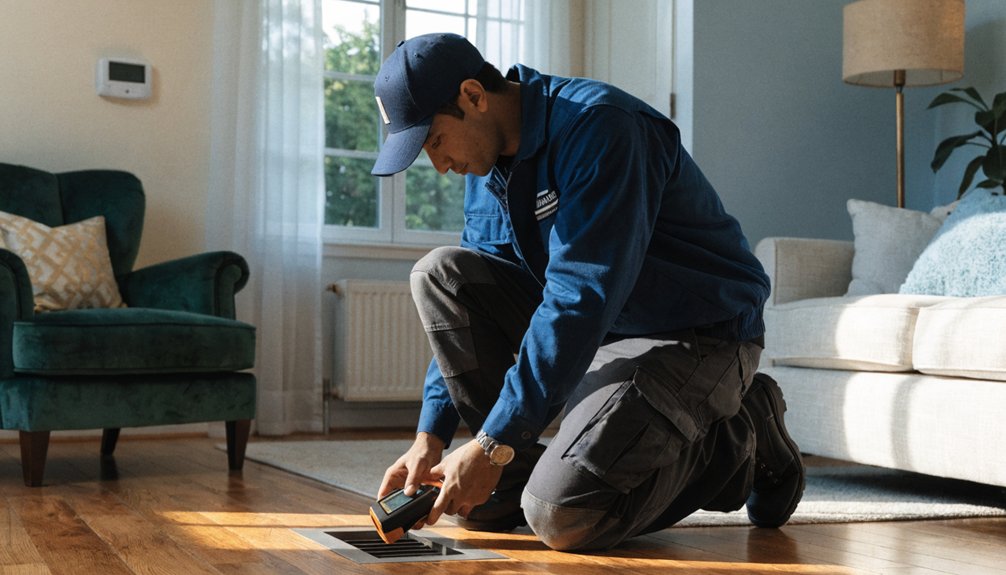
When some rooms stay chilly while others heat normally, the problem usually comes down to airflow restriction, heat delivery loss, or system imbalance. You might have clogged filters, closed dampers, undersized return paths, or leaky ducts that reduce supply volume before warm air reaches distant rooms. Temperature fluctuations also happen when registers are blocked by furniture or when blower performance drops. In many older homes, deteriorated insulation and air leakage around windows and doors significantly increase heating loads in specific rooms, creating persistent cold spots and higher energy use.
You can also see uneven heating from insulation issues, especially in attics, crawlspaces, and exterior walls where heat escapes faster than your system can replace it. Drafts around windows, aging weatherstripping, and poorly sealed penetrations increase load in specific areas. In multi-story homes, rising heat can over-warm upper levels while lower rooms stay cold. Thermostat placement near drafts or sunlight can further distort system response and room comfort overall.
How Heating Pros Diagnose Airflow Problems
When you have uneven warmth, heating pros start by checking your ductwork and vents for leaks, blockages, poor routing, or closed registers that restrict airflow. They’ll also measure static pressure across the system to see whether the blower is pushing against excessive resistance. From those readings, you can pinpoint whether the problem is in the ducts, the filter, the coil, or the equipment setup. Regular professional servicing helps catch these airflow issues early, preventing system breakdowns and maintaining efficient operation.
Ductwork And Vent Checks
Because uneven room temperatures often trace back to restricted or unbalanced airflow, heating pros start by inspecting the ductwork and supply and return vents for blockages, leaks, disconnected sections, crushed flex duct, and dampers set incorrectly. You’ll also see them evaluate duct insulation and vent placement, since heat loss and poor register location can skew comfort room to room.
| Check | What it can reveal |
|---|---|
| Closed register | Reduced delivery |
| Blocked return | Starved circulation |
| Duct leak | Lost heated air |
| Crushed flex | Restricted airflow |
| Bad damper setting | Imbalance |
They’ll confirm furniture, rugs, or curtains aren’t covering grilles and that returns aren’t undersized for the space. In attics or crawlspaces, they’ll trace runs for gaps, kinks, and loose connections that degrade distribution.
Static Pressure Testing
If the ducts and vents look normal, a heating pro will often move to static pressure testing to see how hard your system is working to push air through the equipment and ductwork. This test shows whether resistance inside the system is too high for proper circulation.
During static pressure measurement, your technician places probes near the blower, filter, coil, and supply plenum. By comparing readings to the manufacturer’s rated limits, you can pinpoint hidden restrictions, undersized returns, clogged filters, dirty coils, or dampers that aren’t positioned correctly. The numbers also help confirm whether the blower speed is set right. As part of a full airflow assessment, static pressure data gives you a reliable baseline, so repairs target the actual bottleneck instead of relying on guesswork or assumptions during service calls.
Heating Services That Improve Weak Airflow
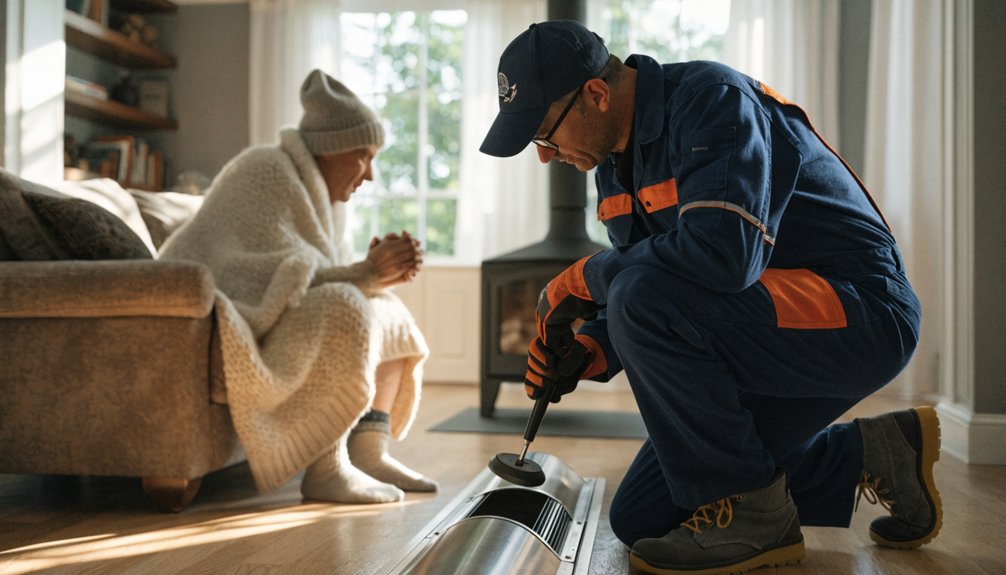
If your system has weak airflow, heating service typically starts with checking for duct leaks, separated joints, and restrictions that reduce delivered air volume. Your technician may also test blower motor output, speed settings, and amperage to confirm the fan is moving air at the required rate. If airflow is still limited, replacing a loaded air filter is a basic but necessary correction that can restore proper circulation. Regular ducted heating maintenance helps improve airflow consistency and indoor air quality by identifying blocked ducts and other issues before they escalate.
Ductwork Repairs And Sealing
Start with the ductwork, since weak airflow often traces back to leaks, crushed sections, loose connections, or heavy dust buildup that restricts static pressure and reduces the amount of heated air reaching each room. You should have the system pressure-tested and visually inspected at trunks, branch lines, boots, and seams.
Technicians can seal gaps with mastic or approved tape, reconnect separated joints, and replace collapsed runs that create airflow obstructions. If sections pass through attics or crawlspaces, damaged duct insulation should be repaired too, because heat loss along supply runs can make rooms feel underheated even when airflow seems acceptable. You’ll also want return ducts checked for hidden leaks, disconnected plenums, and debris accumulation. Correcting these faults restores balanced delivery, improves register output, and helps your heating system distribute warmth more evenly.
Blower Motor Performance
Because the blower motor is what drives heated air through the system, declining motor performance can leave some rooms underheated even when the furnace is producing adequate heat. You may notice weak register airflow, slow startup, or inconsistent fan speeds before complete failure.
- Technicians test amperage draw to see whether the motor is overworking under normal heating demand.
- They inspect capacitor function, bearings, and wheel balance, since vibration reduces airflow and stresses components.
- Reviewing blower motor types helps determine whether your system uses PSC or ECM operation, which affects efficiency and control.
- Scheduled blower motor maintenance includes lubrication where applicable, electrical connection checks, and speed-setting adjustments to restore proper circulation.
If airflow improves after service, you’ll usually get better room-to-room temperature balance and quieter furnace operation overall.
Air Filter Replacement
Although blower issues can restrict circulation, a clogged air filter is often the faster, simpler cause of weak airflow and uneven heating. When the filter loads with dust, static pressure rises, supply volume drops, and your furnace has to work harder to move conditioned air through the duct system.
You should inspect the filter monthly during heating season and replace it when discoloration, debris buildup, or pressure-related symptoms appear. Restricted airflow can overheat the heat exchanger, shorten component life, and worsen room-to-room temperature imbalance. Proper filter maintenance restores airflow, supports stable burner operation, and helps protect blower performance. It also improves air quality by reducing recirculated particulates. If airflow stays weak after replacement, you’ll need further diagnosis for duct leakage, closed dampers, undersized returns, or developing blower faults elsewhere.
Fixes for Rooms That Heat Unevenly
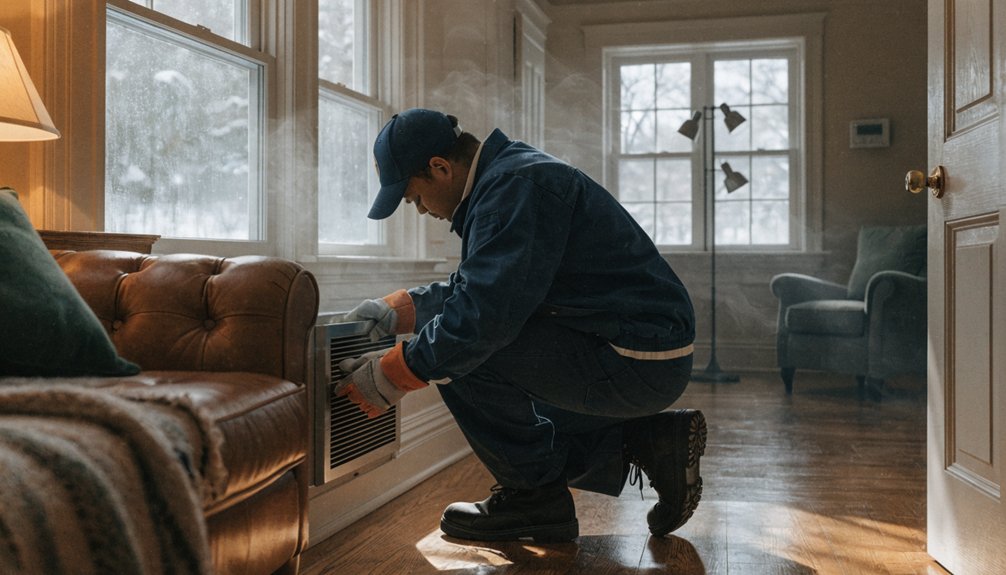
When one room stays chilly while the rest of your home feels comfortable, the problem usually traces back to restricted airflow, poor insulation, duct leakage, or an HVAC system that isn’t balanced correctly. To correct it, you’ll need to isolate what’s affecting heat delivery and heat retention.
- Check supply and return vents for blockage, damper position, and furniture interference reducing circulation.
- Evaluate room insulation around exterior walls, windows, and attic spaces to identify heat loss.
- Verify thermostat placement; if it sits near drafts, sunlight, or warm appliances, readings can mislead system cycling.
- Measure register temperature and compare airflow between rooms to confirm whether balancing adjustments or equipment calibration are needed.
A professional ducted heating service can also inspect your ductwork, test system balance, and identify leaks or faults that cause uneven warmth and higher energy bills.
Duct Repairs That Restore Even Heating
If certain rooms still lag behind after basic airflow checks, duct defects are often the next place to look. Leaks at joints, disconnected runs, crushed flex duct, or gaps near boots can dump heated air into unconditioned spaces before it reaches the registers. That loss lowers delivered temperature and disrupts airflow balance between branches. A technician will pressure-test sections, inspect accessible runs, reseal seams with mastic, and correct kinks or sags that add resistance. You may also need duct insulation where lines pass through attics, crawl spaces, or exterior walls, since conductive losses can cool supply air considerably. In some homes, branch dampers are adjusted after repairs to fine-tune room delivery. When ducts are sealed, supported, and insulated properly, you’ll usually get steadier temperatures without overworking the heating equipment overall. Well-maintained ductwork also helps ducted gas heating systems maintain their efficiency rating, keeping running costs lower over the long term.
Signs Heating System Parts Need Replacement
Because uneven warmth can persist even after airflow and duct issues are corrected, worn or failing heating components are often the next likely cause. You’ll usually notice diagnostic symptoms before total failure occurs.
- If room temperatures don’t match your setting, a faulty thermostat may be misreading conditions or losing control accuracy.
- If airflow is weak despite open registers, a worn out blower or failing capacitor may no longer move enough heated air.
- If the system short cycles, ignition parts, limit switches, or flame sensors may be degrading under repeated heat stress.
- If you hear scraping, buzzing, or delayed starts, motor bearings, relays, or inducer components may be near replacement.
These signs indicate declining performance, rising strain, and a higher likelihood of uneven heating across your home. In many cases, scheduling annual inspections can catch these developing component issues early and prevent uneven warmth from returning.
How to Prevent Uneven Heating From Returning
Replacing failing parts fixes the immediate imbalance, but keeping uneven heating from returning takes consistent system maintenance and control checks. You should schedule seasonal inspections to verify burner performance, blower speed, filter condition, and duct static pressure. Small airflow restrictions often redevelop before comfort problems become obvious. You’ll also want thermostat calibration checked regularly, because inaccurate readings can overheat one zone while leaving another cool. Seal duct leaks, keep supply and return vents unobstructed, and confirm dampers still open and close correctly. If certain rooms lose heat faster, insulation upgrades in attics, crawl spaces, or exterior walls can reduce load differences that strain the system. Track temperature patterns across rooms, and if imbalance starts reappearing, have a technician test airflow, controls, and heat delivery before component wear escalates again. For additional comfort and efficiency, inspect and seal drafts around windows and doors so your heating system doesn’t have to work as hard to maintain balanced temperatures.
Frequently Asked Questions
Can Poor Insulation Make One Room Colder Than the Rest?
Yes—like a thermal sieve, poor insulation can make one room colder than the rest. You’ll lose heat through weak insulation materials, and cold drafts around windows, walls, or attic gaps can worsen the temperature imbalance.
How Often Should Heating Filters Be Changed?
You should change heating filters every 1–3 months, depending on system usage, filter type, pets, and dust levels. Consistent filter maintenance improves airflow, reduces strain, and helps you maintain better energy efficiency and system performance.
Is Uneven Heating More Common in Older Homes?
Yes—older homes often have more uneven heating; as the saying goes, time takes its toll. You’ll often find drafty windows, poor radiator placement, limited heating zones, and thermal bridges disrupting balanced room temperatures.
Can Closed Interior Doors Affect Airflow and Room Temperature?
Yes, closed interior doors can create airflow restrictions, especially if return paths are limited. You’ll often see temperature fluctuations because supply air pressurizes rooms, reducing circulation and forcing your HVAC system to distribute air less evenly.
Will a Smart Thermostat Help Balance Temperatures Throughout the House?
Like a conductor, you’ll improve balance with a smart thermostat, but it can’t perform miracles alone. Its smart thermostat features refine zoning schedules and support temperature control strategies, yet airflow restrictions and insulation gaps still matter.