
As the first hard frost settles over your roofline, your heating system shifts from standby to critical duty. If you schedule seasonal service before winter, you can catch airflow restrictions, ignition faults, thermostat drift, and safety hazards before they trigger a shutdown. A proper inspection also improves efficiency and steadies indoor comfort. The key question isn’t whether your system should be checked, but what early warning signs you might already be missing.
Key Takeaways
- Schedule heating service in early to mid-fall to inspect components, complete safety tests, and avoid winter breakdowns.
- A seasonal tune-up checks filters, thermostat calibration, burners, airflow, and safety controls to improve efficiency and reliability.
- Immediate service is needed for weak heating, frequent cycling, unusual noises, odd smells, or a discolored pilot light.
- Professional inspections can detect carbon monoxide risks, overheating hazards, venting problems, and airflow restrictions before cold weather arrives.
- Choose a licensed, insured provider who documents heat exchanger condition, static pressure, temperature rise, and carbon monoxide readings.
Why Heating Service Matters Before Winter
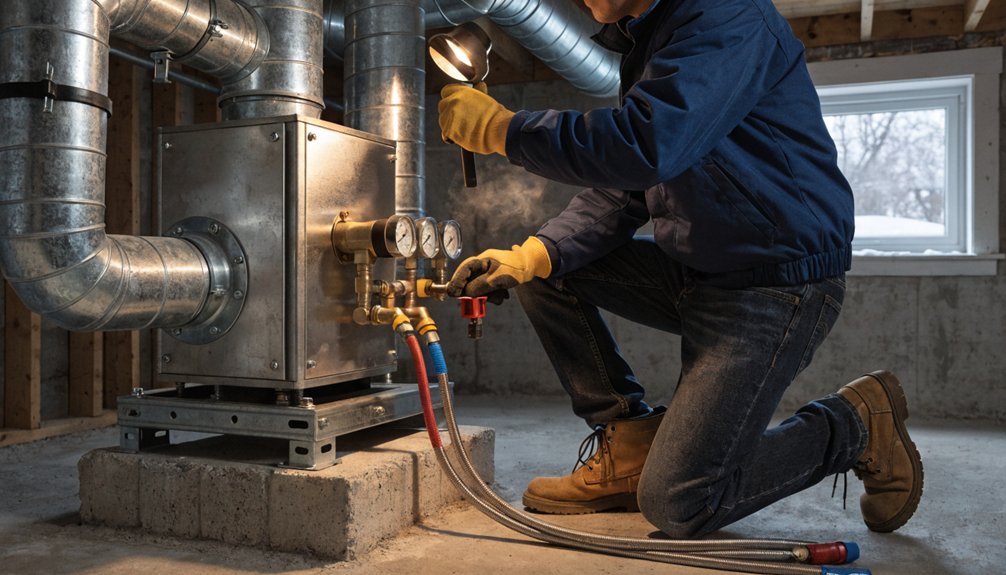
Before winter sets in, heating service matters because your system’s highest-risk failures often start as minor performance faults that are easy to miss during mild weather. You can’t rely on surface operation alone; combustion irregularities, airflow restrictions, sensor drift, and electrical wear often develop gradually, then trigger shutdowns under peak demand.
A diagnostic service check verifies burner performance, heat exchanger condition, ignition reliability, static pressure, and control response. That improves energy efficiency, supports home comfort, and protects system longevity by reducing strain on critical components. You also gain cost savings when technicians correct inefficiencies before they escalate into damaged motors, cracked igniters, or unsafe venting conditions. Most importantly, professional service provides safety assurance by identifying carbon monoxide risks, overheating hazards, and wiring defects. These maintenance benefits reduce avoidable winter emergencies. In Melbourne, scheduling regular gas heater servicing helps prevent carbon monoxide buildup and ensures your system runs safely and efficiently throughout the coldest months.
When to Schedule Seasonal Heating Service
Ideally, you should schedule seasonal heating service in early fall, before sustained cold weather pushes your system into long run cycles and exposes hidden faults under load. That window gives you ideal timing for combustion checks, airflow measurement, control calibration, and safety verification before demand spikes. Use these scheduling tips to avoid delays and support reliable startup performance.
| Timeframe | Purpose | Benefit |
|---|---|---|
| Early fall | Full inspection | Parts available |
| Mid fall | Tune-up | Better efficiency |
| Pre-freeze | Safety tests | Lower risk |
If you use a heat pump, book service before outdoor temperatures routinely drop below manufacturer test conditions. If you have an older furnace, schedule earlier so you can address wear, venting, or ignition adjustments without rushing repairs. Preventive timing protects winter reliability. For Melbourne homes, early fall is also the best time to book central heating repair or maintenance with a professional so any issues are resolved well before the coldest months.
Signs Your Heater Needs Service Now
How can you tell when routine maintenance isn’t enough and your heater needs prompt service? Start with performance changes. Inadequate heating, frequent cycling, and thermostat issues often indicate airflow restrictions, ignition faults, or sensor problems. If your system produces heater noises like banging, screeching, or rattling, internal components may be loose, worn, or failing. You should also treat unusual odors, odd smells, or a discolored pilot light as safety warnings, especially if combustion is involved. Rising energy bills can signal declining efficiency, restricted airflow, or burner malfunction. Review your maintenance history for missed tune-ups, unresolved repairs, or repeated service calls. Annual inspections by a qualified technician can catch these developing issues early and help prevent sudden mid‑winter breakdowns. Age concerns matter too, but the immediate priority is diagnosis. When these signs appear, schedule professional inspection quickly to reduce fire risk, prevent carbon monoxide hazards, and protect reliability.
Should You Repair or Replace Your Heater?
When repairs start stacking up, the repair-versus-replace decision should hinge on safety, reliability, and lifecycle cost rather than age alone. You should compare failure patterns, combustion integrity, and repair costs against replacement benefits before committing. If your unit has a cracked heat exchanger, repeated limit trips, or chronic ignition faults, replacement is often the safer call.
| Factor | Repair | Replace |
|---|---|---|
| Heat exchanger | Minor issue | Crack present |
| Breakdowns | Isolated | Recurrent |
| Efficiency | Acceptable | Declining |
| Parts | Available | Obsolete |
You shouldn’t ignore carbon monoxide risk, escalating utility bills, or unavailable OEM components. High-efficiency gas furnaces can also reduce emissions and long-term operating costs, making replacement more attractive when older units become unreliable. A diagnostic review helps you quantify near-term expense versus long-term risk. If reliability is unstable during cold weather demand, replacing the heater can reduce hazard exposure and restore dependable operation.
What Happens During a Heating Tune-Up?
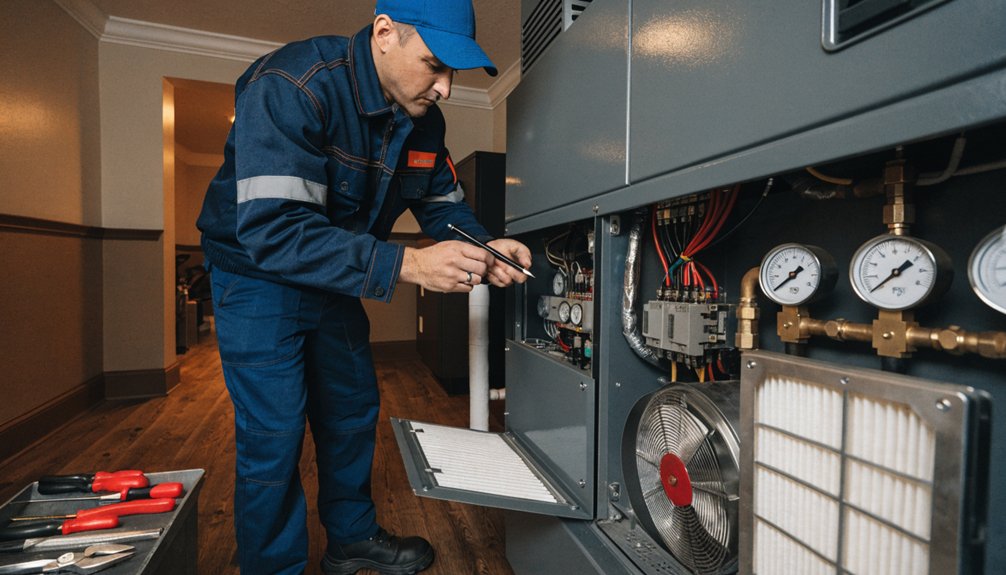
During a heating tune-up, your technician checks the filter and thermostat first to verify proper airflow, temperature accuracy, and system response. You’ll also have the burner assembly inspected for ignition performance, combustion quality, and signs of wear or buildup. To protect safe operation, key safety controls are tested to confirm your heater shuts down and cycles correctly under fault conditions. Regular tune-ups help maintain efficient operation and extend the overall lifespan of your ducted heating system.
Filter And Thermostat Check
Two components get checked first in a heating tune-up: the air filter and the thermostat. Your technician evaluates airflow restriction, filter condition, and installation fit, because poor filter maintenance can increase static pressure, reduce efficiency, and strain components. Then they verify thermostat calibration, response time, and temperature accuracy to confirm your system starts and stops correctly. These checks help prevent nuisance cycling and comfort inconsistencies.
- A clogged filter can limit airflow, overheat the system, and raise energy use.
- An incorrectly installed filter may allow dust bypass, contaminating internal parts and reducing performance.
- A miscalibrated thermostat can cause short cycling, uneven heating, or delayed operation.
Burner And Safety Inspection
After airflow and thermostat operation are verified, the technician inspects the burners and safety controls to confirm stable ignition and safe combustion. You’ll have burner maintenance performed to remove soot, corrosion, and misalignment that can disrupt flame carryover and efficiency.
| Component | Check | Purpose |
|---|---|---|
| Burners | Clean, align | Steady flame |
| Igniter | Test response | Reliable start |
| Flame sensor | Measure signal | Prove combustion |
| Limit switch | Verify trip | Prevent overheating |
| Gas valve | Confirm operation | Safe fuel control |
They’ll test flame characteristics, sensor readings, rollout protection, and shutoff timing. If irregularities appear, you’ll get recommendations for safety upgrades, such as updated switches or ignition parts. This inspection helps you prevent delayed ignition, overheating, and unsafe operation during winter.
Heating Tune-Ups That Improve Efficiency
You improve heating efficiency when you keep burners and filters clean, since buildup restricts combustion and airflow. During a tune-up, your technician should also calibrate the thermostat and verify airflow to confirm the system is operating within safe, specified ranges. These adjustments help your equipment run more accurately, reduce strain, and lower the risk of performance faults. Regular inspections of ductwork issues and thermostat performance during these tune-ups can further prevent uneven heating and surprise breakdowns in the middle of winter.
Burner And Filter Cleaning
A thorough burner and filter cleaning is one of the most effective tune-up steps for improving heating efficiency and system reliability. When residue builds on burners or filters load with debris, combustion quality drops, airflow resistance rises, and your unit works harder than it should.
- Clean burners support stable ignition, proper flame characteristics, and safer burner maintenance throughout winter.
- Replacing or washing filters restores filter efficiency, reduces strain on components, and helps prevent overheating conditions.
- Diagnostic cleaning also exposes corrosion, soot, or blocked passages that could signal venting or combustion concerns.
You should have a technician inspect flame appearance, remove accumulated deposits, and verify surfaces are clear before peak demand begins. This service lowers energy waste, supports safer operation, and helps your system maintain dependable cold-weather performance overall.
Thermostat And Airflow Calibration
Because even a clean heating system can underperform when controls or circulation are off, thermostat and airflow calibration is a critical tune-up step for efficiency, comfort, and equipment protection. During service, you should have a technician verify thermostat settings against actual room temperature and system response. If readings drift, your furnace may short cycle, overheat, or run longer than necessary.
You also need proper airflow adjustments to maintain safe temperature rise across the heat exchanger. Technicians inspect blower speed, supply and return balance, register output, and static pressure to identify restrictions or leakage. These measurements help prevent hot spots, cold rooms, and strain on motors or limit switches. When calibration is precise, your system delivers steadier heat, uses less energy, and reduces the risk of avoidable winter breakdowns.
Safety Checks Included in Heating Service
When a heating system is serviced, safety checks should be treated as a core part of the visit, not an add-on. You need confirmation that ignition, venting, controls, and shutdown responses operate within manufacturer specifications. A technician should verify combustion integrity, inspect heat exchangers for cracks, and test carbon monoxide readings near the unit and supply air. Because gas leaks pose serious health risks and fire hazards, annual inspections that specifically include gas leak detection help ensure safe operation and regulatory compliance.
- Gas pressure, burner flame pattern, and ignition timing are checked for unsafe deviation.
- Limit switches, rollout sensors, and pressure switches are tested against safety protocols.
- Vent connectors, flue draft, and electrical terminations are inspected for failure risk.
These diagnostics strengthen emergency preparedness by identifying hazards before winter demand increases. You’ll also want verification that wiring insulation, grounding, and overcurrent protection remain intact, reducing fire risk and preventing dangerous operating conditions.
Filter Changes That Help Winter Performance
You should replace your furnace filter before winter demand increases, because a loaded filter can restrict airflow and raise system strain. When airflow drops, your heater can lose efficiency, cycle improperly, and overheat critical components. A seasonal filter check helps you maintain stable performance, reduce energy use, and support safer operation. Regular filter changes, as part of broader ducted heating maintenance, also help prevent unexpected failures and improve overall energy efficiency.
Winter Filter Replacement
As heating demand rises in winter, filter condition has a direct effect on airflow, heat exchanger temperature, and overall system efficiency. You should treat winter filter replacement as essential filter maintenance, not a cosmetic task. A loaded filter can elevate static pressure, stress blower components, and increase cycling irregularities, reducing winter readiness.
- Check manufacturer size, MERV rating, and installation direction before replacement.
- Inspect for dust bypass, warped frames, or moisture staining around the rack.
- Replace filters on schedule, then verify secure seating and panel closure.
You shouldn’t wait for visible dirt alone. Diagnostic signs include rising supply temperature, unusual burner shutoff patterns, or blower strain. Proper replacement supports safe combustion conditions, protects internal parts, and helps your heating system operate within design parameters during sustained cold-weather use.
Airflow And Efficiency
Because winter heating loads magnify any airflow restriction, timely filter changes directly support combustion stability, blower performance, and heat transfer efficiency. When your filter loads with dust, static pressure rises, reducing delivered CFM and disrupting airflow balance across the heat exchanger and supply branches.
You’ll often see longer run times, hotter furnace cabinet temperatures, and uneven room heating when restriction increases. A clean, correctly sized filter helps protect the blower motor from excess amperage draw and limits limit-switch trips caused by overheating. It also improves efficiency optimization by restoring designed airflow, which supports proper temperature rise and steadier burner operation. During winter service, you should verify filter MERV rating, installation direction, and replacement interval so your system operates safely, efficiently, and with predictable comfort under peak seasonal demand conditions.
How Heating Service Prevents Breakdowns
When routine heating service is performed on schedule, small defects are identified before they escalate into system failures. You reduce mechanical stress, correct unsafe combustion conditions, and verify controls before winter demand exposes weaknesses. Preventive Maintenance supports System Longevity, Cost Savings, Enhanced Comfort, and Energy Efficiency by keeping critical components within manufacturer tolerances. Sealing drafts and insulating windows further enhances comfort and energy efficiency by working alongside a well-maintained heating system to keep warm air in and cold air out.
- You catch worn belts, weak igniters, cracked heat exchangers, and loose electrical connections before they trigger shutdowns.
- You confirm airflow, gas pressure, limit switch response, and thermostat calibration, preventing overheating, short cycling, and ignition faults.
- You replace clogged filters, lubricate bearings, and clean burners, which stabilizes operation and lowers strain on motors and heat transfer surfaces.
With diagnostic testing, you’re not waiting for a breakdown; you’re actively reducing failure points and protecting safe, dependable heat.
How to Choose a Heating Service Company
Preventive maintenance only works if the company performing it can diagnose faults accurately, follow safety procedures, and service your equipment to code and manufacturer specifications. When you compare providers, verify licensing, insurance, and factory training for your furnace, boiler, or heat pump. Ask for documented service qualifications, combustion analysis capability, and familiarity with airflow, venting, and electrical diagnostics. You should also confirm the company performs load calculations, checks heat exchangers for cracks, tests safety controls, and documents static pressure, temperature rise, and carbon monoxide readings. Review customer reviews for patterns involving punctuality, clear reporting, and callback resolution. A reliable contractor won’t guess at symptoms or skip measurements. Instead, you’ll get written findings, prioritized recommendations, and maintenance steps that reduce ignition failures, airflow restrictions, and unsafe operating conditions. For gas ducted heating, look for providers with experienced technicians who specialise in servicing and repairing gas ducted heating systems across Melbourne.
Frequently Asked Questions
Can Heating Service Help Reduce Winter Allergy Symptoms Indoors?
Yes, heating service can reduce winter allergy symptoms indoors by improving your indoor air quality. You’ll lower allergy triggers when technicians inspect filters, clean ducts, verify airflow, and identify combustion or humidity issues affecting respiratory safety.
Are Smart Thermostats Worth Installing Before Winter Begins?
Yes—small upgrade, major control: you’ll gain smart thermostat benefits before winter, including diagnostic alerts, safer temperature consistency, and measurable energy savings. If your HVAC system short-cycles or overheats, you’ll detect issues sooner and optimize performance.
How Long Should a Home Heating System Typically Last?
You can expect a home heating system’s heating lifespan to be 15–25 years, depending on type, load, and upkeep. Follow maintenance tips, monitor efficiency drops, unusual cycling, and safety control faults to diagnose replacement timing.
Does Homeowner’s Insurance Cover Furnace-Related Winter Damage?
Yes, your homeowner’s insurance may cover furnace-related winter damage if it’s sudden and accidental, but it usually won’t cover neglect. You’ll need documented furnace maintenance for insurance claims, and a diagnostic inspection helps verify cause and safety.
What Temperature Should I Set My Thermostat to in Winter?
Set your thermostat to 68°F when you’re home—a steady heartbeat for thermostat settings. Lower it 7–10°F while sleeping or away to improve energy efficiency, reduce system strain, and help prevent frozen pipes safely.