
Your ducted heating can become a money pit or a smart asset—it depends on what the faults are telling you. If you’re weighing repairs against replacement, start with the basics: system age, fault frequency, efficiency, and total running cost. A single repair may be reasonable, but repeated breakdowns often point to broader wear. The key is knowing when maintenance still makes financial sense, and when a new system changes the equation.
Key Takeaways
- Repair is usually best for isolated faults like igniters, thermostats, sensors, or blocked filters when the system is otherwise reliable.
- Replacement is often better if the unit is over 12–15 years old, less efficient, and harder to source parts for.
- Compare total twelve-month ownership costs, including repair bills, maintenance, energy use, and the price of likely future breakdowns.
- Frequent faults, short cycling, unusual noises, odours, or rising energy bills often indicate replacement is the more economical long-term choice.
- A new ducted heating system can improve efficiency, airflow, temperature control, and indoor air quality while lowering running costs.
Is Repair or Replacement Cheaper?

Whether repair or replacement is cheaper depends on your system’s age, fault pattern, and projected running cost—not just the upfront invoice. You should compare immediate repair costs against likely follow-up failures, labour repetition, and parts availability. A single igniter or thermostat fix is usually economical, but repeated burner, fan motor, or control board faults often indicate compounding deterioration. Factoring in the long-term savings from improved energy efficiency and reduced breakdown risk with a newer system can also shift the balance in favour of replacement for older, less efficient heaters.
You’ll get a clearer answer by calculating twelve-month ownership cost. Add the quoted repair, expected maintenance, efficiency losses, and downtime risk. Then compare that figure with replacement expenses, including installation, commissioning, and any duct modifications. If repairs approach half the installed price of a like-for-like unit, replacement often delivers better value. The cheaper option is the one that minimizes your total cost per heating season, not simply today’s service bill.
How Old Is Your Ducted Heating?
System age is one of the strongest indicators of whether a repair still makes financial and mechanical sense. If your ducted heater is over 12 to 15 years old, you should compare repair costs against declining performance, parts availability, and projected service life. Older units also tend to have lower energy conversion rates and higher standby losses. You should also review maintenance history alongside system age. A well-serviced unit may justify continued operation longer than a neglected one, but only after an efficiency assessment confirms acceptable output and running costs. If your heater predates major technology upgrades, replacement can improve controls, zoning, and combustion performance. That shift can also reduce environmental impact through lower fuel consumption and emissions, especially if your current system operates below modern seasonal efficiency benchmarks today. In making this call, factor in whether your system has received regular professional servicing, as neglected heaters are more prone to inefficient operation, poor air quality, and premature failure.
Which Heating Faults Are Worth Fixing?
When is a ducted heating fault worth repairing rather than replacing? You should usually repair faults that are isolated, diagnosable, and not linked to major safety concerns or advanced system age. If the heat exchanger, cabinet, and duct network are sound, targeted repairs can restore reliable operation without unnecessary intervention. Regular annual inspections and basic maintenance can also help ensure that smaller, repairable faults are detected early before they escalate into major failures.
- Ignition or sensor faults: Failed igniters, flame sensors, thermocouples, and pressure switches are commonly replaceable parts with clear test results.
- Airflow and control issues: Blocked filters, faulty thermostats, fan capacitors, or worn belts often cause poor performance but are straightforward to correct.
- Minor electrical faults: Loose terminals, failed relays, or a damaged circuit board can often be repaired if diagnostics confirm the fault hasn’t affected other components or overall operation.
When Is Replacement Cheaper Than Repair?
Although repairing a single failed component can look cheaper upfront, replacement becomes the better-value option once repair costs start stacking against an older ducted heating unit’s remaining life, efficiency, and reliability. You should compare the quoted repair against the system’s age, heat exchanger condition, burner performance, and energy use. Replacement is usually cheaper when the repair approaches a large percentage of a new unit’s installed price, especially if efficiency is poor or parts are obsolete. A proper cost comparison also includes likely follow-up faults, rising gas consumption, and warranty coverage you’d gain with new equipment. If your technician identifies multiple worn components, deteriorated airflow performance, or unsafe combustion readings, you’re often better replacing the system. In many older Melbourne homes, upgrading instead of repairing also lets you address hidden issues like drafty windows and doors and deteriorated insulation that quietly drive up heating costs. That decision can reduce callout costs, stabilise heating output, and deliver stronger long term savings.
How Often Should Your System Need Repairs?
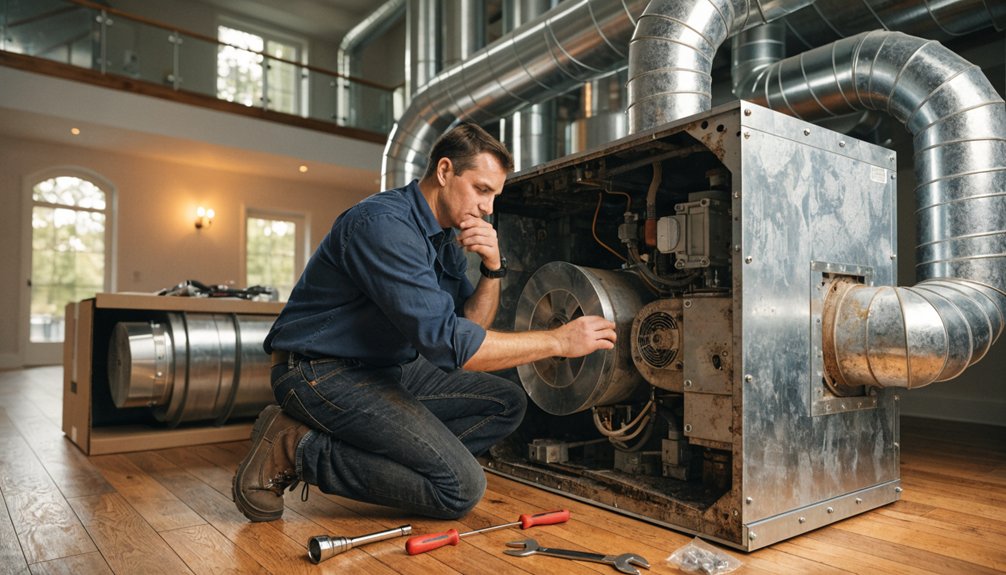
Ideally, your ducted heating shouldn’t need more than occasional minor repairs if it’s serviced on schedule and operating within normal load conditions. If you’re booking callouts every season, that’s a diagnostic signal, not bad luck. Repair patterns usually reflect age, installation quality, and maintenance frequency. Well-timed servicing that includes safety checks and efficiency testing can also reduce the likelihood of frequent breakdowns.
- Once every few years: Generally acceptable for igniters, thermostats, or sensors.
- Annually: Indicates wear is accelerating and key components may be approaching end-stage reliability.
- Multiple times per year: Suggests systemic deterioration, recurring faults, or poor prior repairs.
You should also compare repair history against expected system lifespan. A newer unit with frequent faults often points to installation or control issues. An older unit needing repeated parts replacement usually indicates declining mechanical integrity and a rising likelihood of broader failure soon.
Is Your Ducted Heating Still Efficient?
If your energy bills keep rising without a clear usage change, your ducted heating may be losing efficiency. You’ll also notice uneven room heating, where some areas reach set temperature while others stay cold, indicating airflow, duct, or unit performance issues. When that’s combined with frequent repair needs, it’s a practical sign your system may be costing more to keep than it’s worth. Regular ducted heating maintenance not only restores efficiency but also helps prevent unexpected failures and improves indoor air quality.
Rising Energy Bills
When your energy bills keep climbing without a matching increase in usage, your ducted heating system may be losing efficiency somewhere in the chain—at the heater, in the ductwork, or at the controls.
You can usually trace rising running costs to measurable faults affecting energy efficiency and reducing cost savings:
- Restricted airflow from dirty filters or failing fans forces longer heating cycles and higher gas or power consumption.
- Duct leakage dumps conditioned air into roof cavities, so the unit runs harder to maintain set temperature.
- Control errors from inaccurate thermostats, worn sensors, or outdated zoning cause unnecessary burner or fan operation.
If servicing restores combustion performance, airflow, and control accuracy, repair may be enough. If losses persist after maintenance, replacement often delivers stronger efficiency gains.
Uneven Room Heating
Although some temperature variation between rooms is normal, clear hot and cold spots usually mean your ducted heating system isn’t distributing air evenly or responding accurately to demand. You may have leaking ducts, blocked outlets, poor zoning control, or a thermostat positioned where it misreads the actual indoor temperature.
When heat distribution becomes inconsistent, your system often runs longer to satisfy the coldest areas, while overheated rooms lose room comfort and waste energy. Check whether dampers are stuck, filters are restricting airflow, or return air paths are limited. Insulation gaps can also make some rooms feel underheated even when the unit is performing normally. If balancing adjustments don’t improve airflow or temperatures remain unstable, uneven heating can indicate declining overall efficiency and a system that’s no longer matched to your home’s layout.
Frequent Repair Needs
Frequent breakdowns are another strong sign your ducted heating may no longer be operating efficiently. If you’re booking service calls every winter, the system’s core components may be wearing beyond economical repair. Frequent failures often indicate declining combustion performance, failing sensors, blower motor stress, or control board instability. As faults accumulate, repair costs rise while reliability drops.
Check for these indicators:
- Repeated ignition or startup faults after recent servicing.
- Short cycling that suggests airflow restriction, thermostat issues, or overheating.
- New noises or odours linked to motor wear, cracked heat exchangers, or electrical faults.
When multiple issues appear within a short period, you’re likely dealing with systemic deterioration, not isolated defects. At that point, replacing the unit may deliver better efficiency, safety, and long-term operating value overall.
What Do You Gain From Replacement?
When you replace an ageing ducted heating system, you can reduce energy consumption and cut ongoing running costs. You’ll also get more stable airflow, better temperature control, and fewer performance drops across different rooms. In practical terms, replacement can improve home comfort while giving you a more predictable, efficient heating outcome. Modern systems can also deliver improved indoor air quality by filtering dust and allergens while maintaining natural humidity for a more comfortable home environment.
Lower Running Costs
Because newer ducted heating systems are engineered to convert more of the fuel or electricity you pay for into usable heat, replacement can reduce your ongoing running costs in a measurable way. You’ll typically see better energy efficiency, fewer wasted operating cycles, and stronger cost savings over each heating season.
- Reduced energy draw: Modern units use updated burners, motors, and controls that consume less power or gas for the same heating output.
- Lower standby losses: Replacement eliminates many age-related inefficiencies, such as heat leakage, ignition faults, and worn components that force longer runtimes.
- Smarter system control: New thermostatic logic and zoning compatibility help you avoid unnecessary operation, so you’re not paying to run the system beyond actual demand in most homes.
Improved Home Comfort
Lower running costs are a clear benefit, but replacement also improves how the system feels and performs day to day. When your old ducted heater struggles with airflow, ignition, or temperature control, you notice uneven rooms, delayed warm-up, and noisy cycling. A new system corrects those faults through better fan performance, cleaner combustion, updated zoning, and more accurate thermostats.
You gain steadier airflow, faster response, and more consistent heat across the house. That lifts comfort levels without needing to overheat some rooms just to warm others. Modern units also manage humidity and airflow balance more effectively, which reduces stuffiness and cold patches. Because replacement improves energy efficiency, the system can maintain target temperatures with less strain. You get quieter operation, fewer fluctuations, and a more predictable indoor environment overall.
Should You Repair or Replace?
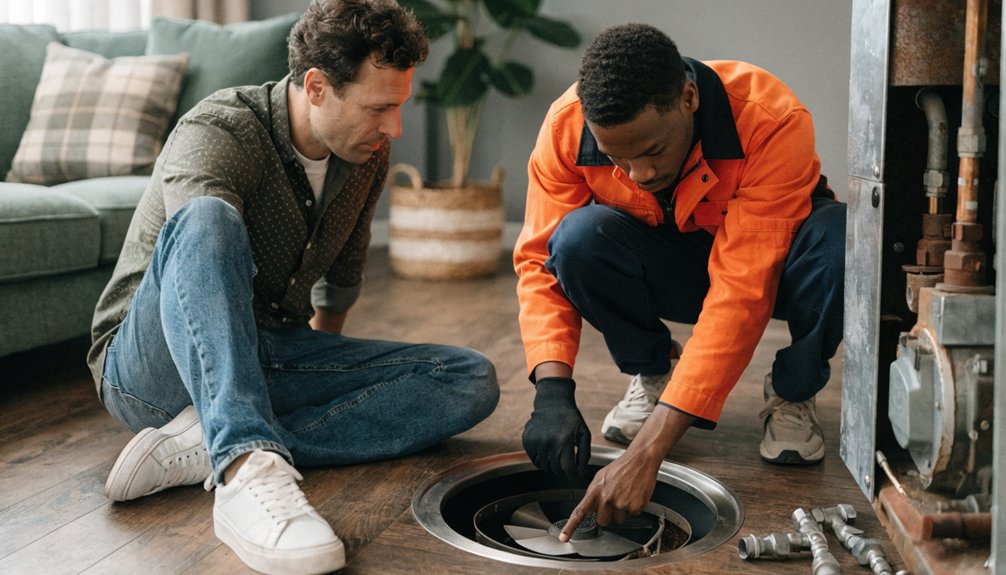
How do you decide whether a ducted heating system is worth repairing or better off being replaced? You’ll need to assess fault severity, system lifespan, and maintenance considerations before spending money. A targeted diagnosis helps you avoid repeated callouts and rising operating costs. Regular annual servicing and attention to energy efficiency ratings can also reveal when an older system is becoming too costly to keep repairing.
- Repair if the issue is isolated: a failed igniter, blocked filter, faulty thermostat, or damaged sensor. These are usually economical fixes with limited labour.
- Replace if major components like the heat exchanger, blower motor, or control board are failing together, especially in an older unit.
- Compare costs using the 50 percent rule: if repairs approach half the price of a new system, replacement often delivers better efficiency, reliability, and warranty protection.
You should also review energy bills and overall performance trends.
Frequently Asked Questions
Can Ducted Heating Repairs Affect My Home Insurance Coverage?
Yes—because your insurer obviously dreams of furnace drama. Your ducted heating repairs can affect coverage if unlicensed work, neglected faults, or rising repair costs influence risk assessments, policy terms, or insurance claims after damage or malfunction.
How Long Does a Typical Ducted Heating Replacement Take?
You can expect a typical ducted heating replacement to take one to two days, depending on ductwork complexity, access, and controls. Your installation timeline may extend if upgrades are needed to optimise system efficiency and compliance.
Will Replacing Ducted Heating Increase My Property’s Resale Value?
Yes—replacing ducted heating can increase your property’s resale value, but only if diagnostics confirm improved energy efficiency and reliability. You’ll appeal to homeowner preferences for lower running costs, fewer faults, and modern, compliant climate systems.
Do Repaired Systems Require Updated Safety or Compliance Inspections?
Yes, you’ll often need updated inspections after repairs, especially if components affecting safety regulations or compliance standards were replaced. You should verify local code requirements, request a licensed technician’s report, and keep documentation for future audits.
Can Zoning Upgrades Be Added During Ducted Heating Replacement?
Yes, you can add zoning upgrades during ducted heating replacement, letting you optimize airflow, improve system efficiency, and target occupied areas only. You’ll gain zoning benefits through compatible controllers, dampers, and correctly sized duct modifications during installation.