
By coincidence, the day you schedule heating service is often the day small performance issues become easier to trace. During a professional appointment, your technician checks operation, airflow, ignition, burners, controls, and key safety systems in a set order. You’ll also get cleaning, testing, and a record of anything that could affect efficiency or safe operation. What’s found during that process can tell you more about your system than you might expect.
Key Takeaways
- A professional heating service includes inspecting major components, documenting system age and model details, and reviewing reported performance concerns.
- Technicians test thermostat response, startup sequence, safety controls, and emergency shutoff functions to confirm proper operation.
- The appointment includes checking burners, ignition, airflow, venting, and carbon monoxide risk for safe heating performance.
- Cleaning typically covers burners, flame sensors, blower components, filters, and vents to improve efficiency and reliable airflow.
- Technicians measure temperature rise, static pressure, blower performance, and electrical draw, then provide a service summary with repair recommendations.
What Happens During a Heating Service Visit?
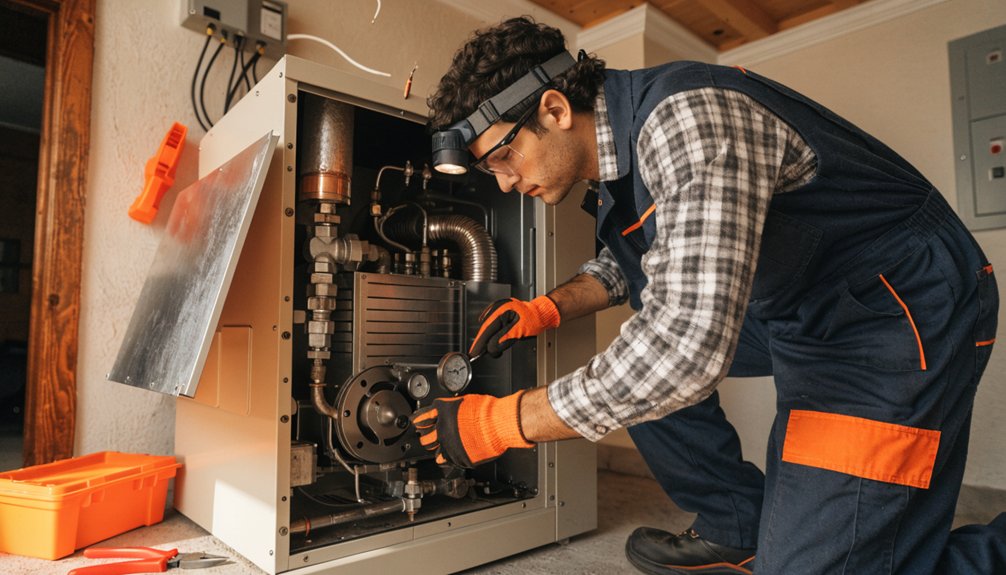
A typical heating service visit starts with a structured inspection of your system’s main components, operating condition, and safety controls. Your technician documents equipment age, model data, and recent performance issues, then verifies thermostat response and startup sequence. They assess airflow, burner or heat source operation, ignition behavior, and temperature rise to confirm system functionality. For Melbourne homeowners, companies like Johns Refair may also offer a free consultation to match your system’s condition with the most suitable central heating solutions for long-term performance and reliability.
Next, you can expect targeted maintenance procedures based on equipment type and service frequency. The technician cleans accessible components, checks filter condition, measures electrical draw, inspects wiring integrity, and evaluates moving parts for wear. They may lubricate motors, tighten connections, and calibrate controls to improve efficiency and reliability. Before finishing, they review findings with you, note recommended repairs, and provide a maintenance record so you can track performance trends over time.
What Safety Checks Are Included?
Beyond routine cleaning and performance testing, a heating service appointment also includes a defined set of safety checks to confirm the system can operate without creating fire, electrical, or combustion hazards. Your technician follows established safety protocols and documents findings systematically. You can expect checks that verify safe startup, controlled shutdown, and proper response to abnormal conditions.
- Verification of gas shutoff, disconnect access, and emergency controls
- Testing of safety switches, limit controls, and fault lockout functions
- Confirmation that venting and combustion conditions meet safe operating standards
During these equipment inspections, you’ll also have carbon monoxide risk screened, wiring conditions reviewed for overheating indicators, and airflow restrictions noted when they could trigger unsafe temperatures. Because carbon monoxide poisoning can occur without obvious warning signs, technicians also confirm that combustion and venting performance won’t allow CO to accumulate indoors.
Which Heating Parts Get Inspected?
Core components are inspected in a defined sequence so your technician can verify operation, wear condition, and safety at the same time. You’ll typically have the thermostat, burners, heat exchanger, blower assembly, ignition system, venting, electrical connections, and limit controls checked, with thermostat calibration confirming accurate call-for-heat response and cycle control. Regular servicing also includes safety checks to prevent dangerous carbon monoxide buildup and gas leaks, keeping your home safe through winter.
| Part inspected | What your technician verifies |
|---|---|
| Thermostat | Calibration, response, wiring |
| Burners/ignition | Reliable light-off, flame stability |
| Heat exchanger | Cracks, corrosion, separation signs |
| Blower/electrical | Motor condition, capacitor, connections |
| Ductwork/venting | Airflow restrictions, leakage, draft |
A duct inspection may also be performed to identify leakage, disconnected runs, or pressure imbalance affecting delivered heat. This methodical inspection helps you catch developing faults before they compromise safe, efficient winter performance at home.
What Cleaning Is Included?
You can expect your technician to clean the burners and flame sensor area to support stable ignition and safe combustion. They’ll also dust the blower assembly and motor to reduce airflow restriction and limit strain on moving components. Your service should also include removing debris from the filter and accessible vent sections so the system can operate efficiently and within safety standards. Regular cleaning like this helps maintain good air quality and supports the overall efficiency and longevity of your ducted heating system.
Burner And Flame Cleaning
When burner and flame cleaning is part of a heating service appointment, the technician typically removes dust, soot, and light carbon buildup from the burner assembly, burner ports, and nearby ignition components so combustion can stay stable and efficient. This careful process helps restore burner efficiency, supports flame stability, and reduces the risk of delayed ignition or uneven firing. You’ll usually see a visual inspection first, followed by controlled brushing or vacuuming using manufacturer-approved methods and tools.
- Clears blocked burner ports to maintain even gas flow
- Removes residue that can disrupt ignition and flame pattern
- Verifies flame appearance after cleaning for safe operation
During service, you can expect the technician to check for corrosion, misalignment, or contamination that could affect combustion quality. They’ll confirm the flame burns cleanly and consistently before the system is returned to operation.
Blower And Motor Dusting
After the burner area is cleaned and combustion is verified, attention usually shifts to blower and motor dusting, which targets dust buildup on the blower housing, wheel blades, motor exterior, and nearby compartments. Your technician will disconnect power, confirm the assembly is stable, and use controlled brushing and vacuuming to remove debris without bending blades or stressing wiring. This step supports blower maintenance by preserving airflow balance and reducing drag on moving parts. During motor care, the exterior is dusted to limit heat retention around the casing and terminals. You can expect careful inspection for loose mounts, abnormal residue, or signs of overheating while accessible surfaces are cleaned. By removing fine dust methodically, your system can run with less strain, improved efficiency, and lower risk of premature mechanical wear overall.
Filter And Vent Debris Removal
Once blower-area dusting is complete, filter and vent debris removal focuses on the system’s primary airflow path, including the accessible filter slot, return grilles, nearby vent openings, and any loose accumulation around the cabinet connection points. You’ll typically have the technician perform a careful filter inspection, checking loading, fit, and airflow restriction before removing debris with controlled vacuuming and soft-brush methods. This step supports safe operation and reduces particulate recirculation.
- Return grilles are cleared to prevent intake blockage.
- Vent openings are checked for lint, dust, and obstructions.
- Cabinet joints are cleaned where debris can disrupt sealing.
During vent maintenance, you can expect attention to accessible covers and surrounding surfaces only, not full duct cleaning. Technicians avoid damaging fins, disturbing wiring, or creating loose contaminants inside the equipment.
How Technicians Test Heating Performance
Start with a controlled system check: technicians test heating performance by measuring temperature rise across the unit, verifying airflow, and confirming that burners, heat exchangers, or heating elements are operating within manufacturer specifications. During this process, they may also review recent energy consumption data trends from building monitoring systems to help spot patterns that indicate hidden efficiency issues or emerging performance problems.
Next, you’ll have key performance metrics recorded and compared against rated values. Using calibrated diagnostic tools, the technician checks static pressure, supply and return temperatures, blower speed, electrical draw, and thermostat response. Fuel-fired systems may also require combustion readings to confirm efficient, stable operation. For electric heat, amperage and sequencer timing are verified. Each measurement is taken systematically to guarantee your system delivers consistent output without exceeding safe operating limits. You’re not just confirming that heat is present; you’re verifying that the entire heating cycle starts, runs, and shuts down correctly under normal demand and control conditions.
What Problems Can a Service Visit Catch?
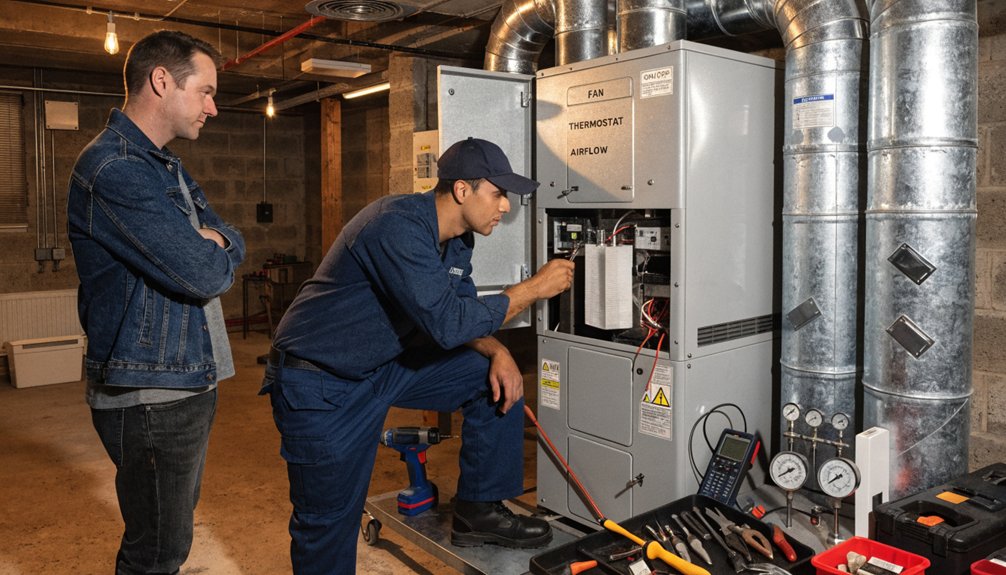
Several common faults can be identified during a heating service visit before they develop into breakdowns or safety hazards. During inspection, you’ll have common issues checked systematically, including restricted airflow, worn belts, dirty burners, weak ignition, and faulty limit switches. Early detection helps you prevent overheating, unstable cycling, and efficiency losses that can strain major components.
- Cracked heat exchangers, loose electrical connections, or scorched wiring
- Gas pressure irregularities, burner imbalance, or ventilation blockages
- Condensate drainage problems, corrosion, or thermostat calibration errors
You can also uncover abnormal noise sources, blower motor wear, refrigerant leaks in heat pumps, and carbon monoxide risks in fuel-burning systems. By catching these faults promptly, you reduce safety exposure, avoid emergency shutdowns, and keep your equipment operating within manufacturer tolerances longer overall. Professional inspections also help identify and prevent carbon monoxide leaks by verifying proper ventilation, combustion performance, and safety controls in gas heaters.
What Will You Get After the Visit?
After the visit, you’ll receive a service summary report that documents system condition, test results, and any identified faults. You’ll also get clear repair and maintenance recommendations so you can address wear, prevent breakdowns, and keep operation within manufacturer specifications. Finally, you’ll be updated on efficiency and safety findings, including any combustion, airflow, or control issues that could affect performance or risk. Your technician may also highlight opportunities to improve energy efficiency and extend equipment lifespan through regular HVAC maintenance and timely upgrades.
Service Summary Report
Before the technician leaves, you’ll receive a service summary report that documents the system’s condition, the diagnostics performed, any adjustments or repairs completed, and any safety issues identified during the appointment. It gives you a clear appointment overview and confirms the service benefits of a documented inspection history. You’ll be able to review measured performance data, verified control responses, and noted code or combustion concerns.
- System condition findings and test results
- Completed diagnostics, calibrations, and safety checks
- Documented warnings requiring prompt attention
This report helps you verify what was inspected, what was corrected, and whether your heating equipment operated within expected parameters at departure. You’ll also have written confirmation for warranty records, future service reference, and household safety documentation. It supports informed, traceable equipment management later.
Repair And Maintenance Recommendations
A prioritized set of repair and maintenance recommendations will outline what should be addressed next, why it matters, and how urgently each item affects safety, reliability, and heating performance.
You’ll typically receive itemized guidance covering worn parts, airflow restrictions, ignition concerns, drainage issues, and control irregularities. Each recommendation should identify the affected component, expected consequence of delay, and whether corrective action is immediate or can be scheduled. You may also see preventive tasks, such as filter replacement intervals, blower cleaning, belt adjustment, lubrication, or thermostat calibration, based on measured operating conditions. If recurring failures suggest broader limitations, your technician may note system upgrades that improve compatibility or durability. Clear recommendations help you plan service logically, reduce avoidable breakdown risk, support energy savings, and keep your heating equipment operating within manufacturer specifications over time.
Efficiency And Safety Updates
Once the appointment is complete, you’ll receive a clear summary of efficiency and safety updates based on the system’s measured performance, inspection findings, and completed service tasks. This report tells you where your unit stands, what was corrected, and which items still need attention to maintain energy efficiency and meet safety regulations.
- Verified combustion, airflow, and temperature-rise readings
- Confirmed venting, controls, and shutdown responses
- Noted code-related concerns and priority upgrades
You’ll also get practical guidance on filter intervals, thermostat calibration, and operating adjustments that can reduce strain on components. If deficiencies were found, they’ll be prioritized by risk level, system impact, and recommended timeline. That way, you can make informed decisions, document service history, and keep your heating system operating reliably, safely, and within manufacturer specifications year-round.
Frequently Asked Questions
How Often Should I Schedule Professional Heating Service Appointments?
You should schedule professional heating service appointments annually, ideally before winter begins. This heating frequency helps you maintain efficiency, detect safety hazards early, reduce breakdown risks, and maximize service benefits through systematic inspection, cleaning, calibration, and testing.
Is Heating Maintenance Covered by Home Warranty or Insurance Plans?
Usually, you’re covered for breakdowns, not routine heating maintenance; picture a silent furnace before winter. Check your warranty coverage and insurance terms carefully, since maintenance benefits vary and neglect can void claims or create safety risks.
How Long Does a Typical Heating Service Appointment Take?
You can expect a typical heating service appointment duration of 60 to 90 minutes. It varies with system type, condition, and service checklist scope, since technicians must complete safety checks, diagnostics, cleaning, and performance verification.
Should I Service My Heating System Before Selling My Home?
Yes, you should service your heating system before selling your home; it strengthens your pre sale checklist, documents safe operation, identifies defects, and demonstrates heating system benefits, reducing buyer objections and potential inspection-related negotiation delays.
Can I Stay Home During a Professional Heating Service Visit?
Yes—you can stay home during a professional heating service visit, but there’s a catch: you’ll need clear access, ventilation, and distance during testing. By staying home, you can monitor safety steps, ask technical questions, and confirm findings.