
When your heater stops working, you need to assess the problem fast, especially in freezing weather. Start with basic checks like the thermostat, power supply, and breaker, but don’t ignore warning signs such as gas odors, weak airflow, or unusual noises. Some issues are safe to troubleshoot on your own, while others require immediate shutdown and emergency heating service. The key is knowing which step comes first.
Key Takeaways
- Set the thermostat to heat, raise the temperature 3–5 degrees, and check breakers, fuses, and the emergency shutoff switch.
- Replace a clogged furnace filter and make sure supply vents and return grilles are open and unobstructed.
- If you smell gas, shut off the heater and gas valve, leave immediately, and call emergency services from a safe location.
- Watch for urgent warning signs like burning odors, loud banging, weak airflow, or breakers that keep tripping.
- Call emergency heating repair if the unit will not start, temperatures are dropping fast, or vulnerable occupants are at risk.
What to Do When Your Heater Stops Working
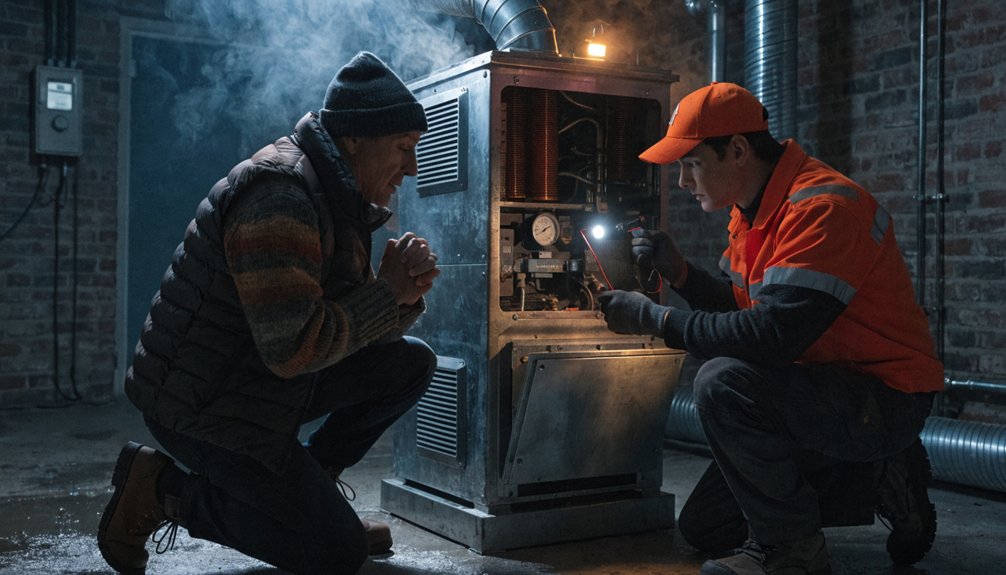
If your heater stops working, start with a quick safety check: confirm the thermostat is set to “heat,” check the circuit breaker, replace a dirty air filter if needed, and make sure the emergency shutoff switch hasn’t been turned off. Next, verify power and airflow. Listen for startup sounds, then check whether the blower runs but no warm air reaches vents. Inspect supply registers and return grilles for blockages. If your system uses batteries in the thermostat, replace them. For gas units, confirm the pilot or ignition sequence is functioning properly. These heating troubleshooting tips help you isolate common heater issues such as restricted airflow, thermostat failure, tripped breakers, or ignition problems. You can often avoid sudden breakdowns by scheduling annual inspections and routine maintenance to catch small issues before they lead to a complete loss of heat. If the unit still won’t operate normally, document symptoms, model information, and recent changes before calling a qualified technician.
Decide If It’s a Heating Emergency
You should first determine whether the heating failure requires immediate service or can wait for a standard repair visit. Key signs of urgency include no heat in freezing conditions, rapidly dropping indoor temperatures, or a system that won’t restart after basic checks. Safety risk factors such as gas odors, burning smells, sparks, smoke, or suspected carbon monoxide mean you should shut the system down and get emergency help now. Because undetected leaks and malfunctioning components can cause serious health issues, annual gas leak checks and regular inspections are essential to reduce the risk of emergencies when your heater stops working.
Signs Of Urgency
When heat stops completely during freezing weather, or your system starts tripping breakers, producing a burning smell, or leaking carbon monoxide, the situation has moved beyond routine repair and into emergency service. These are urgent indicators requiring immediate actions from you now.
| Sign | What it suggests | Your response |
|---|---|---|
| No heat in freeze | System failure | Call now |
| Breakers trip repeatedly | Electrical fault | Shut system off |
| Burning odor persists | Overheating component | Stop operation |
| Airflow suddenly weak | Blower issue | Request service |
| Loud banging starts | Mechanical damage | Book emergency visit |
You should also treat rapid cycling, unexplained shutdowns, or room temperatures dropping fast as escalation points. If performance changes abruptly instead of gradually, don’t wait for normal scheduling. Emergency service limits downtime and protects your equipment.
Safety Risk Factors
Three safety factors separate a heating inconvenience from a true emergency: combustion hazards, electrical faults, and freeze exposure. If you smell gas, hear delayed ignition, or suspect carbon monoxide, leave immediately and call for help. Improper ventilation and outdated equipment increase combustion risk, especially in sealed homes.
You should also treat tripped breakers, burning odors, sparks, or warm outlets as electrical hazards requiring urgent shutdown. Keep flammable materials away from any furnace, vent, or space heater, and prioritize child safety around portable units and exposed cords. Freeze exposure becomes an emergency when indoor temperatures drop low enough to threaten pipes, pets, infants, or older adults. Until service arrives, use your emergency kit, isolate unsafe equipment, and heat only occupied rooms cautiously. Don’t ignore recurring shutdowns or soot.
Shut Off the Heater If You Smell Gas
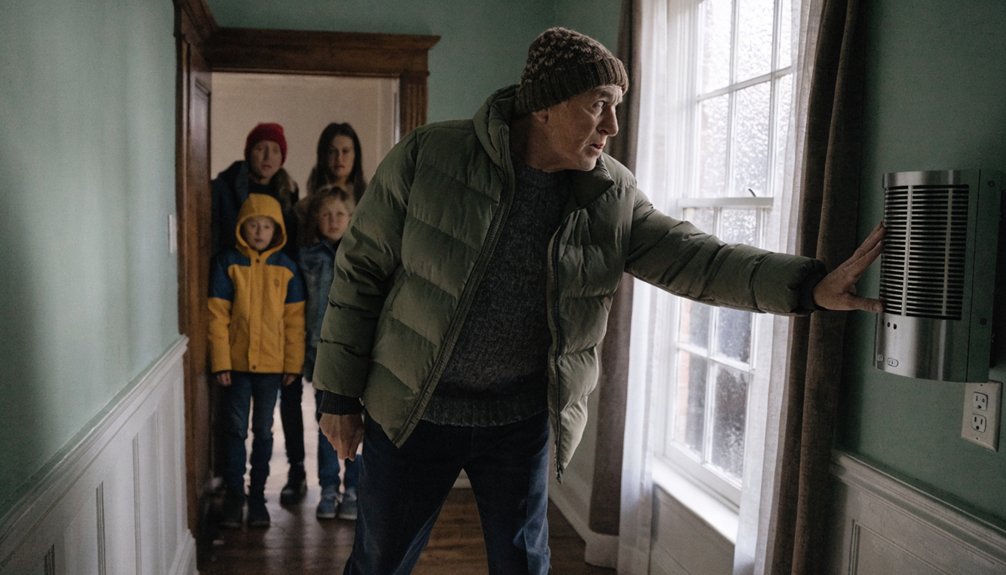
If you smell gas, hear hissing, or notice sudden dizziness, treat it as a leak and shut off the heater at once. If it’s safe to do so, turn off the gas supply valve to stop fuel flow. Then leave the area immediately and call for emergency heating service from a safe location. Be aware that leaks from fuel-burning equipment can also lead to dangerous levels of carbon monoxide, a colorless and odorless gas that can cause rapid oxygen deprivation.
Recognize Gas Leak Signs
Why does a gas leak demand immediate action? Escaping fuel can ignite quickly, displace oxygen, and expose you to harmful combustion byproducts. If your heater suddenly stops and you notice a sulfur or rotten-egg odor, treat it as a critical warning. Effective gas leak detection also includes listening for hissing near the unit, checking for unusual pilot outage patterns, and watching for dust movement around fittings.
You should also monitor physical symptoms. Headaches, dizziness, nausea, or eye irritation can indicate gas exposure, especially in enclosed spaces. Outside, dead vegetation near a gas line or bubbling in standing water may signal leakage. As part of basic gas safety precautions, avoid using switches, phones, lighters, or appliances near the suspected leak. Recognizing these signs fast helps you respond before conditions worsen.
Turn Off Gas Supply
Act immediately and shut off the heater’s gas supply at the nearest manual valve when you smell gas. Turn the valve clockwise until it stops; on most units, the handle should sit perpendicular to the pipe. Don’t relight the system or adjust controls afterward. This step supports gas supply safety and limits fuel flow while you prepare for professional help.
- Locate the dedicated shutoff valve before an issue occurs, so you’re not searching during emergency procedures.
- Use only the manual valve; don’t disassemble panels, regulators, or connectors.
- If the valve resists movement, stop and avoid forcing it, which can damage components.
Once the supply is off, keep the heater untouched. Your goal is containment, not diagnosis, until a qualified technician inspects the equipment and restores service safely.
Leave The Area Immediately
Leave the area immediately once the gas supply is off, and take everyone else with you. Don’t stop to collect belongings, troubleshoot the heater, or finish other tasks. Gas can accumulate fast, and one spark from a switch, appliance, or phone may trigger ignition. Use the nearest emergency exit if it’s safe, and move to a clear location upwind from the building.
Once outside, keep everyone together and account for children, pets, and anyone needing assistance. Don’t reenter for any reason. From a safe distance, call emergency services and your gas utility to report the leak. Tell responders if you noticed unusual odors, hissing sounds, or nearby hazardous materials. Wait for professional clearance before returning, even if the smell seems to fade completely.
Check the Thermostat and Power
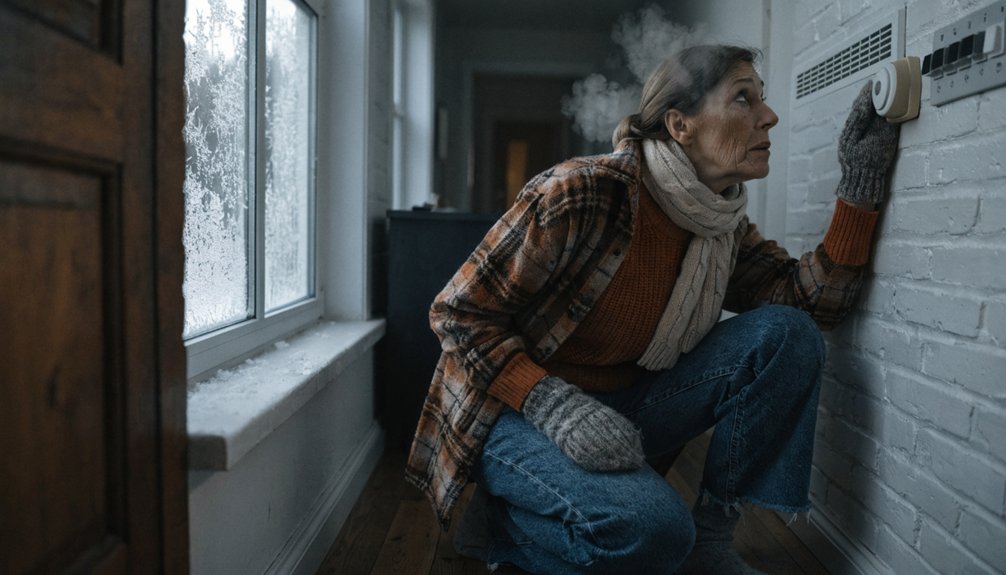
- Confirm the mode reads Heat, not Cool, Off, or Fan Only.
- Raise the setpoint 3–5 degrees to force a clear call for heat.
- Check the service switch near the furnace and the unit’s disconnect for an On position.
If the system still doesn’t respond, note any error codes, blinking lights, or unusual silence. Those details help you describe the failure accurately when you call for emergency heating service. In an emergency no-heat situation, also stay alert for any CO alarm alerts from your carbon monoxide detectors, as loss of heat can sometimes coincide with ventilation or combustion problems that need immediate attention.
Reset a Tripped Breaker or Fuse
If the thermostat is calling for heat and the unit still won’t start, check the electrical panel for a tripped breaker or blown fuse. Open the breaker panel and look for a switch sitting between ON and OFF. To reset it, push it fully to OFF, then back to ON. If your system uses fuses, inspect for a darkened window or broken metal strip before replacing the fuse with the same rating.
Follow basic electrical safety while working: keep your hands dry, stand on a dry surface, and never force a breaker that won’t reset. If the breaker trips again immediately, leave it off. Repeated tripping usually points to an overloaded circuit, short, or equipment fault that needs professional diagnosis. Call emergency heating service promptly for safe repair. During Melbourne’s cold snaps, repeated breaker trips can be a sign that overworked components or electrical issues are straining the system and risking a complete loss of heat.
Replace a Dirty Furnace Filter
Inspect the furnace filter next, since a clogged filter can restrict airflow enough to shut the system down or trigger overheating. Turn the unit off, remove the access panel, and slide the filter out carefully. If it’s visibly loaded with dust, perform filter replacement using the exact size and airflow rating listed on the frame. Regular filter changes are a key part of professional servicing that help maintain efficiency and air quality in ducted heating systems.
- Check the arrow on the filter and match it to airflow direction.
- Use the manufacturer-recommended MERV range to avoid static pressure problems.
- Record the installation date to support routine furnace maintenance.
A fresh filter can improve temperature rise, protect the blower motor, and reduce limit-switch trips. If the new filter becomes dirty unusually fast, you’ve likely got deferred furnace maintenance issues requiring professional diagnosis soon.
Check Vents and Restore Airflow
Once the filter is confirmed, check supply registers and return grilles throughout the house because blocked vents can choke airflow enough to create cold rooms, high furnace temperatures, and short cycling. Make sure furniture, rugs, curtains, and storage bins aren’t covering openings. Open all registers fully unless your system was professionally balanced for partial closure.
Next, remove visible dust buildup from grilles and vacuum inside the first few inches of each duct opening. Look for obvious airflow obstruction such as pet hair, lint, toys, or collapsed flexible duct sections in accessible areas. If you have multiple returns, confirm each one is unobstructed so the blower can circulate air properly. Consistent vent maintenance helps stabilize temperature rise, improve comfort, and reduce strain on heat exchangers, blower motors, and safety limits during winter operation. In Melbourne, ensuring clear vents works hand‑in‑hand with regular maintenance by licensed technicians to prevent unexpected ducted heating breakdowns and costly repairs.
Know When to Call Emergency Heating Repair
Good airflow checks can rule out simple restrictions, but some heating problems signal a fault that needs immediate professional service. If your unit won’t start, cycles erratically, trips breakers, or emits burning, gas, or electrical odors, you shouldn’t wait. Emergency service is also warranted when indoor temperatures drop rapidly or vulnerable occupants are at risk. In many cases, scheduling regular maintenance ahead of the heating season can help prevent these sudden emergency breakdowns.
- Loud banging, screeching, or grinding often indicates failing motors, belts, or ignition components.
- Water leaks, soot, or repeated shutdowns can point to combustion, venting, or heat exchanger issues.
- A blank thermostat, sparking controls, or frequent breaker trips suggest electrical faults in heating systems.
When these symptoms appear, shut the system down if it’s unsafe, then request diagnostic service. A technician can isolate the failure quickly and explain safe repair options clearly.
Frequently Asked Questions
How Long Does an Emergency Heating Repair Appointment Usually Take?
An emergency heating repair appointment usually takes 1–3 hours; your heating repair timeline depends on diagnosis complexity, parts availability, and system access. You’ll typically get a technician arrival window of 2–6 hours, depending on demand.
Will Emergency Heating Service Cost More on Nights or Weekends?
Like a town crier, yes—you’ll usually pay more on nights or weekends. After-hours rates reflect higher emergency costs and limited service availability. You can reduce charges by confirming diagnostics, labor minimums, and parts markups upfront.
Can Frozen Pipes Result From a Heater Shutting Down Overnight?
Yes, you can get frozen pipes from a heater shutdown overnight, especially in uninsulated areas. You’ll face higher risk when outdoor temperatures drop below freezing, airflow is poor, or plumbing runs along exterior walls.
Do Home Warranties Typically Cover Emergency Heater Repairs?
Yes, you’ll typically get warranty coverage for emergency heater repairs if the failure involves covered components, not excluded conditions. You should review service fees, claim limits, and heater maintenance requirements, since neglected upkeep can void coverage.
How Can I Prepare My Home Before the Technician Arrives?
Like Apollo 13’s checklist, you’d clear access, secure pets, note symptoms, and gather model details. Follow a preparation checklist: replace thermostat batteries, check breakers, and observe safety precautions by shutting fuel valves if you smell gas.