
On a cold Melbourne morning, you might switch on your ducted heating and notice weak airflow in the back rooms. That’s often the first sign your system needs attention. You should start with a safety check, then inspect filters, vents, airflow, and thermostat response. If you ignore unusual smells, rattling, or cold spots, small faults can turn into safety risks. The next steps can help you catch problems before they escalate.
Key Takeaways
- Turn off power and isolate gas before checks; if you notice damage, corrosion, or gas smells, contact a licensed technician immediately.
- Clean return-air filters regularly and replace damaged ones to maintain airflow, efficiency, and indoor air quality during Melbourne’s colder months.
- Vacuum and wipe supply and return vents, and keep furniture clear to prevent airflow restrictions and uneven heating.
- Compare airflow and temperature at each vent, and watch for rattling, burning smells, or cold spots that may indicate faults.
- Book annual professional servicing to inspect burners, heat exchangers, gas pressure, and carbon monoxide risks for safe, reliable winter performance.
Start With a Ducted Heating Safety Check
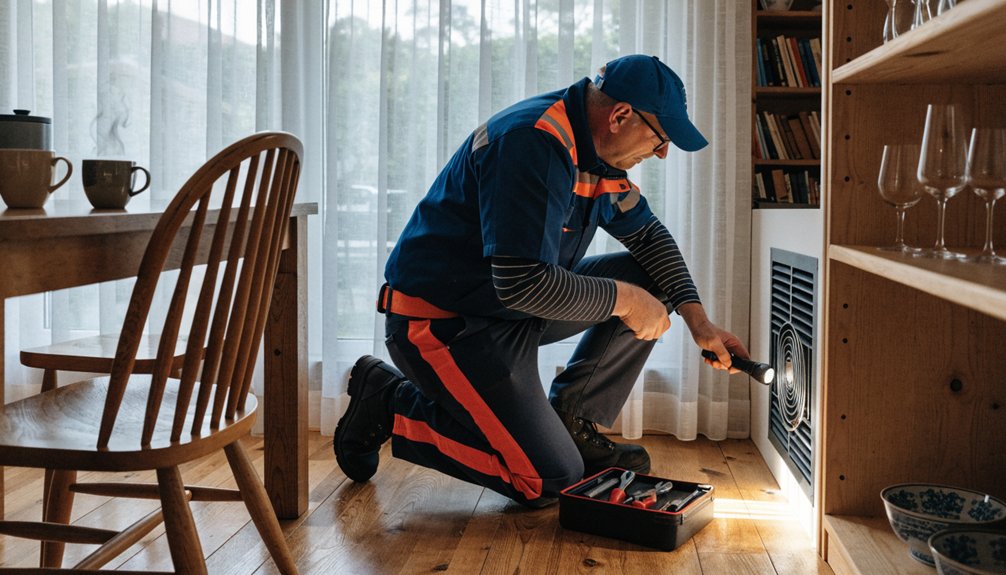
Before you perform any ducted heating maintenance, start with a safety check to reduce the risk of electric shock, gas exposure, fire, or mechanical injury. You should isolate power at the switchboard and confirm shutdown with a suitable tester before touching the unit. If your system is gas-fired, close the gas isolation valve and verify there’s no odour indicating leakage. Allow components to cool fully, then inspect the cabinet, access panels, wiring entry points, and surrounding area for scorch marks, corrosion, loose fasteners, moisture, or pest activity. Use appropriate PPE, stable lighting, and clear access to maintain control while working. Follow manufacturer safety protocols and your model’s service instructions at every step. If anything appears damaged, unstable, or non-compliant during heater inspections, stop immediately and arrange a licensed technician assessment. Regular gas heater servicing also helps prevent carbon monoxide buildup and ensures your system operates safely and efficiently during Melbourne winters.
Clean Ducted Heating Filters and Vents
Once the system is isolated and safe to access, clean filters and vents to restore correct airflow, reduce dust recirculation, and limit unnecessary strain on the fan motor and heat exchanger. Remove return-air filters carefully, noting orientation before lifting them out. If they’re reusable, vacuum both sides with a soft brush attachment, then wash and dry them fully before refitting. If they’re damaged, clogged, or degraded, proceed with filter replacement using the correct size and specification. Regular filter and vent cleaning supports efficient operation and helps maintain better air quality between professional services.
For vent cleaning, remove accessible grilles and wipe them with a damp microfibre cloth or mild detergent solution. Use a vacuum to clear dust from surrounding openings without pushing debris deeper into the system. Wear gloves and a P2 mask if dust levels are high. Reinstall all components securely before restoring power and operation.
Check Ducted Heating Airflow and Thermostat
You should verify that each supply vent has unobstructed airflow and consistent output, since restricted discharge can indicate a developing system fault. You’ll also need to confirm thermostat accuracy by comparing its reading and response times against actual room conditions. If you notice weak airflow, uneven heating, or unusual noise and pressure changes, treat them as possible signs of duct blockage and inspect the system safely. Regular checks for issues like blocked ducts and faulty thermostats help maintain efficient system performance and prevent unexpected failures.
Airflow Vent Inspection
Although ducted heating faults often appear to be mechanical, restricted airflow or an incorrect thermostat setting can cause uneven heating, short cycling, and higher system strain. You should inspect each vent for obstructions, dust buildup, and poor vent alignment. Verify that furniture, rugs, and curtains don’t block discharge paths, as this reduces airflow measurement accuracy and increases static pressure.
| Checkpoint | What to inspect | Risk |
|---|---|---|
| Vent grille | Dust, damage | Reduced discharge |
| Air path | Furniture, curtains | Local overheating |
| Outlet balance | Open/closed position | System strain |
Use a torch and isolate power before removing any grille. Confirm vents open fully and sit securely in place. If one room receives noticeably less air, note it for professional balancing rather than forcing dampers beyond their intended range.
Thermostat Accuracy Check
Two quick checks can confirm whether the thermostat is reading and controlling correctly before you assume a larger ducted heating fault. First, compare the wall thermostat reading with a reliable digital thermometer placed nearby, away from sunlight, lamps, or supply vents. A difference greater than 1–2°C suggests thermostat calibration drift or poor sensor placement.
Second, raise the set temperature by several degrees and confirm the heater starts promptly, then lower it and verify shutdown. Delayed response, short cycling, or ongoing temperature inconsistency can indicate wiring, battery, or control-board issues. Before opening any cover, isolate power at the switchboard if your model requires hardwired servicing. You should also check that the thermostat is level, firmly mounted, and unobstructed, because drafts and loose mounting can distort sensing accuracy and system performance over time.
Duct Blockage Signs
If the thermostat checks out but rooms still heat unevenly, restricted airflow is the next fault to assess. You should compare supply strength at each outlet and note weak branches, excessive noise, or longer run times. These symptoms often indicate duct issues such as crushed flexible ducting, disconnected joints, debris buildup, or blocked return grilles.
Before inspecting, switch the system off at the isolator. Check vents for dust mats, furniture obstruction, and damaged grilles. In the roof space, look for kinks, compression, tears, or sagging sections that can create airflow problems and reduce temperature delivery. Don’t enter confined roof areas unless it’s safe, stable, and adequately lit. If you find disconnected ducts, burnt odours, or insulation damage near wiring, stop and arrange a licensed technician immediately.
Watch for Noises, Smells, and Cold Spots
Three warning signs deserve prompt attention in a ducted heating system: unusual noises, unfamiliar smells, and persistent cold spots. You shouldn’t ignore rattling, banging, or whistling, because these often indicate identifiable noise sources such as loose panels, worn bearings, or restricted returns. If system vibrations increase, switch the unit off and inspect accessible components safely.
You should also investigate odor origins promptly. A burning smell may signal dust buildup or electrical overheating, while musty odors can point to moisture, microbial growth, or duct contamination. Persistent temperature inconsistencies between rooms usually reflect airflow disruptions, leaking ducts, crushed sections, or failing dampers. Check whether vents are fully open and unobstructed. If one area remains noticeably colder, isolate the affected zone and stop using the system if overheating, smoke, or electrical odors appear. For peace of mind and safety, consider booking an annual check with experienced technicians who specialise in gas ducted heating services across Melbourne.
Service Your Ducted Heating Every Year
You should schedule a professional inspection every year to verify safe burner operation, airflow performance, and control accuracy. During the service, your technician should clean or replace filters and clear vents to maintain efficient, unobstructed air distribution. This annual check also helps you catch wear, leaks, or component faults early before they develop into safety hazards or costly failures. Annual servicing by skilled technicians also supports peak efficiency and helps keep your energy bills under control.
Annual Professional Inspection
At least once a year, schedule a licensed technician to inspect and service your ducted heating system. A professional service verifies burner performance, heat exchanger integrity, ignition reliability, gas pressure, electrical connections, thermostat calibration, and airflow balance. This targeted assessment helps you maintain energy efficiency, reduce operating faults, and protect your system lifespan.
You can’t reliably detect every developing issue on your own, especially where combustion safety and component wear are involved. During an annual inspection, a technician can test for carbon monoxide risks, identify gas leaks, confirm safe flue operation, and measure motor and fan performance under load. They’ll also check control boards, limit switches, and wiring for deterioration. By servicing the unit before peak winter demand, you reduce breakdown risk, improve heating consistency, and support safe, compliant operation throughout Melbourne’s colder months.
Filter And Vent Cleaning
Because dust accumulation restricts airflow and forces your system to work harder, filter and vent cleaning should be part of your annual ducted heating service. You should isolate power before opening return-air grilles or removing access panels, then vacuum loose debris using a soft brush attachment to avoid damaging components.
During routine duct maintenance, clean supply and return vents, wipe grille surfaces, and confirm they’re unobstructed by furnishings or curtains. If your unit uses disposable media, schedule timely filter replacement according to manufacturer intervals, occupancy levels, and indoor dust load. Washable filters should be rinsed, dried completely, and reinstalled with correct orientation to prevent bypass leakage. Clean airflow paths improve heat distribution, reduce fan strain, support combustion efficiency, and help you maintain safer operating temperatures across your Melbourne home throughout winter.
Early Fault Detection
Clean filters and unobstructed vents also make emerging faults easier to spot during an annual service. When airflow is stable, your technician can identify abnormal burner operation, temperature drift, ignition delays, and pressure irregularities before they escalate into breakdowns or carbon monoxide risks. Early diagnosis supports safer operation and reduces expensive component failures.
- Check for unusual noises, odours, or delayed starts.
- Monitor thermostat accuracy and supply-air temperature consistency.
- Inspect electrical connections, safety switches, and flame sensor performance.
- Review maintenance schedules to track recurring fault indicators.
If you service your ducted heating every year, you’ll improve fault isolation and preserve system efficiency. Small defects in fans, heat exchangers, or controls won’t stay hidden as long. That means fewer winter callouts, lower repair costs, and better household safety overall.
Know When to Call a Heating Technician
When your ducted heating system shows signs such as uneven airflow, unusual noises, frequent cycling, or a persistent gas smell, it’s time to call a qualified heating technician. These heating indicators often point to burner faults, cracked heat exchangers, blocked return air, ignition failure, or unsafe combustion conditions that require prompt diagnosis. You shouldn’t attempt internal repairs yourself, especially on gas valves, electrical controls, or flue components. Verify the technician qualifications before booking: look for appropriate gas fitting licensing, fault-finding experience, and familiarity with your unit’s brand and zoning setup. A competent technician will test gas pressure, airflow, thermostat calibration, carbon monoxide risk, and safety shutoff operation. Early professional intervention protects your household, prevents component damage, and helps restore efficient, compliant heating performance during Melbourne’s colder months. Annual inspections that include professional gas leak checks help detect early issues, reduce health risks, and prolong the life of your ducted heating system.
Frequently Asked Questions
Can Ducted Heating Increase My Melbourne Home’s Resale Value?
Yes—like a well-tuned engine, your ducted heating can boost resale benefits in Melbourne if it’s safe, compliant, and efficient. You’ll attract buyers by demonstrating energy efficiency, reliable zoning, documented servicing, and lower perceived upgrade costs.
How Long Does a Ducted Heating System Typically Last?
Your ducted heating system typically lasts 15–20 years. You’ll maximize system lifespan through correct maintenance frequency, filter cleaning, and professional servicing. If performance drops, strange noises occur, or combustion faults appear, you should arrange immediate inspection.
Is Ducted Heating Suitable for Homes With Solar Power?
Yes—[✓ theory confirmed] your ducted heating can suit homes with solar power, provided you match system load, inverter capacity, and controls. You’ll improve solar efficiency, boost energy savings, and maintain safe electrical compliance during peak demand.
Can Pets Affect Ducted Heating System Performance?
Yes, your pets can affect ducted heating performance: pet hair increases system blockage risks, worsens allergies, and reduces air quality. You should increase maintenance frequency and perform seasonal checks to protect airflow, efficiency, and safe operation.
Does Ducted Heating Impact Indoor Humidity During Winter?
Yes—your ducted heating can lower indoor humidity in winter; heated air’s relative humidity may drop below 30%, increasing dryness. You’ll need humidity control to protect comfort, preserve air quality, and reduce irritation and static.