
When your heating system is less than cooperative, you need service that is accurate, safe, and compliant. Whether you rely on gas, ducted, or reverse cycle heating, each system has specific installation, maintenance, and repair requirements that affect performance, energy use, and occupant safety. If you’re unsure which option suits your home or when servicing is due, the key differences can directly influence your next decision.
Key Takeaways
- Choose gas, ducted, or reverse cycle heating based on home layout, insulation, energy goals, and available fuel or electrical connections.
- Gas heating services should include burner, igniter, thermostat, flue, and carbon monoxide safety checks by a licensed technician.
- Ducted systems provide even whole-home heating, with zoning and insulated ducts improving comfort, efficiency, and running costs.
- Reverse cycle systems offer efficient heating and cooling in one unit, making them ideal for seasonal comfort and room-specific control.
- Annual servicing and professional installation help maintain efficiency, confirm safe operation, and prevent faults, leaks, and uneven heating.
Which Heating System Is Best for Your Home?

Which heating system is best for your home depends on your floor plan, insulation levels, existing fuel connections, and how you use each room day to day. You’ll need to compare capacity, zoning control, efficiency ratings, and response time before selecting a system. If you want whole-home coverage, ducted systems suit larger layouts and deliver uniform airflow through multiple rooms. For targeted conditioning, split systems give you room-by-room control and can reduce energy use in partially occupied homes. Reverse cycle units provide both heating and cooling, which improves annual value where temperatures vary seasonally. Electric heating may suit smaller spaces, additions, or properties without duct infrastructure, though running profiles differ by tariff and usage pattern. You should also assess installation costs, ceiling space, noise limits, and thermostat compatibility before proceeding. For ducted and central systems, scheduling regular maintenance helps preserve efficiency, improve safety, and extend the lifespan of your heating equipment.
Gas Heating Services: Safety, Repairs, and Maintenance
When you service a gas heater, you must prioritise carbon monoxide safety by confirming proper ventilation, flue integrity, and detector operation. You’ll also need to address common gas heater repairs, such as faulty igniters, worn thermocouples, and burner or thermostat malfunctions. With routine maintenance checks, you can keep the system compliant, reduce failure risk, and maintain efficient operation. Annual professional inspections help detect potential carbon monoxide leaks early and ensure the gas heater continues to operate safely and efficiently.
Carbon Monoxide Safety
Given that carbon monoxide is colorless, odorless, and potentially lethal, your gas heating system must be inspected, serviced, and vented to manufacturer and code requirements to prevent unsafe combustion and flue gas leakage. You should verify correct burner operation, heat exchanger integrity, flue draft, ventilation openings, and combustion air supply during scheduled servicing.
You shouldn’t rely on symptoms alone, because dangerous exposure can occur before obvious appliance failure. Install compliant carbon monoxide detectors in approved locations and test them regularly according to manufacturer instructions. Your technician should also confirm clearances, exhaust termination, and appliance settings meet applicable safety regulations. If your heater is operating irregularly, shut it down and arrange immediate assessment. Documented inspections help demonstrate compliance, reduce risk, and support safe, continuous winter operation in your home.
Common Gas Heater Repairs
Although many gas heater faults begin as minor performance issues, repairs must be based on tested diagnosis and carried out in accordance with manufacturer specifications and applicable gas, electrical, and ventilation codes. When your system short-cycles, fails to ignite, or overheats, technicians isolate thermostat issues, ignition problems, gas leaks, pilot light faults, airflow restrictions, vent blockages, and circuit malfunctions before replacing parts.
- You hear repeated clicking, but the burner never lights.
- You smell gas near unions, valves, or the appliance cabinet.
- You see a weak pilot light lifting or dropping from the thermocouple.
- You notice delayed ignition, soot marks, or uneven burner flames.
Corrective work may include burner maintenance, pressure testing, flame-sensing verification, control-board diagnostics, and safe recommissioning to confirm compliant operation after repair.
Routine Maintenance Checks
Because gas heaters can appear to run normally while hidden faults develop, routine maintenance checks are essential to verify safe combustion, correct gas pressure, intact ventilation, and reliable control operation. You should schedule servicing at least annually so a licensed technician can inspect burners, heat exchangers, ignition components, flue integrity, and safety shutoff functions.
During maintenance, your technician should test carbon monoxide levels, confirm thermostat calibration, clean filters, check duct leakage, and measure airflow against manufacturer specifications. These steps support system efficiency, reduce wear, and help identify non-compliant conditions before they become hazards. You’ll also benefit from seasonal preparation, especially before winter demand increases, because early servicing allows timely parts replacement and stable performance. Documented checks provide service history, demonstrate duty-of-care, and help guarantee your heater remains safe, efficient, and regulation-ready.
Ducted Heating for Whole-Home Comfort
With ducted heating, you can achieve even heat distribution across the entire home through a correctly sized and balanced duct network. You’ll also gain zoned temperature control, which lets you regulate output by area to improve comfort and system efficiency. When installed and calibrated to specification, this configuration supports consistent performance and compliant operation. Modern ducted gas systems can reach up to 6-star energy ratings, helping lower running costs compared to electric heating alternatives.
Even Heat Distribution
When a ducted heating system is correctly designed and balanced, it delivers consistent warmth across multiple rooms rather than creating hot and cold spots. You benefit from controlled heat flow, measured outlet temperatures, and stable return-air performance that support thermal comfort throughout the home.
- Warm air reaches the hallway, bedrooms, and living area at matched velocities.
- Supply grilles diffuse air evenly, avoiding drafts against seating, beds, or workspaces.
- Insulated duct runs reduce heat loss through roof cavities and subfloor sections.
- Balanced return paths help maintain pressure, circulation, and uniform room conditions.
You’ll get better results when duct sizing, grille placement, insulation levels, and fan settings are verified during installation and servicing. This approach supports efficiency, compliance, and dependable comfort without overloading the system or leaving distant rooms underheated.
Zoned Temperature Control
Even heat distribution works best alongside zoned temperature control, where motorised dampers and dedicated thermostats regulate airflow to selected areas based on occupancy, usage patterns, and setpoint requirements. This configuration lets you heat living zones and bedrooms independently, reducing energy waste without compromising comfort.
With zoned heating, you can match output to actual demand, which supports system efficiency and improves seasonal performance. Your installer should balance airflow, verify static pressure, and confirm damper operation to maintain compliant duct performance. Correct temperature control also limits overheating, short cycling, and uneven return-air conditions that can affect reliability. For gas and ducted systems, zoning design must account for minimum airflow, bypass strategies where required, and thermostat placement away from drafts, sunlight, or internal heat sources, ensuring stable sensing and consistent operation year-round.
Reverse Cycle Heating for Year-Round Efficiency
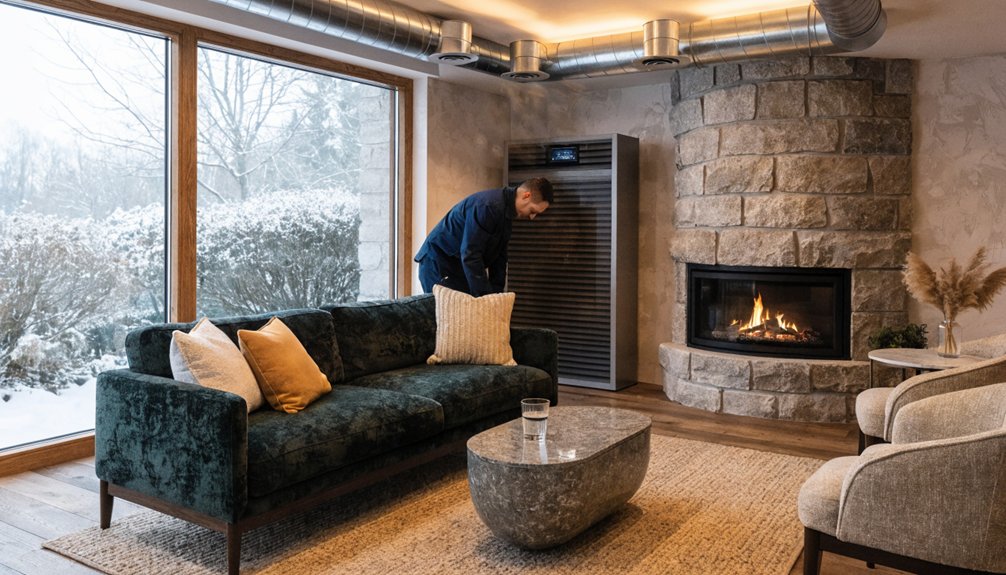
Because reverse cycle systems transfer heat rather than generate it directly, they can deliver efficient winter heating while also providing summer cooling from the same ducted infrastructure. You benefit from strong energy efficiency, stable indoor temperatures, and measurable cost savings when the system is correctly sized, insulated, and commissioned.
- You feel warm air distributed evenly through ceiling outlets on a cold morning.
- You switch modes and receive cooled, dehumidified airflow during summer afternoons.
- You maintain room-specific comfort using compatible zoning dampers and controllers.
- You reduce electrical demand through inverter operation that modulates compressor output.
For compliance and performance, you should verify airflow balance, refrigerant charge, return-air design, and thermostat calibration. These factors support efficient operation, occupant comfort, and consistent seasonal control across your home year-round. Just as with hydronic heating systems, engaging experienced technicians for regular servicing helps preserve efficiency, reliability, and long-term comfort.
Signs You Need Heating Repair or Servicing
Efficient heating still depends on timely servicing, and your system will usually show early fault indicators before performance drops further. If you notice uneven airflow, delayed start-up, short cycling, abnormal burner behaviour, or inconsistent thermostat response, you’re likely seeing Heating symptoms that require assessment. You should also act if energy consumption rises without weather-related cause, filters clog faster than normal, or the unit produces rattling, grinding, burning, or gas-related odours. For ducted systems, persistent cold zones may indicate leakage, motor wear, or control faults. For gas heating, yellow flames or soot suggest combustion issues needing immediate isolation and inspection. Repair urgency increases when safety devices trip, pilot ignition becomes unreliable, or condensate and moisture appear near internal components, signalling potential performance degradation or hazardous operation. Regular filter maintenance and annual inspections can also prevent many of these symptoms from developing into more serious and costly faults.
How Professional Heating Installation Works
When you arrange professional heating installation, the process starts with a site assessment to confirm load requirements, fuel type, zoning layout, duct condition, ventilation, and electrical capacity before any equipment is selected. Regular inspections also allow technicians to check for gas leaks and carbon monoxide issues that could affect both safety and performance.
- You’ll see technicians measure static pressure, room volumes, and return-air paths.
- They’ll position units on compliant clearances, brackets, and vibration isolators.
- They’ll seal ducts, gas joints, and condensate lines using professional tools.
- They’ll commission controls, test airflow, and verify safety shutoffs under load.
During the installation process, licensed installers follow manufacturer specifications and code requirements for gas, ducted, or reverse cycle systems. You can expect pressure testing, electrical isolation, refrigerant checks, thermostat calibration, and documented commissioning results. That’s how your system is installed for safe, efficient, and reliable performance year-round.
Frequently Asked Questions
How Long Does a Typical Heating System Warranty Last?
A typical heating system warranty lasts 5 to 10 years, though you’ll often see shorter terms for labour. Your warranty coverage depends on manufacturer conditions, registration, servicing compliance, and component type, affecting typical duration.
Are Government Rebates Available for Energy-Efficient Heating Upgrades?
Yes—if you replace an outdated unit, you may qualify for government incentives supporting energy efficient upgrades. For example, installing a high-efficiency heat pump could access rebates, but you’ll need to verify your jurisdiction’s eligibility criteria.
Can Heating Installations Increase My Home’s Resale Value?
Yes, your home’s resale value can increase with compliant heating installations, especially when they improve energy efficiency and home comfort. You’ll likely attract buyers seeking lower operating costs, reliable performance, and documented system specifications.
What Financing Options Exist for New Heating System Purchases?
You can access financing plans, heating loans, bank personal loans, credit cards, retailer instalment agreements, and government-backed energy schemes. You’ll need to compare interest rates, fees, repayment terms, approval criteria, and any early payout penalties.
How Often Should Heating Filters Be Replaced in Rental Properties?
You should replace heating filters every 1–3 months, depending on usage, occupancy, and manufacturer specifications. For compliant filter maintenance, you’ll need clear lease terms defining tenant responsibilities, inspection intervals, and documented replacement procedures in rentals.