
If your ducted heating system starts cycling too often, pushing weak airflow, or making new noises, you shouldn’t ignore it. Uneven room temperatures, rising energy use, and unusual smells often point to faults in the fan, ducts, or heat exchanger. Some issues reduce comfort, but others can affect safety. The challenge is knowing which symptoms signal a minor repair and which ones need urgent professional attention.
Key Takeaways
- Reduced airflow, cold rooms, or uneven temperatures often indicate blocked ducts, leaks, or blower problems needing professional inspection.
- Unusual noises like banging, squealing, buzzing, or rattling can signal failing internal parts, loose ducts, or electrical faults.
- Frequent cycling, delayed startup, or repeated shutdowns suggest ignition, thermostat, relay, or control system issues requiring expert diagnosis.
- Rising energy bills, unexplained drafts, or longer run times often point to duct leaks, poor seals, or insulation-related heat loss.
- Carbon monoxide alarm activation, metal-on-metal sounds, or sudden performance drops are urgent warning signs that require immediate professional repairs.
Early Signs Your Ducted Heating Needs Repair

How can you tell when a ducted heating system is starting to fail? You’ll often notice reduced airflow, inconsistent room temperatures, delayed startup, or frequent cycling. These are early warning signs that components such as filters, thermostats, igniters, or sensors may be underperforming. If your energy bills rise without a weather-related cause, efficiency losses may already be occurring.
You should also watch for stale odours, visible dust around vents, or a pilot light that won’t stay stable. These symptoms can indicate restricted return air, burner issues, or poor combustion, all of which affect safe operation. Among the most useful maintenance tips are replacing filters on schedule, checking thermostat accuracy, and booking inspections before minor faults escalate. Prompt diagnosis helps you reduce safety risks, avoid system strain, and preserve winter reliability. In many cases, booking annual inspections with licensed technicians ensures potential faults are identified early and repaired using approved parts, preventing unexpected breakdowns.
Ducted Heating Noises You Shouldn’t Ignore
Why do unusual noises matter? They’re often your system’s earliest fault indicators. If you hear buzzing sounds, the issue may involve an electrical component, failing capacitor, loose wiring, or a stressed blower motor. These faults can escalate quickly and shouldn’t be ignored.
Rattling ducts can point to unsecured duct sections, damaged hangers, vibration from the fan assembly, or debris inside the ductwork. A metallic banging noise may indicate expansion stress, a loose panel, or an imbalanced blower wheel. Squealing often suggests belt wear or bearing failure in older units. Clicking that repeats during startup can signal ignition or relay problems. You shouldn’t keep running the heater to “see if it stops.” Shut it down if noises intensify, and arrange professional diagnostics before a minor defect becomes a safety risk. Regular inspections and maintenance help ensure safe ducted heating operation and can prevent these noise-related issues from developing into major faults.
Why Airflow Feels Weak at the Vents
If the airflow at your vents feels weak, your system may be struggling with blocked or dirty ducts, a failing blower motor, or leaking duct connections. These faults reduce heat delivery, increase system strain, and can indicate conditions that shouldn’t be ignored. You should have the cause diagnosed promptly to prevent further component damage and maintain safe, reliable operation. Weak airflow can also be an early sign that your ducted gas heating system needs professional servicing to restore efficiency and prevent higher running costs.
Blocked Or Dirty Ducts
One common cause of weak airflow at the vents is blocked or dirty ductwork, which restricts the volume of heated air your system can deliver to each room. Dust, insulation fibres, pest debris, or crushed sections can narrow passages, raise static pressure, and reduce outlet velocity. If you notice uneven heating, stale odours, or excess dust near grilles, you should schedule a duct inspection promptly.
| Inside the duct | What you notice |
|---|---|
| Dust mats on duct walls | Weak, dusty airflow |
| Crushed flexible duct | One room stays cold |
| Debris near branch take-offs | Whistling, reduced volume |
Professional duct cleaning removes buildup safely, but technicians should also check for leaks, disconnected runs, and contamination sources. Delaying service can worsen indoor air quality and overwork your heating system unnecessarily.
Failing Blower Motor
A weak stream of warm air at the vents isn’t always caused by dirty ductwork; the blower motor may be losing speed or torque and failing to move the designed volume of air through the system.
You might also notice longer heat-up times, intermittent airflow, humming at startup, or a burning electrical smell. These are common blower motor issues linked to worn bearings, a failing capacitor, overheating windings, or voltage irregularities. Because restricted airflow can overheat the heat exchanger and stress safety controls, you shouldn’t keep running the unit unchecked. A technician can test amp draw, capacitor values, RPM performance, and temperature rise to confirm whether the motor is underperforming. If replacement is required, ask for motor replacement tips on correct sizing, rotation direction, mounting, and compatible control settings afterward.
Leaking Duct Connections
Even when the furnace itself is operating normally, leaking duct connections can dump a significant share of heated air into the roof space, wall cavities, or underfloor instead of delivering it to your vents. You’ll notice weaker airflow, uneven room temperatures, and longer run times as the system struggles to meet the thermostat setting.
Because leaks alter static pressure, they can also reduce efficiency, draw dust into the ductwork, and overwork the blower. In severe cases, disconnected sections may create condensation risks or expose combustible areas to excess heat. You shouldn’t ignore rattling, whistling, or sudden drops in outlet velocity. A professional duct inspection can pinpoint loose joints, failed seals, or crushed sections. Prompt connection maintenance restores designed airflow, improves safety, and helps prevent further mechanical strain on your heating system overall.
Why Some Rooms Feel Colder Than Others
When some rooms stay noticeably colder than others, your ducted heating system may be losing airflow through leaking ducts, blocked outlets, failing dampers, or an unbalanced zone setup. You’ll notice temperature imbalance and uneven heating when supply pressure drops or warm air can’t reach distant rooms safely.
| Symptom | Likely cause | Risk |
|---|---|---|
| Cold back rooms | Duct leak | Reduced airflow |
| Weak vent output | Blocked outlet | Overheating strain |
| One zone underheats | Damper fault | Unsafe operation |
You shouldn’t ignore these signs. Restricted airflow can force components to run outside normal limits, affecting performance and reliability. Check whether vents are open, furniture isn’t obstructing outlets, and filters aren’t clogged. If colder rooms persist, book a licensed technician to test static pressure, inspect zoning controls, and confirm safe, balanced distribution throughout your home. Regular inspections by a professional can help maintain efficient operation and prevent small airflow issues from turning into major, costly repairs.
Why Your Heating Bills Keep Rising
If your heating bills keep climbing, your ducted system may be losing heat through leaks, poor seals, or restricted airflow you can’t easily detect. That hidden energy loss forces key components to run longer and harder, increasing wear on the fan motor, heat exchanger, and controls. If you don’t address it promptly, you could be facing both higher operating costs and a greater risk of mechanical failure. In older Melbourne homes, issues like deteriorated insulation and air leakage can dramatically increase energy loss, compounding the strain on your ducted heating system.
Hidden Energy Loss
Although your ducted heating system may still reach the set temperature, hidden energy loss can force it to run longer and cycle harder than it should. You may have leaking ducts, degraded insulation, or unsealed joints that let conditioned air escape into roof spaces or wall cavities. That lowers duct efficiency and increases operating time without obvious comfort improvements.
A professional inspection can identify where heat is being lost before the problem worsens. Technicians often use thermal imaging to trace temperature inconsistencies, detect leakage paths, and verify whether supply air is reaching intended rooms. You should also treat unexplained drafts, uneven room temperatures, or hot and cold patches near vents as warning signs. Left unaddressed, hidden losses can waste energy, raise costs, and create avoidable strain on your system overall.
Overworked Heating Components
Because worn or restricted parts force longer run times, overworked heating components are a common reason your energy bills keep climbing. If your blower motor, heat exchanger, or limit switch is under strain, your system can’t reach temperature efficiently, so it cycles harder and longer than normal.
You may notice hotter cabinet surfaces, frequent shutdowns, delayed starts, or unusual burning smells. These are warning signs of overheating components and increasing system inefficiency. A clogged filter, blocked return, failing capacitor, or poor burner performance can all elevate operating temperatures and electrical load. Left unresolved, that stress can damage controls, crack critical parts, or create fire and carbon monoxide risks. If your heater seems to run constantly without delivering steady warmth, you should schedule a professional inspection and targeted repair immediately.
What Bad Smells From Ducted Heating Mean
When your ducted heating starts producing unusual odours, it’s often a useful diagnostic clue rather than a minor annoyance. You shouldn’t ignore malodorous odors, because each scent can indicate contamination, overheating, or restricted airflow within the system. A brief burning smell at season start may be dust residue, but persistent odours suggest component stress or dirty ductwork.
| Smell | Likely source | What it suggests |
|---|---|---|
| Musty | Damp dust | Moisture buildup |
| Burning | Motor, wiring | Heat stress |
| Oily | Residue | Internal deposits |
| Sour | Biological growth | Filter neglect |
| Stale | Poor airflow | Duct blockage |
If smells recur, you’re likely dealing with filters, insulation, fan motors, or debris accumulation. A technician can test airflow, inspect electrical connections, and isolate the source before efficiency declines further. Regular maintenance and CO detectors help reduce the risk that odours are linked to dangerous carbon monoxide issues from your gas heating system.
Signs You Need Urgent Ducted Heating Repairs
If your ducted heating shows sudden performance changes or safety-related faults, you shouldn’t delay repairs. Immediate warning signs include repeated shutdowns, weak airflow across multiple vents, tripped circuit breakers, or a pilot light that won’t stay lit. You should also treat burning smells, sparking noises, or visible smoke as urgent issues requiring immediate professional attention.
Uneven heating combined with rising energy bills can indicate serious system inefficiencies, especially if rooms stay cold while the unit runs continuously. If you hear banging, screeching, or metal-on-metal sounds, internal components may be failing under load. You shouldn’t ignore carbon monoxide alarm activation, soot around outlets, or excessive condensation near the unit either. These symptoms can signal combustion faults, airflow restrictions, or overheating risks that compromise safety and reliability. For peace of mind and long-term system performance, consider arranging a free consultation with expert central heating technicians in Melbourne to assess any concerning symptoms.
How Pros Diagnose Ducted Heating Problems
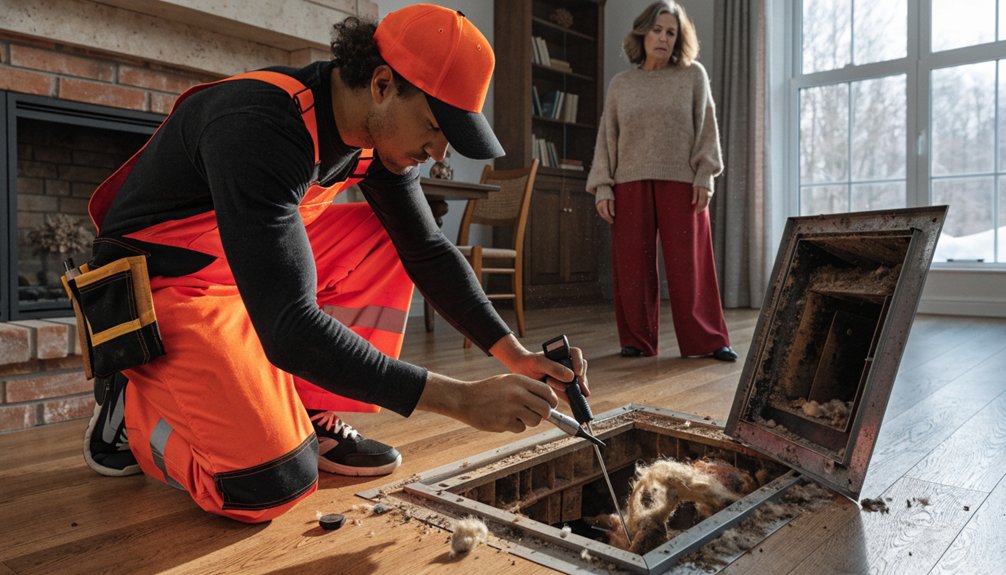
Start with a systematic inspection: a qualified technician won’t guess at the fault, but will test the thermostat, power supply, ignition components, airflow, and safety controls to isolate the cause. When you call for professional help, you’re getting technician expertise backed by diagnostic tools that measure voltage, gas pressure, temperature rise, and motor performance. This lets the technician confirm whether your issue comes from a failed sensor, blocked return, cracked heat exchanger, worn fan motor, or control board fault. You can expect them to check duct integrity, filter condition, burner operation, and fault codes while following shutdown and ventilation procedures. That safety-focused process reduces guesswork, prevents unnecessary part replacement, and helps guarantee your ducted heating system operates reliably, efficiently, and without avoidable risk to your household each winter. Professional servicing also includes carbon monoxide checks and gas line inspections to prevent dangerous leaks and keep your home safe through Melbourne’s coldest months.
Frequently Asked Questions
How Often Should Ducted Heating Systems Be Professionally Serviced?
You should schedule ducted heating servicing annually—before winter, before faults, before efficiency drops. Regular seasonal maintenance and technician inspections help you identify wear, verify safe combustion, maintain airflow, and prevent hazardous failures or costly breakdowns.
Can a Dirty Filter Damage a Ducted Heating System?
Yes, a dirty filter can damage your ducted heating system by causing airflow issues, overheating components, and increasing strain on the blower. You’ll reduce safety risks and prevent premature wear through consistent filter maintenance and inspections.
How Long Does a Ducted Heating System Usually Last?
You can expect your ducted heating system lifespan to be 15–20 years; ENERGY STAR notes proper upkeep can improve efficiency by 15%. Follow maintenance tips, monitor airflow, and schedule safety inspections to detect wear before failures.
Is It Safe to Use an Old Ducted Heating System?
It can be safe if it’s inspected regularly and operating within specifications, but old systems raise safety concerns. You should follow strict maintenance practices, monitor combustion, airflow, and wiring integrity, and schedule professional diagnostic testing.
Should I Repair or Replace My Ducted Heating System?
You should repair when faults are isolated and repair costs stay low; replace when breakdowns march like falling dominoes, safety risks rise, and replacement benefits include efficiency, compliance, and reliable heat through your home’s aging winter veins.