
Your heating system is the house’s heartbeat, and when its rhythm slips, you can’t ignore it for long. If you’ve noticed uneven rooms, short cycling, odd smells, or higher energy use, it’s time to assess whether you need routine service or urgent repair. Before you book, you’ll want to know what checks matter, when timing affects availability, and what a qualified technician should actually inspect.
Key Takeaways
- Book heating service when rooms heat unevenly, the system cycles oddly, smells unusual, or efficiency drops.
- Treat gas odors, smoke, sparking, fuel leaks, or carbon monoxide alarms as emergencies requiring immediate professional help.
- Before booking, check thermostat settings, replace dirty filters, clear blocked vents, and note error codes, sounds, or odors.
- Schedule tune-ups in early fall or pre-winter, and consider spring maintenance for post-season diagnostics and lower demand.
- Expect inspection, cleaning, safety and performance testing, plus clear repair recommendations based on system condition.
Signs You Need Heating Service Soon
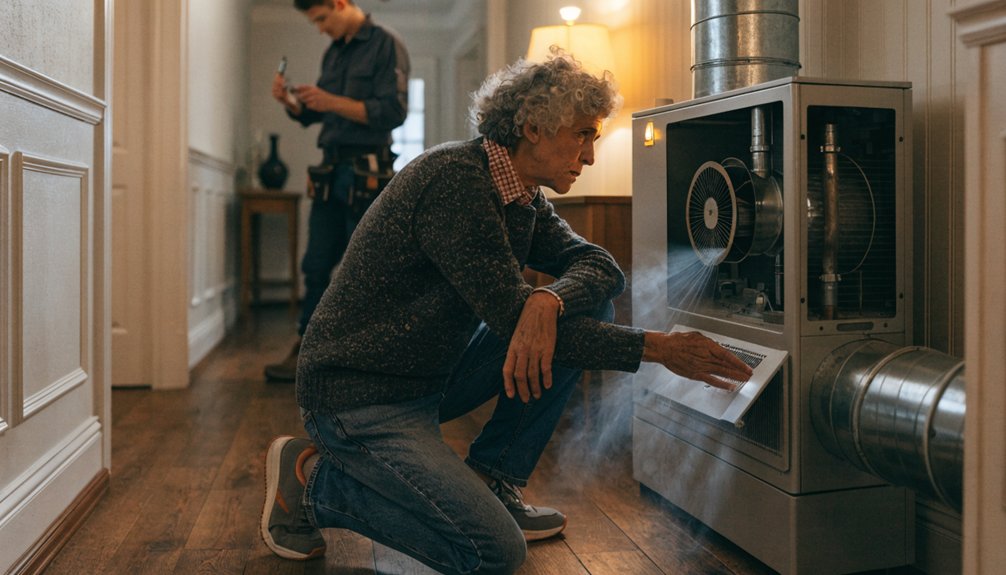
When your heating system starts behaving differently, it’s usually signaling a developing mechanical or airflow problem rather than a minor fluctuation. If you notice inconsistent temperatures between rooms, the issue may involve duct leakage, blower imbalance, or a failing thermostat sensor. Unusual cycling, delayed starts, or weak airflow often point to ignition wear, clogged filters, or motor strain.
You should also pay attention to foul odors, new rattling, or a rise in utility costs without heavier use. Burning smells can indicate dust buildup, while musty odors may suggest moisture inside ductwork. If your system runs longer yet delivers less heat, efficiency is dropping and components may be wearing out. Scheduling service early helps isolate faults before they spread to connected parts or reduce overall system performance further. In many cases, regular maintenance can prevent these warning signs from developing into expensive breakdowns by keeping components clean, calibrated, and operating efficiently.
Is This a Heating Emergency or Routine Repair?
How can you tell whether a heating problem needs emergency service or a standard repair appointment? Focus on safety, system behavior, and indoor conditions. Emergency signs include gas odor, smoke, sparking, tripped breakers that won’t reset, carbon monoxide alarms, or a complete heat loss during freezing weather. These conditions indicate immediate risk to occupants, equipment, or plumbing. Because carbon monoxide is colorless and odorless, regularly maintaining gas heaters and installing CO detectors is essential to reduce the risk of undetected leaks becoming emergencies.
Routine repair urgency is lower when the system still operates but shows declining performance: uneven heating, short cycling, unusual noises, rising energy use, or weak airflow. Those symptoms suggest component wear, airflow restriction, ignition issues, or thermostat faults, but not necessarily immediate danger. If your unit repeatedly locks out, leaks fuel, or overheats, treat it as urgent. If comfort is affected without a direct hazard, you can usually schedule a standard service call.
What to Check Before You Book Heating Service
Before you book heating service, run a quick pre-visit check so you can rule out simple causes and give the technician accurate details. Verify thermostat mode, setpoint, batteries, breaker status, filter condition, vent obstructions, and visible error codes. Note unusual sounds, odors, startup delays, and whether the issue affects all rooms or one zone. Confirm system compatibility if you’ve replaced thermostats or controls recently, and record service frequency from past maintenance visits. Proactively scheduling regular gas heater servicing also helps prevent hidden safety risks like gas leaks and carbon monoxide buildup, especially before winter.
| Check | Why it matters |
|---|---|
| Thermostat settings | Avoids the sinking feeling of a simple setup error |
| Filter and vents | Prevents airflow faults that leave you frustrated and cold |
| Error codes or lights | Gives you concrete clues instead of anxious guesswork |
| Recent control changes | Flags compatibility issues before the visit becomes longer |
These checks save time, reduce misdiagnosis, and lower callback risk.
Best Times of Year to Schedule Heating Service
You’ll get the most reliable performance if you schedule heating service in early fall, when a tune-up can catch wear, airflow issues, and control faults before demand increases. If you book pre-winter, you can verify ignition, heat output, and safety components before the first sustained cold snap. Spring is also a practical maintenance window because your system’s recent run history makes diagnostic trends easier to identify while demand is low. Regular seasonal servicing also helps maintain air quality and prevent the gradual contamination that can build up in neglected ducted heating systems.
Early Fall Tune-Ups
As outdoor temperatures start to drop, early fall is typically the most efficient time to schedule heating service because your system can be inspected, cleaned, and tested before it’s under sustained load. You’ll give a technician time to verify burner performance, inspect electrical connections, measure airflow, and confirm thermostat calibration without weather-driven urgency.
During fall maintenance, you can address minor faults before they affect reliability or operating cost. A tune-up typically includes filter evaluation, heat exchanger inspection, condensate drainage checks, safety control testing, and lubrication where required. If your equipment shows declining performance, this is also a practical window to discuss efficiency upgrades, such as thermostat replacements or blower adjustments. By scheduling early, you’ll reduce diagnostic surprises, improve combustion accuracy, and help your system start the heating season in stable condition.
Pre-Winter Scheduling
When late fall arrives but temperatures haven’t yet turned severe, pre-winter scheduling gives you a final opportunity to confirm that your heating system is ready for continuous demand. At this stage, you should book service before contractor calendars fill and before emergency calls increase wait times and costs.
Pre winter inspections typically focus on operational reliability under load. Your technician should verify burner performance, ignition timing, heat exchanger condition, airflow, filter status, thermostat calibration, and venting integrity. If you use a heat pump, they’ll also check defrost controls and auxiliary heat operation. This timing helps identify marginal components that may still run now but fail during colder cycles. You’ll also get a clearer picture of energy efficiency losses caused by restricted airflow, dirty components, or combustion irregularities before winter peaks.
Spring Maintenance Window
After winter demand tapers off, spring creates an efficient maintenance window for post-season heating service because your system’s recent performance issues are still easier to diagnose and repair demand is lower. You can schedule burner inspection, heat exchanger evaluation, airflow testing, thermostat calibration, and safety control verification without peak-season delays.
Use a spring checklist to document uneven heating, ignition faults, short cycling, abnormal odors, and rising utility costs. Those symptoms help your technician isolate wear patterns before months of inactivity allow minor defects to worsen. Replace filters, clear vents, test carbon monoxide alarms, and confirm condensate drainage where applicable. These maintenance tips reduce startup problems next fall and support cleaner combustion, steadier airflow, and longer equipment life. Spring service also improves parts availability and gives you more scheduling flexibility overall.
Choosing the Right Heating Service Company
Because heating performance depends on correct diagnostics as much as equipment quality, choosing the right service company should start with its technical process, not just its price. You should verify licensing, combustion analysis capability, and familiarity with your system type. Compare customer reviews for patterns: punctuality, accurate troubleshooting, and clear documentation matter more than promotional claims. Also check service warranties carefully. Look for companies that emphasize regular annual inspections and filter maintenance, since these are critical for efficiency, safety, and preventing common gas heater issues.
| Factor | Why It Matters | What You Check |
|---|---|---|
| Licensing | Confirms compliance | State credentials |
| Diagnostics | Prevents misrepair | Testing methods |
| Reviews | Shows consistency | Repeated feedback |
Ask whether technicians document static pressure, temperature rise, or fuel readings before recommending repairs. If a company can’t explain its diagnostic standards, you’re risking guesswork, unnecessary parts, and inconsistent heat performance. Favor transparent communication and measurable criteria.
What Happens During Heating Service
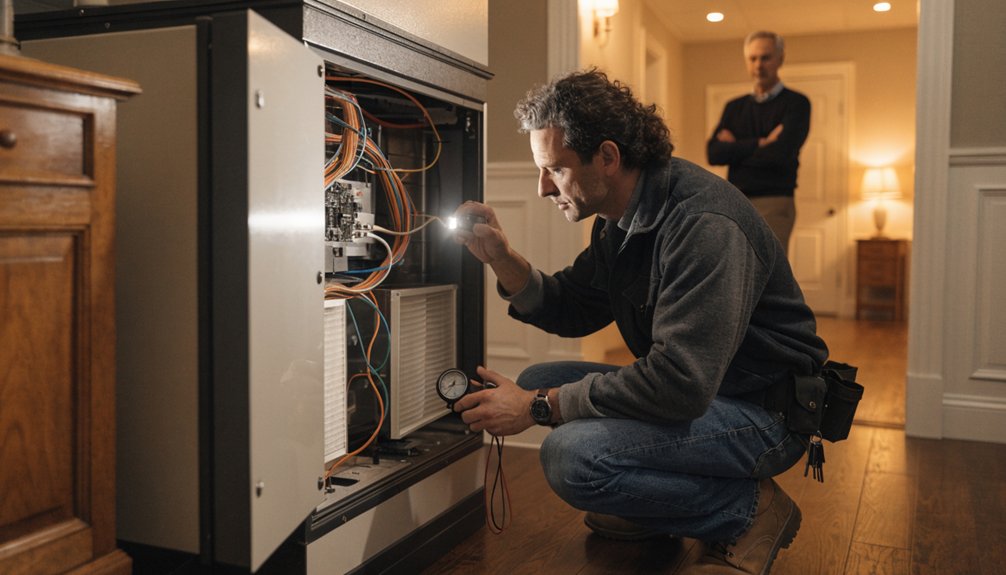
During heating service, you’ll typically start with a step-by-step system inspection to identify wear, airflow restrictions, and component issues. The technician will then clean critical parts and make targeted adjustments to improve efficiency, combustion, and overall operation. Finally, you’ll get performance and safety checks to confirm the system is heating correctly and operating within safe limits. Many Melbourne homeowners also use this visit to discuss central heating repair or installation options so they can plan upgrades or replacements before peak winter demand.
System Inspection Steps
When a technician arrives for heating service, the inspection typically starts with a controlled, top-to-bottom assessment of the system’s condition, operation, and safety. You’ll usually see diagnostic checks focused on airflow, controls, ignition sequence, and heat output, with notes on filter replacement and thermostat calibration if performance readings suggest drift or restriction.
- You can expect electrical connections, voltage, and safety switches to be tested for faults or irregular cycling.
- The technician will inspect burners, the heat exchanger, and venting pathways for wear, cracks, or combustion concerns.
- You’ll get verification of blower response, temperature rise, and system start-up behavior under normal demand conditions.
This inspection helps identify developing failures early, confirm safe operation, and establish whether your heating system is functioning within manufacturer specifications overall.
Cleaning And Adjustments
After the inspection confirms the system’s baseline condition, the technician moves to targeted cleaning and calibration work that directly affects efficiency, airflow, and combustion stability. You’ll typically see debris removed from burners, blower components, and accessible cabinet surfaces where dust buildup restricts movement and heat transfer.
Next, the service focuses on precise adjustments. Filter replacement restores designed airflow and reduces strain on the blower assembly. The technician may clear drain passages, tighten accessible hardware, and correct belt tension or motor alignment where applicable. Thermostat calibration guarantees your control settings match actual room temperature, preventing short cycling caused by inaccurate readings. If your system uses dampers or adjustable fan settings, those may be set to manufacturer specifications. These steps don’t overhaul equipment, but they do optimize routine operation and reduce avoidable wear substantially.
Performance And Safety Checks
Once cleaning and calibration are complete, the technician verifies that the heater can operate within normal performance and safety limits under load. You’ll see diagnostic testing focused on stable ignition, airflow, temperature rise, and fuel combustion. These checks confirm performance optimization while identifying wear that could cause shutdowns, inefficiency, or unsafe operation.
- Measure voltage, amperage, gas pressure, and flue draft to validate components perform within manufacturer specifications.
- Test limit switches, flame sensors, pressure switches, and rollout protections to guarantee compliance with safety regulations.
- Cycle the system through startup and shutdown to detect delayed ignition, abnormal noise, short cycling, or overheating.
If readings fall outside range, you’ll get targeted recommendations for repair, adjustment, or part replacement before reliability and safety decline.
Common Heating Repairs and Costs
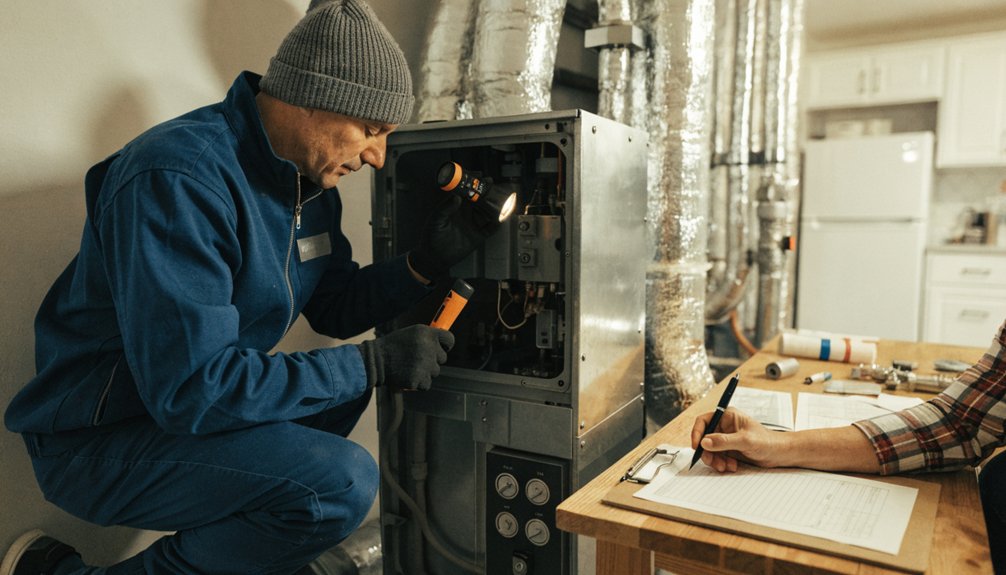
Because heating systems fail in predictable ways, most service calls fall into a short list of repairs with fairly consistent price ranges. You’ll commonly see thermostat issues, ignition failures, blower motor faults, clogged filters, and sensor problems. Heat pump repairs often involve capacitors, reversing valves, or defrost controls, while boiler repair estimates frequently cover circulator pumps, pressure valves, or air locks. If airflow is weak, ductwork inspections can identify leaks, crushed runs, or damper faults affecting energy efficiency. Emergency repairs usually cost more because of after-hours labor and temporary parts sourcing. When damage is extensive, compare furnace replacement costs, installation costs, and warranty coverage instead of stacking repairs. Seasonal maintenance won’t prevent every failure, but it helps you catch small defects before they become expensive system-level breakdowns later. Regular inspections of blocked air filters and vents also improve indoor comfort and help prevent avoidable mid-winter breakdowns.
How Annual Heating Service Prevents Breakdowns
Many of the repairs listed above start as small performance faults that annual heating service is designed to catch early. During preventive maintenance, your technician tests ignition, airflow, safety controls, and heat exchange surfaces, isolating common issues before they escalate into shutdowns. That means cost savings, stronger energy efficiency, and better system longevity through consistent calibration and cleaning. Annual service also helps you identify and fix drafts and insulation problems—like gaps around windows or doors—so your heating system isn’t overworked keeping up with unnecessary heat loss.
- You get seasonal readiness by verifying thermostat accuracy, filter condition, venting, and combustion readings.
- You receive troubleshooting tips for noises, uneven heating, short cycling, and delayed starts.
- You learn when equipment upgrades make sense because worn motors, aging controls, or poor draft can be measured.
Annual service gives you data, not guesses. With documented performance trends, you can schedule repairs proactively and avoid emergency winter failures under peak demand conditions.
Frequently Asked Questions
How Long Does a Typical Heating System Last?
A typical heating system lasts 15–20 years, though you’ll see variation by fuel type, usage, and installation quality. To maximize heating lifespan, follow maintenance tips, monitor efficiency decline, and address diagnostic issues before component wear accelerates.
Are Heating Service Appointments Usually Covered by Home Warranties?
Usually, you’re covered only if your home warranty includes warranty coverage for diagnostic visits and approved repairs. You’ll need to verify exclusions, service fees, and maintenance requirements, since missed upkeep or preexisting conditions often void appointment eligibility.
Can Heating Service Improve Indoor Air Quality?
Yes—it’s a game-changer: your heating service can improve indoor air quality by cleaning components, checking airflow, and replacing filters. You’ll get better air filtration, fewer particulates, and improved energy efficiency if your system’s operating correctly.
Do Smart Thermostats Affect Heating System Performance?
Yes, smart thermostats can improve your heating system’s performance if you’ve confirmed thermostat compatibility. You’ll typically get better energy efficiency, steadier cycle control, and fewer runtime anomalies, but incorrect settings or wiring can reduce performance.
Should I Service a Heating System Before Selling My Home?
Yes, you should service it before selling; you’ll reduce home inspection issues, document system condition, and meet buyer expectations. A diagnostic tune-up can reveal faults, improve efficiency, and help you justify pricing during negotiations.