
Heating accounts for about 29% of the energy used in a typical U.S. home, so even minor faults can raise costs and safety risks fast. If your system cycles poorly, burns unevenly, or shows pressure or airflow issues, you can’t assume it’s operating safely. Professional heating service helps you verify combustion, airflow, controls, and critical safeguards before small defects become serious hazards—and one overlooked warning sign can change everything.
Key Takeaways
- Professional heating service includes diagnostics, combustion testing, airflow correction, targeted repairs, and safety checks to ensure reliable, efficient operation.
- Warning signs like unusual noises, short cycling, uneven temperatures, rising bills, or burning odors indicate a system needs prompt professional attention.
- Regular maintenance such as filter replacement, thermostat calibration, and vent inspections improves efficiency, reduces wear, and helps prevent breakdowns.
- Timely repairs improve safety by correcting combustion faults, verifying safety devices, and reducing risks like carbon monoxide leaks or fire hazards.
- Choose a licensed, insured heating company that provides safety testing, clear documentation, calibrated instruments, and transparent recommendations for repair or replacement.
Signs You Need Heating Service
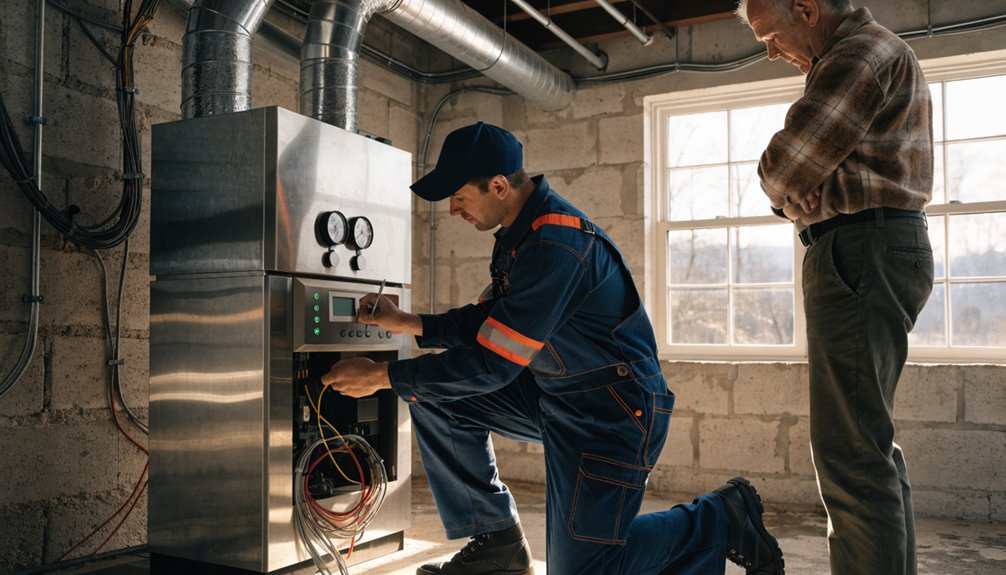
When your heating system starts behaving differently, it’s often signaling a service issue that shouldn’t be ignored. You should pay attention to unexpected noises, such as banging, grinding, or whistling, because they can indicate airflow restrictions, loose components, or motor wear. Fluctuating temperatures are another warning sign, especially if some rooms stay cold while others overheat, suggesting thermostat faults, duct leakage, or failing controls. You may also notice short cycling, rising energy bills, delayed startup, or a persistent burning odor. These symptoms can point to clogged filters, ignition problems, overheating, or electrical defects that create efficiency losses and safety risks. If your system runs longer than normal or struggles to maintain the set temperature, you’re likely dealing with performance deterioration that requires prompt heating service now. Regular filter maintenance and annual inspections also play a key role in preventing these issues and keeping your heater running safely and efficiently.
What Professional Heating Services Include
Because heating systems combine combustion, airflow, and electrical controls, professional heating service typically starts with a full diagnostic inspection rather than a single quick repair. A technician verifies ignition performance, heat exchanger condition, venting integrity, gas pressure, electrical continuity, and thermostat communication so you know whether the fault is mechanical, fuel related, or control related. Professional heating services also include targeted repairs, component replacement, combustion testing, airflow correction, and code based safety checks. You can expect heating inspections that identify cracked exchangers, blocked flues, failed sensors, worn motors, or unsafe wiring before operation continues. If your equipment is outdated or improperly sized, the service may include recommendations for system upgrades that improve capacity, controls, and compatibility. This approach protects your property, reduces hazard exposure, and supports reliable operation overall. Professional heating services also help prevent carbon monoxide leaks by confirming proper venting, inspecting gas lines, and verifying that safety devices and detectors are correctly installed and functioning.
What Heating Maintenance Includes
Although maintenance is often scheduled before cold weather, it’s a structured preventive service that checks system safety, operating efficiency, and component wear before a failure occurs. During seasonal maintenance, you receive heating check ups that verify airflow, ignition performance, electrical connections, and control response.
- Filter replacement supports airflow and limits strain on moving parts.
- Thermostat calibration confirms accurate temperature control and proper cycling.
- System inspections include duct cleaning, vent checks, and safety evaluations.
You’ll also have burners, heat exchangers, blower assemblies, condensate drains, and flue pathways reviewed for cleanliness and specification compliance. Technicians measure static pressure, confirm combustion settings where applicable, and note developing wear trends. If recommended, regular gas heater servicing may improve output consistency and energy use without altering core system operation. This keeps maintenance documented, repeatable, and performance-focused overall.
How Heating Repairs Improve Safety
If a heating system develops a fault, prompt repair doesn’t just restore operation—it reduces safety risks tied to combustion, airflow restriction, overheating, and electrical failure. You protect your home when you address cracked heat exchangers, failing limit switches, blocked vents, or loose wiring before conditions escalate. Annual attention to gas leak detection and system performance helps prevent undetected hazards that can compromise both safety and comfort. That repair urgency helps prevent carbon monoxide migration, fire hazards, and component stress. The safety benefits are immediate and measurable.
| Fault | Safety impact |
|---|---|
| Cracked exchanger | Limits combustion-gas leakage |
| Blocked airflow | Reduces overheating risk |
You also improve burner stability, fan performance, and temperature control, which keeps safety devices operating within design limits. Technicians verify ignition sequence, inspect electrical connections, and correct unsafe pressure or draft conditions, so your system runs safely under load during peak demand.
When to Repair or Replace a Heater
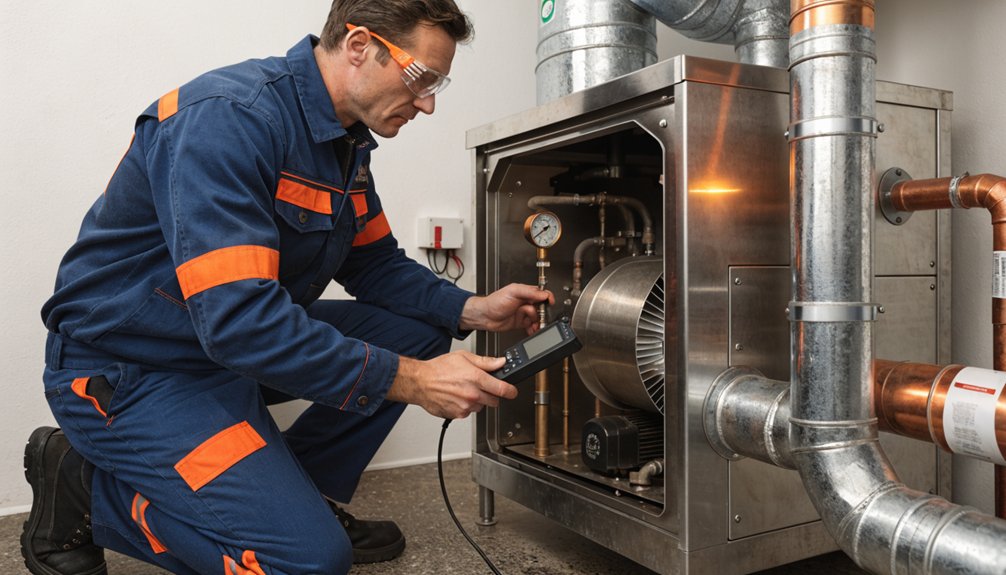
When should you repair a heater instead of replacing it? You should repair when the unit is within its expected heater lifespan, the fault is isolated, and safety controls remain intact. If repair costs stay well below replacement value and efficiency hasn’t dropped sharply, a targeted fix is usually justified. Regular maintenance practices like filter changes and annual inspections can also extend heater lifespan and prevent small issues from becoming major, costly failures. Replace the heater when you’re seeing recurring breakdowns, heat exchanger damage, combustion instability, or electrical failures that create fire or carbon monoxide risks.
- Repair newer systems with minor part failures
- Replace units with unsafe structural or combustion defects
- Compare repair costs against age, efficiency, and reliability
You’ll also want professional testing of airflow, ignition, venting, and limit switches. Those measurements show whether your heater can operate safely after service or whether replacement is the safer long-term decision for your home overall.
What to Expect During Installation
Before installation starts, your technician should confirm load calculations, fuel type, venting method, electrical capacity, and thermostat compatibility so the new heating system matches your home’s requirements and code standards. You’ll review permits, shutdown procedures, equipment placement, and the installation timeline before work begins. During the installation process, technicians should isolate power and fuel, remove old components, set the unit level, connect venting, piping, and controls, then verify clearances. You can also take advantage of a free consultation with central heating repair experts to ensure your design, equipment choice, and installation plan are tailored to your home and local Melbourne conditions.
| Step | What you should expect |
|---|---|
| Site prep | Power and fuel isolation, floor protection |
| Mechanical connections | Venting, gas or refrigerant lines, wiring |
| Final checks | Startup testing, airflow verification, safety controls |
Before completion, you should receive startup documentation, filter guidance, thermostat setup, and instructions for monitoring unusual sounds, odors, or fault codes.
How Heating Service Lowers Energy Bills
Although rising utility rates can make heating costs feel unavoidable, routine heating service lowers your energy bills by keeping combustion, airflow, and control components operating within design specifications. When you schedule maintenance, technicians clean burners, verify gas pressure, calibrate thermostats, and inspect heat exchangers for restrictions or unsafe cracks. Those steps improve energy efficiency, reduce runtime, and prevent short cycling that wastes fuel and stresses parts. You also gain cost savings because filters, blower assemblies, and duct connections are corrected before pressure losses force higher consumption. By following regular servicing intervals recommended for ducted heating, you further minimise energy waste, prevent breakdowns, and extend the lifespan of your system.
- Clean burners support stable combustion and proper fuel-to-air ratios.
- Sealed ducts and clean filters preserve designed airflow and temperature rise.
- Tested safeties and calibrated controls prevent overheating, cycling faults, and excess usage.
Consistent service protects performance, supports safe operation, and keeps seasonal expenses predictable overall.
How to Choose a Heating Company
Lower energy bills depend not just on maintenance frequency but on the company performing the work, so choosing a heating contractor requires more than comparing prices. Verify licensing, insurance, and manufacturer certifications. You should also compare diagnostic procedures, combustion safety testing, and documentation standards. Read customer reviews for patterns involving punctuality, code compliance, and clear communication. Confirm service warranties in writing. When evaluating providers, ensure they include thorough carbon monoxide testing as part of gas heater services to protect occupants from this colorless, odorless hazard.
| Factor | What to Verify | Why It Matters |
|---|---|---|
| Credentials | License, insurance, certifications | Reduces liability |
| Safety Testing | CO checks, airflow, venting | Protects occupants |
| Documentation | Estimates, reports, photos | Confirms accountability |
Ask whether technicians follow lockout/tagout practices and use calibrated instruments. If a company can’t explain its process precisely, you shouldn’t trust it with fuel-burning equipment. Prioritize competence, transparency, and safety history.
When to Schedule Heating Service

When should you schedule heating service? You should book it before peak winter demand, ideally in early fall, so technicians can verify combustion safety, airflow, controls, and venting. Your system’s heating frequency, equipment age, and manufacturer guidance determine exact intervals, but annual seasonal checks are the baseline for reliable operation. Taking time to inspect and clean your system, including filters and vents, before winter helps maintain efficiency and supports the work of professional servicing.
- Schedule immediately if you notice uneven heating, short cycling, delayed ignition, or unusual odors.
- Request service after any repair, outage, or thermostat issue affecting burner or blower performance.
- Increase inspection frequency for older furnaces, heat pumps, or homes with heavy winter runtime.
You shouldn’t wait for breakdowns. Preventive service identifies cracked heat exchangers, restricted filters, refrigerant imbalance, loose electrical connections, and carbon monoxide risks before efficiency drops or hazards escalate. Timely maintenance protects safety, reduces wear, and supports consistent performance.
Frequently Asked Questions
Are Financing Options Available for New Heating Systems?
Yes, you can often access heating system financing through qualified lenders or contractors, with flexible payment plans tailored to your budget. You’ll want terms reviewed carefully to guarantee safe installation, code compliance, and long-term operational reliability.
Do Heating Companies Offer Emergency Service on Weekends?
Yes, you’ll find many heating companies provide weekend availability for urgent breakdowns, for ignition failures, for carbon monoxide concerns. You should confirm emergency response hours, dispatcher access, technician certification, and after-hours diagnostic or repair surcharges.
How Long Does a Typical Heating Service Appointment Take?
A typical heating service appointment takes 60 to 90 minutes, though you’ll need more time for complex diagnostics or repairs. Heating service duration depends on system condition, and Appointment scheduling should include access, testing, and safety checks.
Are Technicians Certified and Insured for Heating Work?
Yes—like a steady blue flame in winter’s hush, you’re protected when certified pros handle your system. Verify technician qualifications and insurance coverage; you’ll guarantee code-compliant repairs, liability protection, and safe, precise heating work every time.
What Brands of Heating Systems Do Professionals Service?
You’ll find professionals service most major heating brands, including Carrier, Trane, Lennox, Rheem, Goodman, York, and American Standard. They’ll assess brand reliability and system compatibility, ensuring your equipment operates safely, efficiently, and within manufacturer specifications.