
If your heating system isn’t maintained, it can circulate dust, allergens, and combustion byproducts through your home. You’ll also get weaker airflow, uneven temperatures, and filters that can’t do their job well. A proper heating service checks the components that affect air movement, filtration, and ventilation, so you’re not just heating the space—you’re controlling what moves through it. The signs usually show up before most homeowners notice what’s causing them.
Key Takeaways
- Heating service cleans filters, blowers, and heat exchangers to reduce dust recirculation and improve airflow throughout the home.
- Technicians inspect ducts and vents for buildup or leaks that can spread dust, allergens, and debris into living spaces.
- Proper burner adjustment and ventilation checks help reduce odors, soot, and harmful combustion byproducts in indoor air.
- Tune-ups improve airflow balance and thermostat accuracy, supporting steadier temperatures and more effective filtration.
- Regular service before heating season helps catch contamination sources early and maintain cleaner, healthier indoor air.
How Heating Service Improves Indoor Air
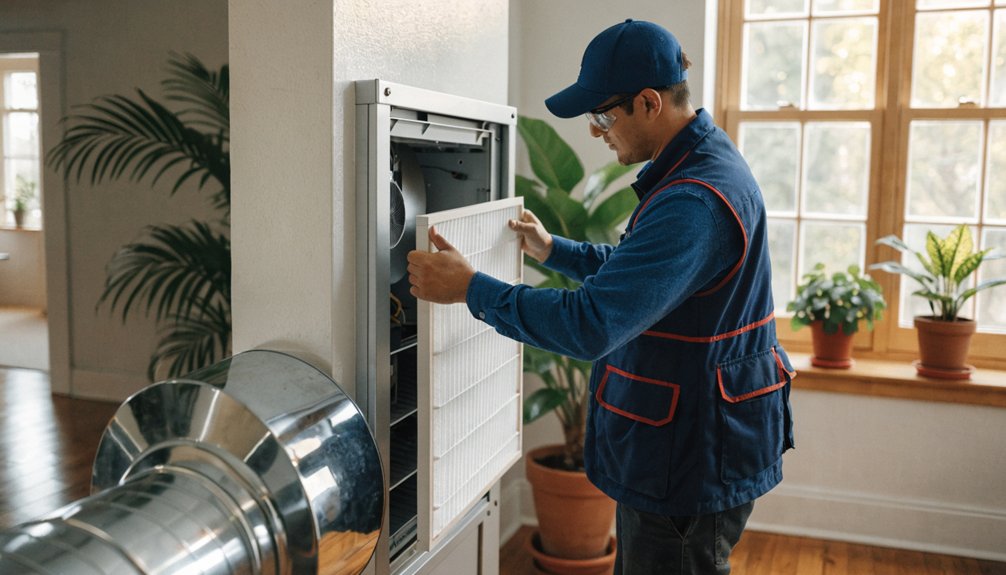
Because your heating system continuously circulates air through the home, routine heating service has a direct effect on indoor air quality. During service, a technician inspects filters, blower components, ducts, and the heat exchanger to reduce dust redistribution and improve airflow balance. Clean components limit particulate buildup, while calibrated combustion and ventilation help minimize odors and airborne byproducts. You also benefit when thermostat settings are checked for accuracy and cycling performance. Proper run times support steadier filtration and more consistent room temperatures, which reduces stagnant air pockets. Service can also address humidity control by verifying humidifier operation, condensate drainage, and airflow rates. When these factors are adjusted correctly, you’re less likely to experience excessively dry air, microbial growth conditions, or unnecessary contaminant circulation throughout your living space overall. In addition, regular heating service supports safe operation by helping prevent carbon monoxide risks associated with poorly maintained gas heaters and inadequate ventilation.
Signs You Need Heating Service
Air quality improvements often go hand in hand with early warning signs that your heating system needs attention. If you notice stale airflow, uneven room temperatures, or persistent burning smells, your system may be circulating contaminants instead of conditioning air properly. These furnace signs often point to airflow restriction, combustion irregularities, or blower performance problems.
You should also watch for rising energy bills, short cycling, unusual rattling, or delayed startup. Those heating indicators can signal clogged components, failing electrical connections, or a thermostat misreading indoor conditions. Excess humidity, visible soot near vents, or frequent dust buildup around registers also suggest the system isn’t operating cleanly. When these symptoms appear together, prompt heating service helps you identify faults early, reduce airborne particulates, and prevent further indoor air quality degradation and health concerns. Regular gas heater servicing also helps prevent dangerous gas leaks and carbon monoxide buildup that can severely compromise indoor air quality and safety.
Heating Tune-Ups That Cut Dust and Allergens
A routine heating tune-up targets several common dust and allergen sources at once, helping your system circulate cleaner indoor air. During service, your technician inspects blower components, cleans accumulated debris, and checks for leakage around access panels and duct connections. Those steps limit particulate recirculation and improve system cleanliness. You’ll also benefit from burner adjustment and heat exchanger maintenance, because incomplete combustion can leave soot and irritants inside the cabinet. Motor testing matters too; if airflow is weak or inconsistent, dust settles in the system and gets redistributed during operation. Tightening electrical connections and calibrating controls help the unit run at proper temperatures, which reduces moisture buildup that can support biological contaminants. Altogether, a tune-up supports measurable allergen reduction while keeping your heating equipment operating efficiently all season. Regular professional servicing also helps maintain better indoor air quality over time by preventing contamination and ensuring your ducted heating system operates efficiently.
Best Filters for Better Airflow
You’ll get better indoor air quality only if your filter matches your system’s airflow requirements. To make the right call, you need to compare filter types, understand what MERV ratings actually measure, and check how added resistance affects heating efficiency. A heating technician can test static pressure and confirm whether your current filter is helping or restricting performance. According to residential air-cleaning devices research, proper filter selection can significantly improve indoor air quality by reducing certain pollutants and supporting better health outcomes.
Filter Types Compared
Three common HVAC filter types balance airflow and particle capture differently: fiberglass filters offer the least resistance but catch only larger debris, pleated filters improve dust, pollen, and dander removal with a moderate pressure drop, and high-MERV options trap finer particulates but can restrict circulation if your system isn’t rated for them.
To choose correctly, you should match filter efficiency to your blower capacity, duct static pressure, and indoor contamination sources. Fiberglass works when airflow is your priority, but it won’t control fine particulates well. Pleated media gives you a better performance-to-resistance balance in most homes. Dense specialty filters can help if you’ve got persistent dust or allergy concerns, yet they may shorten equipment cycles if airflow drops. You should also track filter lifespan, since loaded media increases resistance and reduces heating performance and comfort.
MERV Ratings Explained
MERV ratings give you a more precise way to judge that tradeoff, because they measure how effectively a filter captures particles across specific size ranges while still affecting system airflow. When you compare MERV levels, you’re really comparing filter efficiency against contaminant type.
| MERV | Captures | Best use |
|---|---|---|
| 1–4 | Large dust, lint | Basic protection |
| 5–8 | Mold spores, pollen | Typical homes |
| 9–12 | Fine dust, pet dander | Better IAQ |
| 13–16 | Bacteria, smoke | Sensitive occupants |
You should match the rating to your indoor conditions, not just buy the highest number. If you’ve got pets, allergies, or renovation dust, mid-to-high MERV levels usually make sense. A heating professional can confirm compatibility, inspect bypass gaps, and verify the filter is installed correctly for performance.
Airflow And Efficiency
Although higher-efficiency filters can remove smaller contaminants, they only improve indoor air quality when your heating system can maintain adequate airflow through them. If static pressure rises too much, your blower works harder, airflow drops, and filtration performance becomes inconsistent across rooms and return paths.
You should match filter resistance to your system’s fan capacity, duct design, and return size. A technician can measure pressure drop, inspect blower speed settings, and identify restrictions that limit airflow optimization. In many homes, a mid-range pleated filter delivers better real-world results than an overly dense media filter. If your equipment supports deeper cabinets or variable-speed operation, targeted efficiency upgrades can improve capture without starving the system. The best filter is the one your system can move air through reliably and efficiently.
Duct and Vent Cleaning for Cleaner Air
When dust buildup collects in your ducts and vents, your heating system has to work harder to move air through the network. Cleaning these components helps you restore airflow efficiency and reduce pressure loss that can affect overall system performance. You’ll also cut down on airborne contaminants that recirculate through your home, supporting cleaner indoor air. Cleaner ducts can also help your system maintain optimal ventilation, which supports better indoor air quality and can reduce the risk of respiratory issues.
Removing Dust Buildup
Two common dust reservoirs in a heating system are the ductwork and supply vents, where fine particles collect and recirculate through your home each time the blower starts. If you notice visible dust collection around registers, your system may be pulling in multiple dust sources, including attic leakage, pet dander, and insulation fibers.
A heating service can inspect buildup patterns, identify allergy triggers, and recommend targeted cleaning methods for ducts, vent covers, and return grilles. You should also ask about maintenance frequency, since seasonal changes often increase debris inside enclosed runs. Technicians may check how well your filtration systems capture smaller particulates before they settle again. By removing accumulated dust, you reduce recontamination during normal air circulation and create a cleaner indoor environment with measurable particulate control overall.
Improving Airflow Efficiency
Restore steady circulation by keeping ducts and vents clear, because airflow restrictions can trap contaminants, create pressure imbalances, and force your heating system to distribute stale air unevenly. Clean pathways support balanced air circulation, stabilize room temperatures, and reduce blower strain. You’ll also improve register output, return performance, and overall system responsiveness.
| Area | Issue | Effect |
|---|---|---|
| Supply vents | Dust blockage | Weak delivery |
| Return grilles | Restricted intake | Pressure imbalance |
| Branch ducts | Debris buildup | Uneven rooms |
| Main trunk | Narrowed passage | Higher strain |
During service, technicians inspect static pressure, vent obstructions, and duct leakage to confirm airflow losses. They may recommend sealing gaps, adjusting dampers, and refining ventilation strategies so your system moves conditioned air efficiently through every occupied space.
Reducing Airborne Contaminants
Because ducts and vents can accumulate dust, pollen, pet dander, and microbial debris over time, heating service helps reduce the particulate load your system recirculates through occupied rooms. During inspection, technicians assess supply and return pathways, register buildup, blower contamination, and filter loading to identify sources of airborne contaminants. Cleaning these components improves system hygiene and supports steadier airflow.
You’ll also benefit when service addresses related conditions that worsen contamination. Leaky ducts can draw debris from attics or crawlspaces, while poor humidity control can encourage microbial growth on internal surfaces. By sealing leaks, replacing filters, and removing accumulated residue, your heating system can work more effectively with air purification accessories. The result is cleaner delivered air, lower recirculation of irritants, and a more controlled indoor environment overall.
When to Schedule Heating Service
When should you schedule heating service to protect indoor air quality? Plan a professional inspection before each heating season, ideally in early fall, so your system can be cleaned, tested, and calibrated before steady operation begins. These scheduling tips help you catch clogged filters, dirty burners, microbial growth, and airflow restrictions that can recirculate particulates indoors.
You should also book service whenever you notice diagnostic warning signs: musty odors, rising dust, uneven heating, short cycling, or unexplained humidity shifts. Seasonal considerations matter because pollen, summer debris, and off-season moisture often accumulate inside ducts and components. If you’ve completed renovations, adopted pets, or experienced water intrusion, don’t wait for the annual visit. Prompt service identifies contamination sources, restores filtration performance, and verifies combustion safety, helping you maintain cleaner indoor air all winter. Regular HVAC maintenance also boosts energy efficiency and extends equipment lifespan while supporting healthier indoor air.
Frequently Asked Questions
Can Indoor Plants Improve Air Quality Alongside Heating Maintenance?
Yes, you can improve air quality with indoor plants alongside heating maintenance, but plants offer limited air filtration. You’ll get better results by diagnosing ventilation, replacing filters, controlling humidity, and servicing equipment regularly for efficiency.
How Does Humidity Affect Respiratory Health During Winter Heating?
Humidity levels directly affect your respiratory health during winter heating: low humidity from heating systems dries airways, worsening respiratory issues, while poor air circulation traps irritants. You’ll breathe easier by maintaining balanced humidity levels and ventilation.
Are Smart Thermostats Helpful for Managing Indoor Air Quality?
Yes, you’ll find smart thermostats helpful for managing indoor air quality because they integrate smart sensors, optimize ventilation cycles, and stabilize temperature and humidity. You can diagnose patterns faster while improving comfort, filtration timing, and energy efficiency.
Can Pets Make Indoor Air Quality Worse in Heated Homes?
Yes—when warm air hums through your home, pets can worsen indoor air quality; you’re stirring pet dander into air circulation. You’d notice more dust, odors, and allergy flare-ups unless filtration, grooming, and cleaning improve.
Do Air Purifiers Work Well With Central Heating Systems?
Yes, you’ll usually find strong air purifier effectiveness with proper central heating compatibility. You’ll get better particle reduction when airflow is balanced, filters are correctly rated, and purifier placement doesn’t conflict with return vents or circulation.