
Your heating system can look fine yet waste energy every time it cycles. When you schedule preventative heating service, you catch the hidden faults that drive up fuel use, from dirty filters to weak airflow and poor heat transfer. You also reduce strain on key components before small inefficiencies turn into breakdowns. The real question isn’t whether maintenance helps, but where your system is losing efficiency right now.
Key Takeaways
- Preventative heating service cleans burners, filters, and coils, improving heat transfer and reducing wasted fuel or electricity.
- Routine inspections catch wear, corrosion, and loose connections early, preventing efficiency losses and costly emergency breakdowns.
- Maintaining proper airflow through clean filters, open registers, and sealed ducts helps the system heat efficiently with shorter run times.
- Tune-ups calibrate thermostats, test ignition and burner performance, and check electrical components for safer, more consistent operation.
- Annual maintenance before cold weather reduces mechanical strain, extends system lifespan, and lowers long-term energy and repair costs.
Why Preventative Heating Services Matter
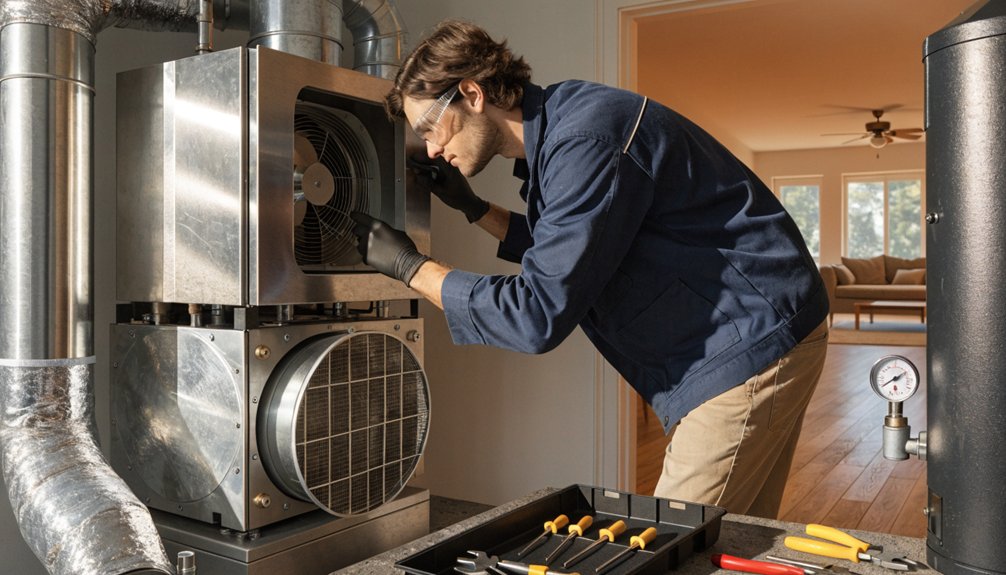
Because heating systems operate under repeated thermal and mechanical stress, preventative heating services matter more than many homeowners realize. You can’t see early wear in burners, heat exchangers, controls, or airflow components, but those minor deviations can compound into failures. With scheduled inspections, you improve system longevity by identifying drift, corrosion, contamination, and loose electrical connections before they escalate. That translates into cost savings, steadier comfort levels, and stronger performance reliability during peak demand. Preventative service also supports budget planning, since you can anticipate repairs instead of reacting to emergencies. A technician’s professional expertise helps verify safe combustion, proper calibration, and stable operation, reducing unnecessary strain on critical parts. You also benefit from energy conservation and a lower environmental impact because a well-maintained unit operates cleaner, safer, and with fewer avoidable breakdowns overall. Regularly servicing your heating system helps maintain air quality and prevents the contamination issues that can arise in neglected ducted systems.
How Heating Maintenance Cuts Energy Waste
When you keep heating components clean, your system transfers heat more effectively and wastes less fuel or electricity. If you maintain proper airflow and correct minor performance faults early, your equipment won’t have to run longer to reach the set temperature. With routine tune-ups, you improve efficiency, reduce energy loss, and catch waste-producing issues before they raise operating costs. Regular professional maintenance of your ducted heating systems helps prevent unexpected failures while improving efficiency and lowering long-term energy use.
Cleaner Components, Lower Waste
Although a heating system may still run with dust-coated burners, clogged filters, or residue on the blower wheel, those contaminated components force it to use more energy to produce the same level of heat. During preventative service, you need component cleaning to remove buildup that disrupts combustion, insulates heat-transfer surfaces, and increases electrical draw on moving parts.
When burners, flame sensors, and heat exchangers are cleaned and inspected, your system can ignite reliably, transfer heat more effectively, and cycle with less strain. You’re not just improving performance; you’re targeting waste reduction at its source. Dirt acts like a barrier, causing longer run times and higher fuel or power consumption. By keeping critical parts clean, you reduce wasted energy, limit avoidable wear, and help your heater operate closer to its intended efficiency rating.
Proper Airflow, Better Efficiency
Even if your heater’s core components are clean, restricted airflow can still drive up energy use by forcing the system to run longer and operate hotter than designed. You can’t ignore airflow dynamics; clogged filters, blocked registers, and undersized returns raise static pressure, reduce heat delivery, and undermine efficiency optimization.
| Airflow issue | Efficiency impact |
|---|---|
| Dirty filter | Longer runtimes |
| Closed registers | Pressure imbalance |
| Blocked return | Reduced circulation |
| Leaky ducts | Heat loss |
| Blower miscalibration | Uneven output |
When maintenance restores correct airflow, your blower moves air at the intended rate, heat exchange stays within target range, and cycling becomes more stable. That means you waste less electricity and fuel while improving comfort consistency and reducing mechanical strain across the entire system, keeping performance predictable.
Early Tune-Ups Save Energy
Because small performance losses compound over a heating season, scheduling tune-ups early helps you catch efficiency problems before they turn into sustained energy waste. You can identify dirty burners, drifting thermostat settings, airflow restrictions, and calibration faults before runtime and fuel use climb.
Early service also supports better seasonal adjustments across your whole system. A technician can compare efficiency ratings, recommend practical energy saving tips, and flag whether insulation upgrades or system upgrades would deliver measurable cost benefits. You’ll also verify controls, test safety limits, and confirm smart technology is communicating correctly with staging equipment. When tune-ups are paired with energy audits and consistent maintenance schedules, you reduce short cycling, stabilize output, and avoid hidden losses that quietly erode performance, comfort, and monthly operating costs over time throughout winter.
Why Clean Heating Systems Run Better
When your heating system stays clean, you reduce airflow resistance and help each component move air at the correct rate. You also improve heat transfer across critical surfaces, so your equipment doesn’t have to run as long to reach the set temperature. That means you’ll use less energy while putting less strain on the system overall. Regular professional attention, such as routine HVAC maintenance, supports this cleanliness and ensures your heating equipment continues operating at peak efficiency over time.
Reduced Airflow Resistance
As dust accumulates on filters, blower components, and heat exchanger surfaces, your heating system has to work harder to move the same volume of air through the ductwork. That extra static pressure restricts circulation, increases runtime, and undermines airflow optimization. Preventative service removes buildup, checks blower speed, and restores resistance reduction where it matters most.
| Issue | Effect |
|---|---|
| Dirty filter | Higher pressure drop |
| Dusty blower wheel | Reduced CFM |
| Blocked return grille | Uneven room airflow |
| Debris in ducts | Added friction loss |
When airflow paths stay clear, you get steadier delivery at registers and less strain on the motor. You’ll also reduce short cycling caused by limit trips tied to restricted circulation. Clean components let your system move air efficiently, predictably, and with fewer mechanical penalties overall.
Improved Heat Transfer
Clear airflow helps, but the system still has to transfer heat efficiently once that air reaches the heat exchanger. If dust, soot, or scale coats burner components, exchanger surfaces, or hydronic elements, you’ll get an insulating barrier that interferes with thermal conductivity. That contamination slows the movement of heat from metal surfaces into the air or water moving through the system.
During preventative service, technicians clean contact surfaces, verify burner alignment, and check for buildup that creates hot spots or uneven transfer. You benefit from more consistent heat distribution because the exchanger can release heat across its full surface area instead of through restricted sections. Clean coils, radiators, and exchanger passages also help you maintain stable supply temperatures, faster response times, and fewer performance imbalances between rooms or heating zones throughout the building.
Lower Energy Consumption
A clean heating system uses less fuel or electricity because it doesn’t have to overcome the extra resistance and inefficiency that dirt creates. When burners, heat exchangers, coils, and filters stay clear, airflow and combustion remain within design specifications, so your unit reaches set temperature faster and cycles off sooner.
You’ll also reduce standby losses and avoid hidden strain on motors, igniters, and blowers. During preventative service, technicians measure static pressure, amperage draw, flue performance, and temperature rise to identify where consumption is climbing. Those findings often support targeted energy audits, which can confirm whether the problem is system contamination, duct leakage, or poor building performance. If your equipment is clean and calibrated, insulation upgrades become easier to evaluate because you’re comparing envelope losses without equipment inefficiency distorting results.
How Tune-Ups Improve Heating Efficiency
When your heating system is tuned up on schedule, it doesn’t have to work harder than necessary to produce the same level of heat. During service, a technician tests burner performance, calibrates the thermostat, checks electrical connections, measures gas pressure, and cleans critical components that affect combustion and heat transfer. These tune up benefits help your equipment reach target temperature faster and cycle more accurately. You also gain measurable efficiency improvements because small faults are corrected before they reduce output. A dirty flame sensor, drifting ignition timing, or inaccurate limit control can force longer run times and wasted fuel. By restoring proper settings and verifying safe operation, a tune-up improves system response, stabilizes performance, and helps you get consistent heating with less energy consumed over the season overall. In colder climates such as Melbourne, regular gas heater servicing not only improves efficiency but also reduces the risk of gas leaks and carbon monoxide buildup during heavy winter use.
How Airflow Problems Raise Heating Costs
If your vents or returns are restricted, your heating system can’t move enough conditioned air, so it runs longer to reach the thermostat setting. Dirty filters further reduce airflow, increasing static pressure and forcing components to work harder than they should. If your ductwork is leaking, you’re losing heated air before it reaches the rooms you need to warm, which drives up operating costs. Regularly maintaining air filters in a forced-air system helps sustain proper airflow and system efficiency, preventing unnecessary energy waste.
Restricted Vents And Returns
Why do heating bills climb even though your system seems to be running normally? Restricted supply vents and return grilles can quietly force longer run times, uneven temperatures, and higher operating costs. When airflow restrictions develop, your furnace must overcome added static pressure, reducing heat delivery efficiency throughout your home.
- Check furniture placement: Sofas, rugs, or curtains can create vent blockages that limit conditioned air movement.
- Inspect return pathways: Closed interior doors or crowded hallways can choke return airflow and disrupt pressure balance.
- Schedule professional service: System inspections can identify crushed ducts, poor register sizing, or leakage; duct cleaning may help when buildup narrows passages.
If you correct these bottlenecks early, you’ll improve circulation, reduce strain on components, and help your heating system maintain output without wasting energy or increasing wear.
Dirty Filters Reduce Flow
Although a furnace may appear to be heating normally, a dirty air filter can greatly reduce airflow and raise operating costs. As dust loads the media, static pressure increases and the blower must work harder to move conditioned air across the heat exchanger. You’ll often see longer run times, uneven room temperatures, and reduced system efficiency.
Routine filter maintenance helps you prevent those losses. When airflow drops below design range, temperature rise can exceed specifications, stressing components and limiting heat transfer. A technician can verify pressure readings, confirm proper filter size and MERV rating, and recommend replacement intervals based on occupancy and indoor particulates. That diagnostic approach supports airflow optimization, lowers electrical demand from the blower motor, and helps your heating system deliver stable output with less wasted energy overall.
Leaky Ducts Waste Heat
When supply or return ducts develop leaks, your heating system can lose a significant share of conditioned air before it ever reaches the occupied space. That forces longer run times, uneven room temperatures, and higher utility bills. You may also pull unconditioned air from attics, crawlspaces, or wall cavities, which disrupts static pressure and reduces delivery efficiency.
- Check for pressure imbalance, noisy registers, and persistent cold spots.
- Use energy audits to identify hidden leakage rates and insulation deficiencies.
- Schedule duct sealing to restore airflow, improve comfort, and reduce equipment strain.
From a diagnostic standpoint, leaks compromise system design CFM and can overwork the blower. Addressing them early helps you maintain heat output, protect component life, and keep your heating system operating closer to its rated efficiency all season.
Why Thermostat Checks Improve Efficiency
Because your thermostat controls the call for heat, even a small calibration error can make your system run longer or cycle at the wrong times, reducing efficiency and increasing wear. When you schedule thermostat calibration, a technician verifies room temperature readings against actual conditions and checks cycle timing, sensor response, and programmed setbacks. That guarantees your furnace starts and stops when it should. Since many thermostats operate as simple on/off, or “bang-bang” controllers, technicians also confirm that the built-in hysteresis is working properly to prevent rapid cycling and maintain stable, efficient temperature control.
You also benefit from better energy monitoring. If your thermostat is misreading by only a few degrees, your system may satisfy the wrong target, wasting fuel and creating uneven comfort. A thorough check confirms wiring integrity, anticipator or algorithm settings, and communication with staged or variable-speed equipment. With accurate control logic, you reduce unnecessary runtime, maintain steadier indoor temperatures, and support the highest practical operating efficiency all season.
How Maintenance Catches Small Problems Early
Accurate thermostat operation is only one part of preventive heating care; routine maintenance also helps catch minor faults before they turn into breakdowns or efficiency losses. During service, you can identify wear patterns, airflow restrictions, and combustion irregularities that slowly reduce performance. That early detection supports minor repairs before components operate outside specification. Regular boiler servicing also helps extend equipment lifespan, enhance safety, and improve energy efficiency, preventing costly repairs and unexpected breakdowns.
- You can spot loose electrical connections that increase resistance, heat buildup, and cycling inefficiency.
- You can find dirty burners, filters, or coils that restrict transfer and force longer run times.
- You can measure belt tension, motor draw, and ignition response to verify stable operation.
How Maintenance Prevents Emergency Repairs
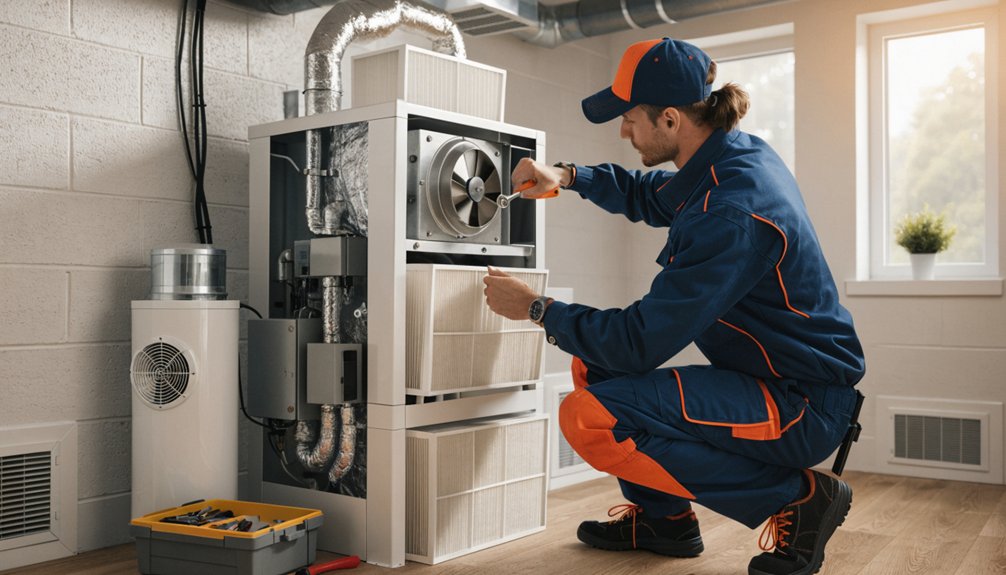
While emergency heating failures often seem sudden, they’re usually the end result of unresolved wear, restricted airflow, ignition instability, or electrical stress that routine maintenance can identify and correct in advance. During service, your technician tests voltage, amperage, gas pressure, temperature rise, and safety controls to detect conditions that trigger sudden shutdowns. You can also avoid nuisance lockouts by replacing clogged filters, cleaning burners, tightening connections, and calibrating the thermostat before performance degrades. Proactive tasks like sealing drafts and improving insulation further reduce strain on your system by lowering heat loss and helping it maintain temperature more efficiently.
That diagnostic work reduces emergency costs because faults are corrected under controlled conditions instead of after-hours breakdowns. It also shortens repair timelines by preventing cascading damage to igniters, motors, relays, or limit switches. When each component is inspected, cleaned, and verified, you’re far less likely to face a no-heat call during peak winter demand or severe cold.
How Maintenance Extends System Life
The same maintenance steps that reduce emergency repairs also slow the wear patterns that shorten a heater’s service life. When you keep components clean, aligned, and properly calibrated, you reduce friction, overheating, and electrical strain. Those corrections directly support system longevity and preserve stable operating conditions.
- Clean burners and heat exchangers transfer heat efficiently, so your unit doesn’t overcycle or run hotter than design limits.
- Lubricated motors and inspected belts minimize drag, bearing stress, and premature blower failure.
- Tightened electrical connections and tested controls prevent arcing, short cycling, and voltage imbalance that damages major parts.
These maintenance benefits compound over time. You’re not just avoiding breakdowns; you’re controlling cumulative stress, protecting core assemblies, and helping your heating system reach a longer, more reliable service life. For Melbourne homes, partnering with specialists in central heating repair and ongoing maintenance ensures these longevity benefits are applied consistently and professionally.
When to Schedule a Heating Tune-Up
Ideally, you should schedule a heating tune-up before sustained cold weather arrives, when your system can still be tested under controlled conditions and any developing faults can be corrected without emergency pressure. For most homes, annual service frequency is sufficient, with fall preparation being the priority for seasonal readiness. If you run an older furnace or heat pump, spring maintenance can also help identify wear after winter demand. During visits, technician expertise supports combustion analysis, airflow measurement, safety inspections, and other performance checks that protect system reliability. This timing improves energy savings by correcting inefficiencies before they raise utility use. It also delivers cost benefits, since minor adjustments are cheaper than midseason repairs. With stronger homeowner awareness, you’ll know when noises, cycling changes, or uneven heating signal that service shouldn’t wait. Regular tune-ups help maintain optimal energy efficiency ratings, which lowers utility bills and reduces the likelihood of costly breakdowns as your system ages.
Frequently Asked Questions
Can Preventative Heating Maintenance Improve Indoor Air Quality?
Yes—like a clean sieve catching dust, you’ll improve indoor air quality through preventative heating maintenance. You’ll optimize air filtration, verify humidity control, reduce particulate buildup, and diagnose airflow or combustion issues that contaminate circulated air.
Are Service Plans Worth the Cost for Homeowners?
Yes, they’re usually worth it if you want predictable upkeep, fewer breakdowns, and lower lifecycle expenses. You get service plan benefits like priority diagnostics, calibrated maintenance, and measurable cost savings through improved system reliability and efficiency.
Does Regular Maintenance Affect Manufacturer Warranty Coverage?
Yes—like Achilles’ heel, skipped upkeep can undermine coverage; you’ll need warranty compliance through documented maintenance schedules. If you miss required service intervals, manufacturers can deny claims after diagnosing neglect, improper operation, or unverified repairs later.
Can Smart Thermostats Reduce Heating Energy Use Further?
Yes, you can reduce heating energy use further with smart thermostats by using smart scheduling and energy monitoring. You’ll optimize runtime, detect inefficiencies, trim standby losses, and match output more precisely to occupancy patterns.
How Do I Choose a Qualified Heating Technician?
You should choose a qualified heating technician by verifying certification requirements and technician experience; 87% of homeowners avoid repeat repairs doing this. Check licensing, insurance, diagnostic procedures, brand familiarity, references, and written estimates before hiring.