
If you own an older home, your heating system may be working against you in ways that aren’t obvious at first. Ageing components, leaky ductwork, and outdated controls can reduce efficiency, create uneven temperatures, and raise safety risks. You might notice higher utility costs or more frequent service calls, but those signs don’t always point to the same fix. The next step is identifying whether your system needs targeted service, repair, or full replacement.
Key Takeaways
- Older heater systems often struggle with efficiency, airflow balance, and consistent temperatures because they were designed for outdated home conditions.
- Warning signs include short cycling, delayed ignition, cold spots, unusual noise, and rising energy bills without major weather changes.
- Professional heating service should include combustion testing, airflow checks, burner calibration, duct sealing, and cleaning of heat-transfer components.
- Regular inspections improve safety by identifying gas leaks, venting problems, worn parts, and potential carbon monoxide risks before failure occurs.
- Repair makes sense for isolated, code-compliant issues, while replacement is better for frequent breakdowns, poor efficiency, or significant safety concerns.
Why Older Home Heating Systems Struggle
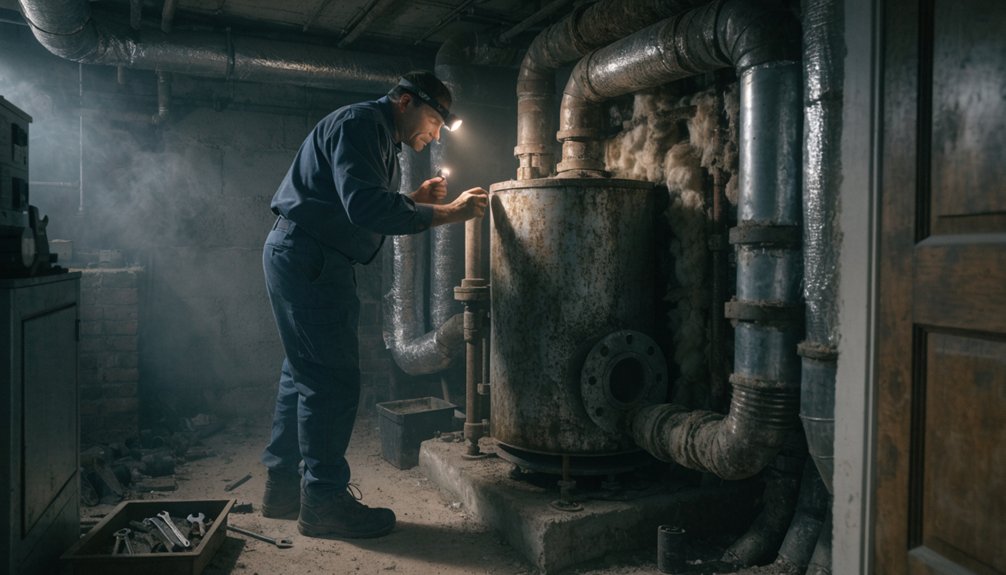
Because many older heating systems were designed around outdated load assumptions and looser building envelopes, they often struggle to maintain consistent indoor temperatures under current usage conditions. As system age increases, original sizing, controls, and distribution layouts may no longer align with your home’s insulation, airflow, or occupancy demands. You’ll also encounter performance issues tied to outdated technology, declining energy efficiency, and cumulative component wear in burners, heat exchangers, motors, and valves. These conditions create maintenance challenges because legacy parts, fuel compatibility requirements, and obsolete control interfaces complicate compliant servicing. In some cases, safety concerns rise when combustion tolerances, venting parameters, or electrical protections no longer meet modern expectations. As deterioration progresses, repair costs can escalate because diagnostics, parts sourcing, and code-related adjustments require more labor and specialized evaluation. In older Melbourne homes, deteriorated insulation and unchecked air leakage often compound these system issues, leading to more pronounced cold spots, drafts, and higher heating costs.
What Signs Mean You Need Heating Services?
When an older heating system starts showing measurable performance changes, those symptoms usually indicate the need for professional heating services rather than routine seasonal adjustment. You should monitor cycling irregularities, delayed ignition, uneven room temperatures, rising noise levels, and thermostat variance, because these are primary heating indicators of deteriorating components or unsafe operating conditions.
You may also notice persistent dust movement, dry indoor air, unusual odors at startup, visible soot, or a pilot outage. If your utility usage increases without corresponding weather changes, that pattern can support compressed service timelines. Repeated breaker trips, discolored burner flames, and intermittent airflow further suggest diagnostic attention is required. You shouldn’t ignore short cycling or cold spots, since both can signal airflow restriction, control failure, or combustion imbalance requiring documented inspection and code-aware corrective service by licensed technicians. In many older homes, a sudden jump in energy bills or inconsistent temperatures from room to room is an early warning that the heating system is losing efficiency and may be nearing failure.
Which Heating Services Improve Efficiency?
To improve efficiency in an older heating system, you’ll want services that address both equipment performance and heat distribution losses. A system tune-up can verify combustion, airflow, and control calibration so your unit operates within manufacturer specifications. You should also consider ductwork sealing upgrades, since leaks can reduce delivered heat and increase system runtime. Regular heater servicing that includes safety checks and component inspections can further improve efficiency while preventing hazards like gas leaks and carbon monoxide buildup.
System Tune-Up Benefits
Although older heating systems often remain operational for decades, a professional tune-up can still improve efficiency by correcting the specific performance losses that develop over time. You’ll benefit when technicians calibrate burners, clean heat-transfer surfaces, verify airflow, test safety controls, and measure combustion performance. This confirms tune up importance and establishes proper maintenance frequency for your system’s age and operating conditions.
- A blue burner flame steadies after adjustment, replacing yellow, wavering tips.
- Dust lifts from the blower housing as moving parts are lubricated precisely.
- Digital gauges display tighter temperature rise and improved combustion readings.
You can expect reduced cycling stress, more consistent heat delivery, and lower fuel waste. Diagnostic service also identifies worn igniters, drifting thermostats, and restricted filters before they trigger unsafe operation or expensive component failure later.
Ductwork Sealing Upgrades
Because older homes often have leaky, uninsulated duct runs, ductwork sealing upgrades can improve heating efficiency by reducing conditioned-air loss before it reaches occupied rooms. You’ll typically need a pressure test, airflow measurement, and visual assessment to identify separation, crushed sections, and failed joints. These diagnostic steps quantify leakage rates and confirm where corrective sealing is warranted.
A qualified technician should seal accessible joints with code-appropriate mastic or UL-listed tape, then add insulation where ducts pass through unconditioned spaces. You’ll gain duct inspection benefits such as more balanced room temperatures, lower runtime, and reduced particulate infiltration. Properly sealed ducts also support static-pressure targets, helping your ageing heater operate within design parameters. That improves energy efficiency, limits heat loss, and can reduce strain on the blower and heat exchanger over time.
When Do Heating Repairs Make Sense?
When does a heating repair make more sense than a full system replacement in an older home? You’ll usually authorize repair when diagnostics show the core heat exchanger, burner assembly, and controls remain code-compliant, and the issue is isolated. If your unit is still within its expected heating lifespan, targeted service can restore safe performance without disproportionate repair costs. You should also compare measured combustion efficiency, airflow readings, and ignition reliability before deciding. In many cases, confirming routine maintenance records—such as regular filter changes and annual inspections—supports choosing repair by showing the system has been properly cared for and is more likely to deliver reliable performance after service.
- A steady burner flame behind a clean inspection panel
- Warm air moving evenly through long, shadowed hallway registers
- A technician’s meter confirming stable voltage at aging controls
Repairs also make sense when parts are available, the failure hasn’t caused secondary damage, and post-repair testing can verify safe venting, temperature rise, and consistent thermostat response under load conditions.
When Is Heater Replacement the Better Option?
You should compare repair costs against the unit’s age, efficiency rating, and expected service life to determine whether replacement is the more compliant, cost-effective option. If your energy bills keep rising despite maintenance, that’s a diagnostic sign the heater may be operating below acceptable efficiency standards. You’ll also want to track frequent breakdowns, since repeated service calls often indicate system decline that makes replacement the better long-term solution. Since older systems typically have lower energy efficiency ratings, replacing an aging heater can significantly cut operating costs while improving comfort.
Repair Vs. Replacement
Although repairs can extend the service life of an older heating system, replacement becomes the better option once failure patterns, safety risks, and operating costs indicate the unit is no longer performing reliably or efficiently. You should use cost analysis and lifespan assessment to compare repeat repair frequency, part availability, and code compliance.
- A heat exchanger with visible cracking, hot metal seams, and soot streaking
- A burner compartment showing delayed ignition flashes and uneven flame rollout
- A service log filled with repeat callouts, obsolete parts, and escalating labor hours
If your unit exceeds its expected service range, fails combustion testing, or can’t support safe venting upgrades, replacement is usually justified. You’ll reduce breakdown exposure and bring the system into current installation, ventilation, and control standards.
Rising Energy Costs
As utility rates climb, rising fuel use becomes a clear diagnostic indicator that an older heater may be costing more to operate than it’s worth to keep. If your winter bills increase despite stable thermostat settings and comparable weather, your system’s declining energy efficiency should be evaluated.
You can compare historical utility data, runtime patterns, and input-output performance to determine whether the unit is consuming excessive energy per heating cycle. Ageing burners, heat exchangers, motors, or controls often force longer operation to maintain target temperatures. Even if the system still produces heat, reduced combustion performance and airflow losses can undermine cost savings month after month. A licensed technician can measure efficiency, confirm whether performance falls below current standards, and help you determine if replacement offers a more compliant, economically sound long-term result.
Frequent Breakdown Signs
When a heating system requires repeated service calls within the same season, that pattern often indicates component wear that extends beyond routine repair. If you’re scheduling repairs for ignition faults, blower failures, or limit-switch trips, you’re likely seeing malfunction indicators that point to declining system reliability and reduced safety margins.
- A burner that clicks, hesitates, then exhales uneven heat into dark hallways
- A blower motor whining through the night while rooms stay stubbornly cold
- Rust around the heat exchanger, like dust-red scars inside the cabinet
You shouldn’t ignore short cycling, inconsistent airflow, or recurring shutdowns after resets. Those symptoms suggest aging controls, airflow restrictions, or structural deterioration. Follow maintenance tips, but if breakdown frequency keeps rising, replacement is often the more compliant, cost-stable, and performance-secure option overall.
How Heating Services Improve Safety and Air Quality
Because older heating systems often develop cracked heat exchangers, blocked flues, and degraded seals, professional heating service directly reduces your risk of carbon monoxide exposure, combustion gas leaks, and fire hazards. Technicians inspect burner combustion, venting draft, gas pressure, limit switches, and ignition performance to verify code-compliant operation and deliver measurable safety enhancements. Regular, professional leak checks and maintenance also support early gas leak detection, helping prevent dangerous exposure and costly damage over time.
Service also improves your air quality by identifying soot formation, microbial buildup, excess dust, and filter bypass within ageing ductwork and furnace cabinets. You’ll benefit when components are cleaned, filters are fitted correctly, and airflow is balanced to manufacturer specifications. Proper maintenance limits particulate recirculation, stabilizes humidity interaction, and reduces irritants that can aggravate allergies or respiratory conditions. In older homes, these diagnostic corrections help your system operate cleaner, safer, and more consistently year-round.
How to Choose Heating Services for an Older Home
Safety and air-quality gains only hold if the contractor servicing your older home can diagnose age-related system defects accurately and correct them to code. You should verify licensing, insurance, combustion-analysis capability, and experience with obsolete burners, gravity furnaces, and original ductwork. Ask for documented load calculations, venting inspections, and written heater maintenance schedules that target energy efficiency without overstressing ageing components. Regular service should also include testing for carbon monoxide leaks and confirming that CO detectors are installed and functioning to prevent exposure to this colorless, odorless gas.
- A rusted heat exchanger glowing dull orange behind a service panel
- Dust-lined floor registers feeding rooms with uneven winter temperatures
- A technician measuring draft pressure beside a brick chimney liner
Choose providers who test carbon monoxide, static pressure, ignition safety, and fuel-delivery stability. If they recommend replacement, they should justify it with readings, code references, and lifecycle cost comparisons, not sales pressure alone.
Frequently Asked Questions
Can Historic Homes Qualify for Heating Upgrade Rebates or Tax Credits?
Yes, you can qualify if your project meets program criteria; historic home upgrades often remain eligible. You’ll need diagnostic verification, code compliance, and approved equipment documentation to access available energy efficiency incentives, rebates, or tax credits.
How Long Does a Typical Heating Service Visit Usually Take?
A typical heating service visit usually takes 60 to 90 minutes, though your system may need a little extra attention. You’ll get diagnostic checks, a maintenance checklist review, and heating efficiency verification for compliant operation.
Will Heating Services Require Access to Walls, Floors, or Ceilings?
Usually, you won’t need wall access, floor removal, or ceiling inspection during standard heating service. If diagnostics indicate concealed ducting, leaks, or wiring faults, your technician may require limited invasive access for compliant assessment.
Can Pets Remain Indoors During Heating Maintenance or Repairs?
Yes—you can usually keep pets indoors during maintenance, like securing equipment in a lab, if you isolate work zones, monitor pet safety, and maintain indoor comfort; however, noise, fumes, or open access points may require temporary relocation.
How Should I Prepare My Home Before a Heating Service Appointment?
Before your appointment, you should clear access, replace filters, note symptoms, secure pets, and review your furnace maintenance checklist. Your heating system preparation should include thermostat testing, unobstructed vents, and documenting unusual noises or odors.