
Your ducted heating can seem quiet and reliable, yet hidden faults may already be affecting safety and performance. When you service it regularly, you’re checking for ignition issues, airflow imbalance, heat exchanger stress, and efficiency loss before they escalate. That helps you reduce risk, control energy use, and avoid preventable breakdowns. What a standard service actually reveals, and when you should book one, matters more than most homeowners expect.
Key Takeaways
- Regular ducted heating servicing improves safety by detecting ignition faults, overheating risks, and heat exchanger damage before they become dangerous.
- It boosts efficiency by restoring proper airflow, checking burner performance, and reducing energy waste caused by blocked filters or leaks.
- Annual servicing helps prevent expensive breakdowns by finding worn components, wiring issues, and motor problems before major repairs are needed.
- Servicing improves comfort by maintaining even heating, stable temperature control, and reliable fan operation throughout winter.
- It also supports better indoor air quality by reducing dust buildup, moisture issues, and contaminants circulating through the duct system.
Why Ducted Heating Servicing Matters
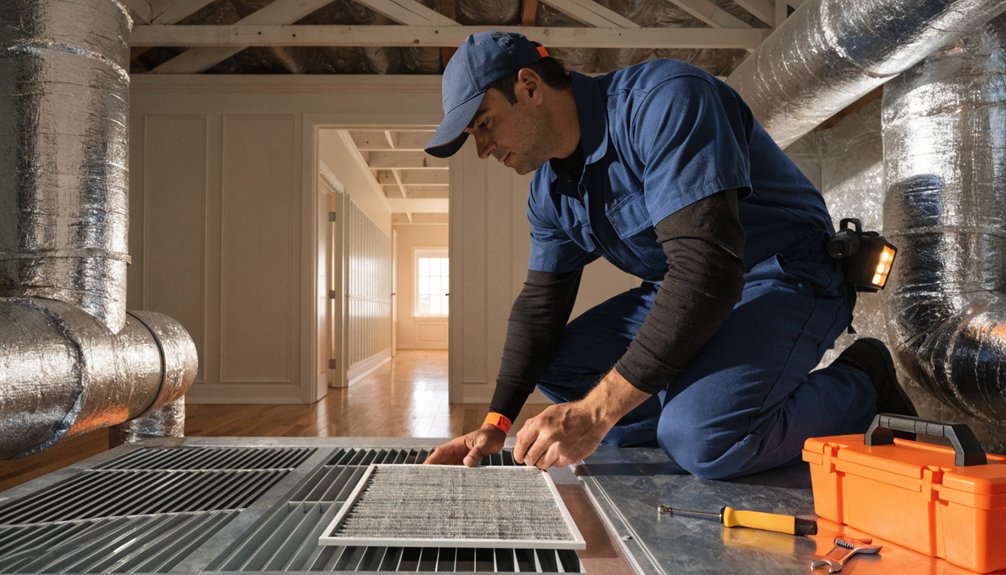
Because a ducted heating system relies on controlled combustion, electrical switching, and balanced airflow to operate safely, routine servicing matters for more than just comfort. You’re managing a gas appliance that can develop ignition faults, heat exchanger stress, fan imbalance, or sensor drift without obvious warning signs. Regular servicing helps identify abnormal operation before it affects safety, efficiency, or system reliability. When components operate outside specification, you can see uneven heating, short cycling, rising energy use, and reduced air quality. Dust accumulation, restricted return airflow, or burner irregularities can also place extra load on motors and controls. A diagnostic service checks whether the system is operating within manufacturer tolerances, so you’re less likely to face preventable breakdowns, unsafe combustion conditions, or performance decline during peak winter demand at home. Industry professionals generally recommend regular professional servicing at least once a year to maintain safe operation, efficiency, and system longevity.
What’s Included in a Ducted Heating Service
A ducted heating service is a structured inspection and test procedure that checks combustion performance, electrical operation, airflow, and safety controls against expected operating parameters. During servicing, your technician inspects the heat exchanger, burner assembly, ignition sequence, gas pressure, and thermostat response for faults or abnormal readings. You’ll also have wiring connections, fan motor operation, capacitor condition, and limit switches examined to confirm correct function. An airflow assessment is performed to identify restrictions, duct leakage indicators, or imbalance affecting system delivery. Return grilles and internal components are checked for dust loading, with filter replacement completed where required. The technician may test flue integrity, condensate drainage on compatible units, and control board diagnostics, then document observed defects, wear, and any components needing further repair or calibration later. Regular servicing also focuses on identifying issues like blocked ducts or faulty thermostats early, helping maintain consistent warmth, indoor air quality, and system efficiency.
How Servicing Improves Safety and Efficiency
When ducted heating is serviced at the correct interval, you reduce the risk of unsafe combustion, overheating, airflow-related stress, and undetected electrical faults that can compromise both occupant safety and system reliability. Technicians verify burner performance, inspect heat exchangers for cracks, test safety switches, and confirm fan operation within design parameters. As part of routine servicing, technicians also inspect electrical connections and gas components to prevent potential hazards like gas leaks and ensure the heating unit operates safely.
You also improve efficiency because servicing restores balanced airflow, correct ignition, and stable temperature control. Clean filters, unobstructed ducts, and calibrated components help your unit operate without excessive cycling or strain. That supports consistent indoor comfort while protecting critical parts from premature wear. Servicing can also identify contaminants, moisture issues, or leaks that affect air quality and place added load on the system. By keeping combustion and airflow conditions within specification, you help preserve safe operation and extend system lifespan.
How Regular Servicing Helps You Save Money
Regular servicing doesn’t just protect safety and performance—it also reduces avoidable operating costs over the life of your ducted heating system. When components are inspected, cleaned, and calibrated, your unit doesn’t have to work harder than necessary to maintain output. That directly supports energy efficiency and lowers fuel or electricity consumption.
You also save by limiting wear-related faults before they escalate into major repairs. During servicing, technicians can detect airflow restrictions, burner irregularities, thermostat inaccuracies, and fan motor strain, then correct them before they damage other parts. This diagnostic approach helps you avoid premature component failure and unplanned breakdown expenses. Over time, lower maintenance costs, fewer emergency callouts, and improved system stability mean you’re paying for controlled upkeep instead of expensive reactive repairs. That protects your household budget too. With JohnsRefair’s experienced technicians handling regular gas ducted heating maintenance, Melbourne homeowners can keep their systems running efficiently while avoiding costly breakdowns.
When to Service Your Ducted Heating

Ideally, you should service your ducted heating system at least once a year, preferably before winter demand begins. Annual maintenance lets you verify burner performance, airflow balance, thermostat accuracy, and heat exchanger integrity before sustained operation places components under stress. Booking pre-season service also helps identify worn belts, blocked filters, ignition faults, or unsafe combustion readings. Regular servicing by qualified technicians in Melbourne helps prevent gas leaks and carbon monoxide buildup while ensuring efficient operation throughout winter.
You shouldn’t wait for failure symptoms. Arrange seasonal checks if you notice uneven room temperatures, delayed startup, unusual odours, rising energy use, or cycling irregularities. These can indicate restricted ducts, control issues, or signs overheating within the unit. If your system is older, has operated heavily, or hasn’t been inspected for more than twelve months, service it promptly. Timely diagnostics reduce fire risk, limit carbon monoxide hazards, and keep your heater operating within manufacturer safety tolerances.
Frequently Asked Questions
Can I Service Ducted Heating Myself?
Yes, you can handle basic DIY Maintenance like filter cleaning and vent inspections, but you shouldn’t service gas or electrical components yourself. For Common Issues, use diagnostic checks safely, then call a licensed technician for faults.
How Long Does a Ducted Heating Service Take?
A ducted heating service usually takes 1 to 2 hours, depending on your unit’s condition, maintenance frequency, and faults found. You’ll improve system efficiency while ensuring safe operation through diagnostic testing, cleaning, and component inspection.
Will Servicing Void My Heater Warranty?
No, servicing usually won’t void your heater warranty; skipping required maintenance might. You should verify warranty implications in the manufacturer’s terms, follow specified service frequency, and use licensed technicians to maintain safe operation and compliance.
Do All Ducted Heating Brands Need Specialised Technicians?
Like a telegram, no: not all brands need specialists, but you should verify brand compatibility and technician qualifications. You’ll want diagnostic experience, safety compliance knowledge, and manufacturer-specific training when systems use proprietary controls or components.
Should I Service Ducted Heating Before Selling My Home?
Yes, you should service ducted heating before selling your home; it verifies safe operation, identifies faults, and documents performance. You’ll improve home value, strengthen buyer confidence, and reduce risks from undetected combustion, airflow, or control issues.