
When you book ducted heating services in Melbourne, you’re not just getting someone to “turn it on and check it works.” A proper visit should include systematic inspections, airflow measurements, gas and electrical safety checks, carbon monoxide testing, and cleaning that targets efficiency losses you can’t see. Done correctly, it reduces running costs, extends system life, and protects your household’s health—yet many systems don’t receive even the basic checks they actually need…
Key Takeaways
- Technicians inspect the heater, burner, heat exchanger, flue, and electrical components to ensure safe, efficient operation and compliance with Victorian gas regulations.
- They test gas pressure, ignition, burner flames, thermostat calibration, and safety shut-off devices, correcting faults that could cause gas leaks or system failure.
- Ductwork, vents, and return air paths are checked for leaks, damage, and pressure imbalances, with adjustments or resealing to improve airflow and comfort.
- Filters, grilles, and accessible ducts are cleaned or replaced to restore proper airflow, reduce dust, and protect the heater from strain and overheating.
- A calibrated analyser is used for carbon monoxide testing, and a written report details findings, recommendations, timeframes, and any additional repair or upgrade costs.
What Does a Ducted Heating Service Include?
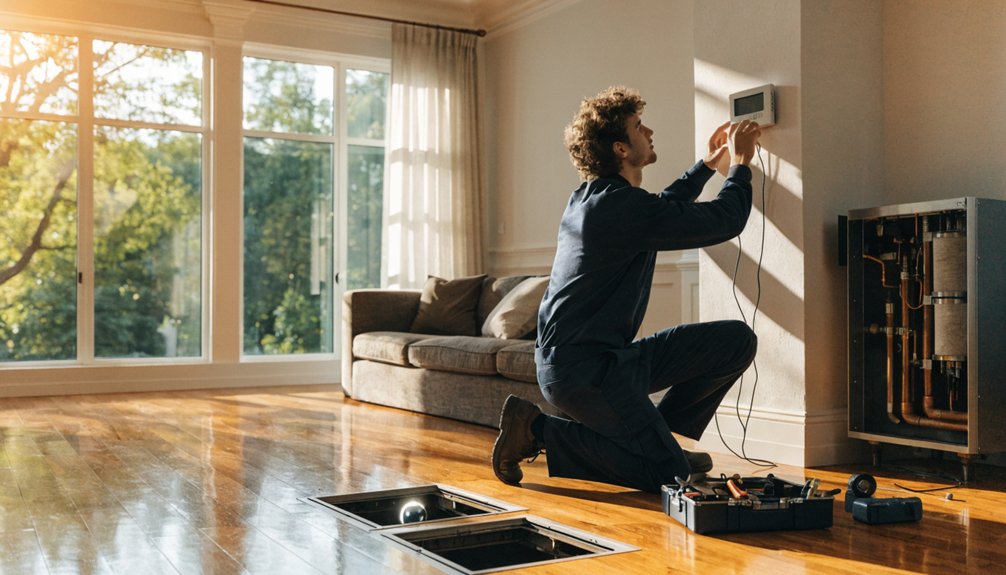
When you book a professional ducted heating service in Melbourne, the technician carries out a structured series of checks, tests, and cleaning tasks designed to keep the system efficient and safe. They’ll begin with operational testing, thermostat calibration, and visual inspection of the heater, burner, heat exchanger, and flue for cracks, corrosion, or leakage risks.
You can expect electrical safety checks, gas pressure and combustion analysis, and verification of carbon monoxide levels against Australian standards. Regular servicing by qualified technicians also helps prevent carbon monoxide buildup and reduces the risk of gas leaks in your home. Duct cleaning may be included or recommended, targeting accumulated dust, debris, and microbial growth that restrict airflow and undermine efficiency improvements. The technician will also assess return air grilles, filters, zoning controls, and airflow balance, tightening connections and sealing minor leaks to enhance performance and reduce energy waste.
How Often Should Melbourne Homes Service Ducted Heating?
You’ll get the safest, most efficient performance from your ducted heating if you follow clear service intervals based on manufacturer specifications and local Melbourne conditions. It’s also critical to recognise warning signs that you’re overdue—such as uneven heating, unusual noises, burning smells, or increased gas or power use—and act before they become safety risks. By planning maintenance around key seasonal changeovers, especially before winter, you reduce the likelihood of breakdowns and carbon monoxide hazards when you need the system most. For most homes, scheduling professional servicing at least annually helps maintain efficiency, air quality, and the lifespan of your ducted heating system.
Recommended Service Intervals
Although every system and household is different, most Melbourne ducted heating units should be professionally serviced at least once every 12 months, ideally before peak winter use. This recommended service frequency lets a licensed technician verify combustion efficiency, check gas pressures, test for carbon monoxide, inspect heat exchangers, and confirm safe airflow and return air balance.
If your heater is heavily used, located near coastal or industrial areas, or supports occupants with asthma or other respiratory conditions, you may need servicing every 6–9 months. To stay on schedule, set digital maintenance reminders in your calendar or smart-home app, aligned with the start of the heating season. Consistent intervals reduce breakdown risk, stabilise running costs, and help your system operate within manufacturer safety specifications.
Signs You’re Overdue
Several clear warning signs indicate your ducted heating in Melbourne is overdue for a professional service, even if the 12‑month mark hasn’t arrived. Paying attention to these symptoms helps you fine‑tune service frequency and protect your home’s safety.
- Declining performance – Rooms heat unevenly, airflow drops at vents, or the system runs longer to reach the same temperature, signalling dirty filters, blocked ducts, or failing components.
- Unusual noises or smells – Rattling, booming on startup, or burning/dusty odours can indicate gas combustion issues, debris in ducts, or overheating parts that demand immediate inspection.
- Spikes in gas or power bills – A sudden, unexplained increase in energy use often means the heater’s running inefficiently, eroding key maintenance benefits and increasing wear.
Seasonal Maintenance Timing
Because Melbourne’s climate swings from chilly, damp winters to mild, variable shoulder seasons, ducted heating should be professionally serviced at least once every 12 months, ideally in early autumn before sustained cold sets in. This timing guarantees combustion components, electrical connections, and safety controls are inspected before peak load, when minor faults can escalate into carbon monoxide risks or system failure.
Seasonal considerations also matter if you’ve used your system heavily during a particularly cold winter or left it idle for long periods. In those cases, increase your maintenance frequency to every 6–9 months. Filters, return air grilles, and ducts can accumulate dust, moisture, and debris, which affect efficiency and air quality. Regular, seasonally aligned servicing keeps performance stable and safety margins high.
Signs Your Ducted Heating System Needs Servicing
One of the most reliable ways to protect your ducted heating system—and your safety—is to recognise early warning signs that it needs servicing. Acting quickly preserves system performance, reduces running costs, and delivers long‑term maintenance benefits. Professional inspections by licensed technicians using approved parts further help prevent unexpected breakdowns and extend your system’s lifespan.
1. Unusual noises or smells
Banging, grinding, or high‑pitched squeals, plus metallic, burning, or gas‑like odours, can indicate fan damage, motor wear, or combustion issues that may be hazardous.
2. Uneven heating or weak airflow
Cold spots, slow warm‑up, or noticeably reduced air from vents often signal duct leaks, blockages, or failing blowers.
3. Frequent cycling or rising energy bills****
Short cycling, hard starting, or unexplained bill increases usually point to poor efficiency, dirty components, or failing controls that need prompt professional attention.
What Happens During a Ducted Heating Service Visit
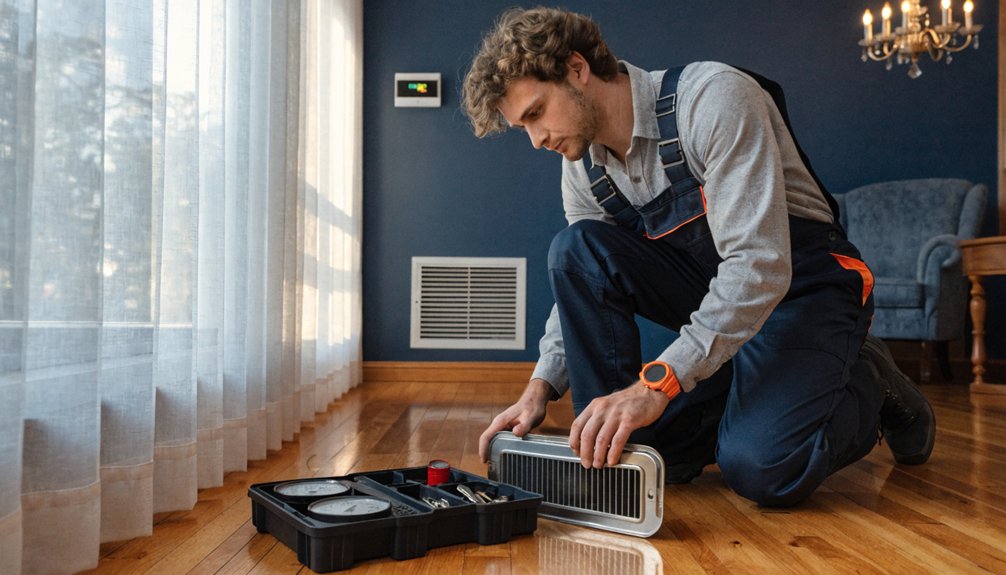
During a professional ducted heating service visit, a licensed technician performs a systematic inspection, testing, and cleaning of every critical component to verify safe and efficient operation. They’ll start by confirming gas, power, and thermostat settings, then run the system through a controlled start‑up and shutdown to check correct sequencing and safety responses.
They’ll assess airflow at multiple supply and return vents, noting pressure imbalances that indicate blockages or leaks. Filters, grilles, and accessible duct sections are cleaned, tightened, or resealed to optimise circulation and highlight duct maintenance benefits such as lower energy use and reduced dust. As part of this visit, the technician will also inspect the heat exchanger and other safety‑critical components to help prevent hazards such as gas leaks and ensure safe operation.
The technician also documents findings, explains service frequency importance, and outlines any corrective actions required to keep your system compliant and reliable.
Heater Unit, Burner and Heat Exchanger Checks
When your technician inspects the heater unit, they’ll check fans, electrical connections, ignition components, and controls to guarantee stable and efficient operation. They’ll also assess burner performance—looking at flame shape, colour, gas pressure, and safety shutoff response—to confirm combustion is clean and controlled. Finally, they’ll carry out heat exchanger integrity checks for cracks, corrosion, or leaks that could allow combustion gases, including carbon monoxide, to enter your supply air. As part of this visit, they may also test for carbon monoxide leaks and confirm that any installed CO detectors are positioned and operating correctly to enhance household safety.
Inspecting Heater Unit Components
Although your ducted heater might seem to be running normally, its internal components need systematic inspection to guarantee safe and efficient operation. A licensed technician uses specific inspection techniques to identify early component wear and safety risks before they escalate into failures or gas-related hazards.
They’ll typically focus on:
- Heater cabinet and seals – Checking panels, gaskets, and mounting points for gaps, corrosion, vibration damage, and dust build-up that can affect airflow and efficiency.
- Burner assembly condition – Verifying physical integrity, cleanliness, secure fixation, and signs of overheating or distortion that indicate abnormal operation or stress.
- Heat exchanger integrity – Examining for cracks, pinholes, rust, and warping using visual checks and instruments, because any breach can allow combustion by-products to enter your home’s air stream.
Burner Operation and Safety
Because the burner is the source of ignition and flame inside your ducted heater, its operation and safety controls are treated as critical checks in any professional service. Your technician will visually inspect the burner assembly, ensuring ports are clean, correctly aligned, and free from corrosion or debris that could disrupt burner efficiency or cause incomplete combustion.
They’ll then observe ignition and flame characteristics, checking for a stable, blue flame with correct shape and lift-off. Gas pressure and air–fuel ratios are verified and adjusted to manufacturer specifications.
Critical safety protocols include testing flame-sensing devices, ignition controls, and automatic shut‑off valves to confirm they respond correctly to faults, preventing unburnt gas release, flame rollout, or unsafe operating conditions.
Heat Exchanger Integrity Checks
While safe burner operation helps control the flame itself, the condition of the heat exchanger determines whether combustion gases remain fully isolated from your indoor air. During a professional visit in Melbourne, your technician focuses on structural integrity and heat exchanger efficiency to protect against carbon monoxide leaks and performance losses.
1. Visual and mechanical inspection
Your technician checks for cracks, corrosion, warping, and hot spots using inspection mirrors, lights, and sometimes borescopes.
2. Operational and combustion testing
They monitor burner flame patterns, temperature rise, and flue-gas readings to detect concealed exchanger faults.
3. Preventive heat exchanger maintenance
The technician removes dust, rust flakes, and combustion by-products, verifies seals and gaskets, and documents any deterioration so you can address issues before they become safety hazards.
Ductwork and Airflow Balancing in Your Home
Properly designed and balanced ductwork guarantees your gas ducted heating system delivers the right amount of warm air to every room without overworking the unit or creating safety risks. During a professional visit, the technician inspects duct sizing, layout, and insulation to maximise ductwork efficiency and airflow optimization. They’ll check for crushed, disconnected, or poorly sealed ducts that can cause pressure imbalances, heat loss, and back-drafting risks. This is also when they confirm the system’s energy efficiency rating, as higher star‑rated heaters can significantly reduce running costs compared to electric alternatives.
They also measure static pressure, temperature rise, and airflow at key supply and return registers. Using these readings, they fine‑tune damper positions and register settings so each zone receives appropriate airflow without noise, drafts, or hot and cold spots. This precise balancing reduces energy waste, protects the furnace, and maintains safe combustion conditions.
Filter Cleaning or Replacement for Better Efficiency
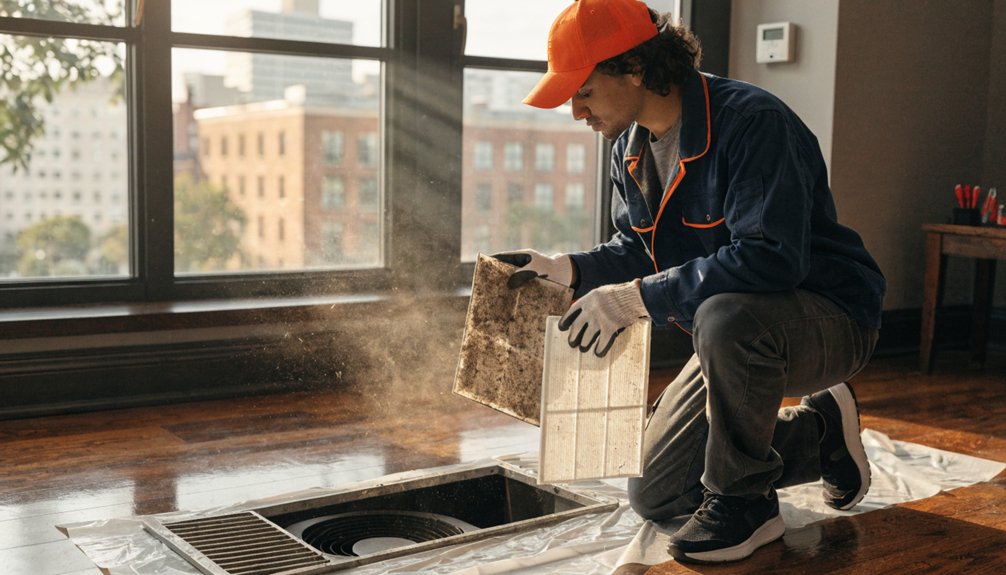
Once airflow through the ducts is correctly balanced, the next priority is making sure the air can actually move through the system without obstruction, which depends heavily on the condition of your return air filter. During a professional visit, the technician inspects, cleans, or replaces this filter to restore proper airflow and protect system components.
They’ll focus on:
- Assessing filter efficiency – Checking rating, fit, and loading so the filter traps particulates without over-restricting airflow.
- Cleaning or replacement – Carefully vacuuming or washing reusable filters, or installing correctly sized disposables to the manufacturer’s specification.
- Verifying safe operation – Confirming the filter door seals properly, there are no bypass gaps, and airflow remains within safe design limits, reinforcing the maintenance importance of timely filter service. In Melbourne, experienced technicians from JohnsRefair can incorporate this filter service into broader gas ducted heating maintenance to keep your system running efficiently and safely.
Gas, Electrical and Thermostat Testing for Safety
Although a clean filter protects airflow, your ducted gas heater’s safety ultimately depends on rigorous testing of its gas, electrical, and thermostat controls. During a professional visit, the technician checks all gas joints, isolation valves, and burners for leaks, stable pressure, and correct ignition sequencing to maintain strict gas safety standards. They then verify electrical safety by inspecting wiring insulation, earthing, circuit protection, and control boards for heat damage, loose connections, or corrosion. Voltage and current are measured against the manufacturer’s specifications. Finally, your thermostat and zone controls are calibrated to guarantee accurate temperature sensing, safe cycling, and proper communication with the heater. This prevents short‑cycling, overheating, and undue stress on critical gas and electrical components. For more complex faults or system upgrades, many Melbourne homeowners rely on specialists in central heating repair to diagnose issues, replace worn components, and keep their ducted systems running safely and efficiently.
Carbon Monoxide and Venting Safety Checks
When you run a gas ducted heater, you need rigorous checks to guarantee it’s not producing or leaking carbon monoxide into occupied spaces. A licensed technician will use calibrated instruments to detect CO, verify the flue is drawing correctly, and confirm all vents and return air pathways are unobstructed and correctly sized. These tests also confirm your system complies with Victorian and Australian safety standards, helping you minimise risk of CO exposure and legal non‑compliance. Regular inspections help mitigate health threats from gas leaks and carbon monoxide, protecting both your household’s wellbeing and your heater’s long‑term performance.
Detecting Carbon Monoxide Leaks
Even a small carbon monoxide (CO) leak in a ducted heating system can quickly become a life‑threatening hazard, so systematic detection and venting checks are essential. During a professional visit, your technician follows strict safety protocols to confirm your system isn’t producing or distributing dangerous levels of carbon monoxide.
They’ll typically:
- Use a calibrated electronic CO analyser to measure ambient CO around the heater, return air grille, and key duct junctions, comparing readings to Australian exposure limits.
- Inspect burner flames, heat exchanger surfaces, seals, and combustion chamber for cracks, corrosion, or soot that indicate incomplete combustion and hidden leaks.
- Check nearby rooms and hallways for cross‑contamination, recommending additional fixed CO alarms in sleeping areas and high‑risk zones for continuous monitoring.
Testing Flue And Ventilation
Because your ducted heater relies on controlled combustion, its flue and room ventilation must be tested just as rigorously as the appliance itself to prevent carbon monoxide from re‑entering your home. During a professional visit, the technician inspects the flue for corrosion, dislodged sections, blockages, and incorrect terminations, then performs flue maintenance as required to restore safe, unobstructed discharge of combustion gases.
They’ll use instruments to verify draft strength, ensuring exhaust is drawn consistently outdoors under different operating conditions. Internal rooms are checked for adequate make‑up air and cross‑flow, so the system doesn’t create negative pressure that can pull fumes back inside. The technician also assesses ventilation efficiency, confirming grilles, vents, and clearances support stable, safe burner performance.
Compliance With Safety Standards
Flue and ventilation testing naturally extends into a broader requirement: your ducted heating system must comply with Victorian and Australian safety standards for carbon monoxide and venting. During a professional visit, the technician doesn’t just “check it works”; they verify that every combustion and exhaust component meets current safety regulations through structured compliance checks.
- Carbon monoxide testing – They measure CO levels at registers and around the heater, confirm stable readings under different operating conditions, and compare results against legal thresholds.
- Appliance and flue compliance – They verify appliance certification, flue sizing, terminations, clearances from combustibles, and correct draught performance.
- Ventilation and isolation – They confirm adequate make‑up air, room ventilation, safe zoning of living and sleeping areas, and document findings for regulatory traceability.
Service Costs, Timeframes and Choosing a Melbourne Heating Specialist
When you’re planning ducted heating services in Melbourne, it’s essential to understand likely costs, realistic timeframes, and how to vet a qualified specialist before work begins. Expect transparent service pricing that separates call‑out, labour, parts, and any compliance testing (including carbon monoxide and gas‑pressure checks). Always request a written, itemised quote before authorising work. Most routine services take 60–120 minutes, depending on system size, access to the heater, duct condition, and whether fault diagnostics are required. Complex repairs or part replacement may extend this. When choosing a specialist, verify technician qualifications: Victorian plumbing registration/licensing, gasfitting endorsement, and manufacturer training for your specific brand. Confirm public liability insurance, warranty terms, and post‑service reporting, including documented safety test results. Regular servicing that includes ducted heating maintenance and carbon monoxide testing can improve energy efficiency, indoor air quality, and system longevity.
Frequently Asked Questions
Can Ducted Heating Be Integrated With Smart Home Systems or Wi‑Fi Controllers?
Yes, your ducted heating can integrate with smart home systems or Wi‑Fi controllers, like a conductor guiding an orchestra. You’d use compatible smart thermostats, ensuring correct wiring, secure networking, and safety‑compliant settings to optimise energy efficiency and control.
What Rebates or Incentives Exist in Victoria for Upgrading Old Ducted Heating Systems?
You can access Victorian Energy Upgrades rebates and occasional federal incentives when replacing old ducted heating, but rebate eligibility depends on installer accreditation, product energy efficiency ratings, correct sizing, safe gas fitting, and compliant decommissioning of existing appliances.
How Does Ducted Heating Performance Compare to Split Systems in Melbourne’s Climate?
You’ll find ducted systems heat whole homes faster in Melbourne’s cold snaps, but split systems often beat ducted efficiency for zoned areas. Well‑maintained ducted units offer strong system longevity, provided gas leaks, flue integrity, and combustion are regularly safety‑checked.
Are There Zoning Options to Heat Only Certain Rooms and Reduce Energy Costs?
Yes, you can add zoning options, so you don’t heroically heat empty rooms. Zoning benefits include targeted comfort, improved energy efficiency, reduced duct pressure, and safer operation—provided dampers, controls, and airflow balancing are professionally designed, installed, and commissioned.
What Modifications Are Needed to Convert an Existing Ducted Heating System to Add Cooling?
You’ll typically need major system modifications: a compatible outdoor condenser, indoor coil, upgraded duct sizing, drain lines, electrical supply, thermostat, and airflow balancing. Cooling options include add‑on refrigerated coils or a full reverse‑cycle system, both requiring licensed installation.